
CJC-1295 DAC (2 mg & 5 mg Vial) Dosage Protocol
Quickstart Highlights
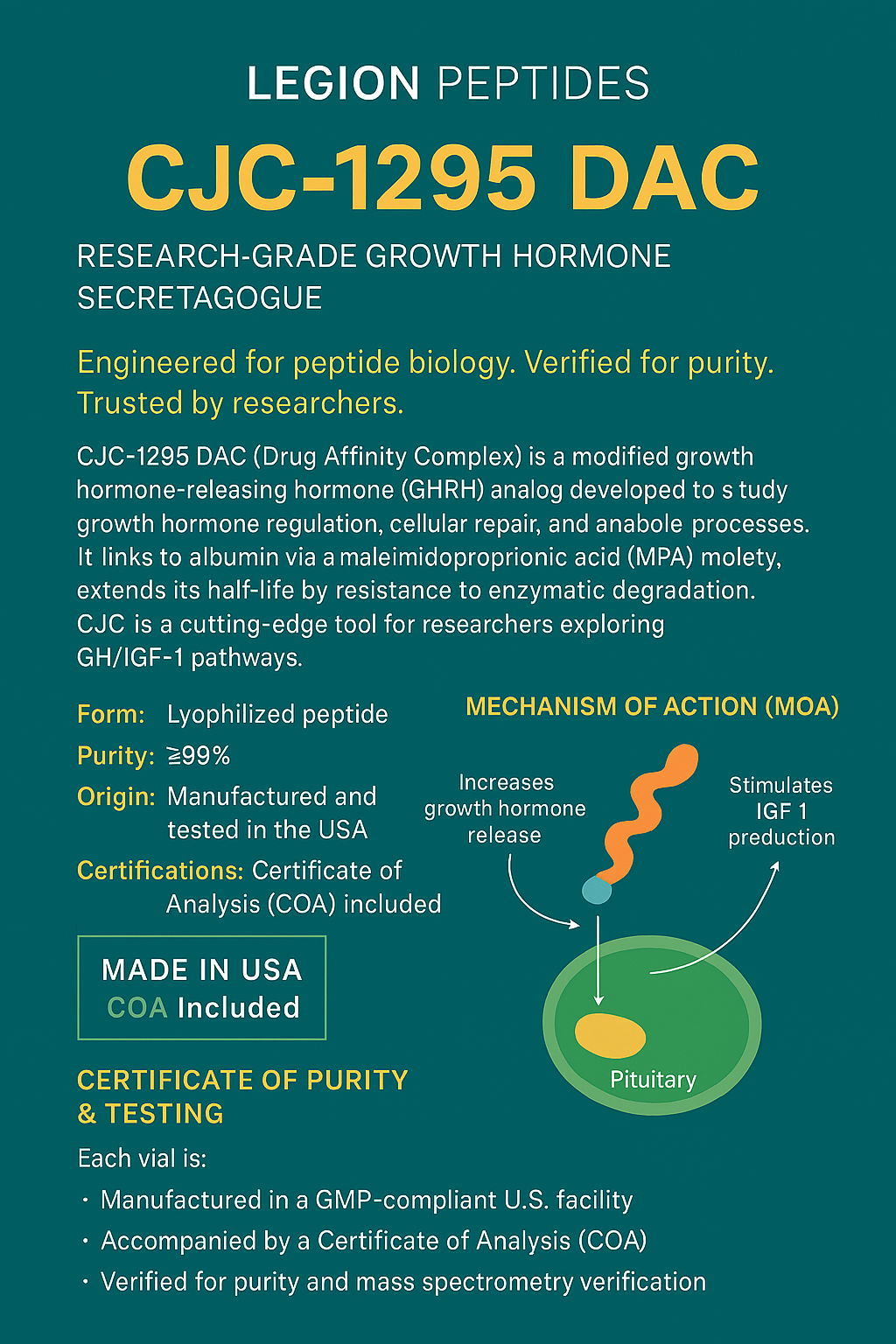
CJC-1295 DAC is a long-acting synthetic analog of growth hormone-releasing hormone (GHRH). The DAC (Drug Affinity Complex) modification binds reversibly to albumin, extending the peptide's half-life to approximately 6–8 days[1]. By stimulating pituitary GHRH receptors, CJC-1295 DAC increases GH secretion and circulating IGF-1 in a dose-dependent manner[2]. This educational protocol presents both once-weekly (2 mg) and twice-weekly (5 mg) subcutaneous approaches using practical dilutions for clear insulin-syringe measurements.
5 mg Vial (Twice Weekly)
- Reconstitute: Add 2.0 mL bacteriostatic water → 2.5 mg/mL (2500 mcg/mL) concentration.
- Typical dose range: 300–1000 mcg per injection, twice weekly (gradual titration).
- Easy measuring: At 2.5 mg/mL, 1 unit = 0.01 mL = 25 mcg on a U-100 insulin syringe.
2 mg Vial (Once Weekly)
- Reconstitute: Add 1.0 mL bacteriostatic water → 2.0 mg/mL (2,000 mcg/mL) concentration.
- Typical weekly dose: 2,000 mcg (2 mg) once weekly — the full vial per injection.
- Easy measuring: At 2.0 mg/mL, 1 unit = 0.01 mL = 20 mcg on a U-100 insulin syringe; full dose = 100 units (1.00 mL).
Storage: Lyophilized: freeze at −20 °C (−4 °F); after reconstitution, refrigerate at 2–8 °C (35.6–46.4 °F); avoid freeze–thaw cycles.
Dosing & Reconstitution Guide
Educational guide for reconstitution and dosing
Standard / Gradual Approach
5 mg Vial (2 mL = 2500 mcg/mL) - Twice Weekly
| Week | Per-Injection Dose (mcg) | Units (per injection) (mL) | Weekly Total |
|---|---|---|---|
| Weeks 1–2 | 300 mcg (0.3 mg) | 12 units (0.12 mL) | 600 mcg/week |
| Weeks 3–4 | 500 mcg (0.5 mg) | 20 units (0.20 mL) | 1000 mcg/week |
| Weeks 5–6 | 750 mcg (0.75 mg) | 30 units (0.30 mL) | 1500 mcg/week |
| Weeks 7–12 | 1000 mcg (1 mg) | 40 units (0.40 mL) | 2000 mcg/week |
Frequency: Inject twice weekly subcutaneously (e.g., Monday/Thursday or Tuesday/Friday). The extended 6–8-day half-life from the DAC modification supports less frequent dosing compared to non-DAC GHRH analogs[1][2].
2 mg Vial (1 mL = 2.0 mg/mL) - Once Weekly
| Week | Weekly Dose (mcg) | Units (per injection) (mL) |
|---|---|---|
| Weeks 1–12 | 2,000 mcg (2 mg) | 100 units (1.00 mL) |
Frequency: Inject once weekly subcutaneously, preferably in the evening before bed to align with natural nocturnal GH surges[6]. The peptide's extended half-life (~6–8 days) supports weekly administration without significant loss of activity between doses[1].
For ≤10-unit (≤0.10 mL) administrations, consider 30- or 50-unit insulin syringes for improved readability.
Reconstitution Steps
- Draw the appropriate volume of bacteriostatic water (1.0 mL for 2 mg vial, 2.0 mL for 5 mg vial) with a sterile syringe.
- Inject slowly down the vial wall; avoid foaming or direct stream onto the powder.
- Gently swirl/roll until dissolved (do not shake vigorously).
- Label and refrigerate at 2–8 °C (35.6–46.4 °F), protected from light.
Supplies Needed
Plan based on an 8–16 week protocol with appropriate frequency.
5 mg Vials (Twice Weekly)
- 8 weeks ≈ 3 vials (~10.2 mg total)
- 12 weeks ≈ 4 vials (~18.2 mg total)
- 16 weeks ≈ 6 vials (~26.2 mg total)
2 mg Vials (Once Weekly)
- 8 weeks: 8 vials (1 vial/week)
- 12 weeks: 12 vials (1 vial/week)
Insulin Syringes (U-100)
- Twice Weekly: 2 syringes/week → 8 weeks: 16 syringes, 12 weeks: 24 syringes, 16 weeks: 32 syringes
- Once Weekly: 1 syringe/week → 8 weeks: 8 syringes, 12 weeks: 12 syringes
Bacteriostatic Water (10 mL bottles)
Use 1.0 mL per 2 mg vial or 2.0 mL per 5 mg vial for reconstitution.
- 5 mg protocol (8 weeks, 3 vials): 6 mL → 1 × 10 mL bottle
- 2 mg protocol (8 weeks, 8 vials): 8 mL → 1 × 10 mL bottle
- 2 mg protocol (12 weeks, 12 vials): 12 mL → 2 × 10 mL bottles
Alcohol Swabs
One for the vial stopper + one for the injection site each injection.
- Twice Weekly: 4 swabs/week → 8 weeks: 32 swabs
- Once Weekly: 2 swabs/week → 8 weeks: 16 swabs
Protocol Overview
Concise summary of the regimens.
- Goal: Support sustained GH and IGF-1 elevation for research into GH-axis effects[1].
- Schedule: 2 mg: Once weekly for 8–12 weeks; 5 mg: Twice weekly for 8–12 weeks.
- Dose Range: 2 mg: 2000 mcg weekly; 5 mg: 300–1000 mcg per injection with gradual titration.
- Reconstitution: 1.0 mL per 2 mg vial (2.0 mg/mL) or 2.0 mL per 5 mg vial (2.5 mg/mL) for accurate measurements.
- Storage: Lyophilized frozen; reconstituted refrigerated; avoid repeated freeze–thaw.
Dosing Protocol
Suggested administration approaches.
- 2 mg Vial: 2000 mcg once weekly[7]; Conservative: 1000 mcg weekly.
- 5 mg Vial: Start 300 mcg twice weekly; increase by ~250 mcg every 2 weeks as tolerated.
- Target: 5 mg: 750–1000 mcg per injection by Weeks 5–12.
- Frequency: 2 mg: Once weekly; 5 mg: Twice weekly, spaced 3–4 days apart.
- Cycle Length: 8–12 weeks; optional extension to 16 weeks.
Storage Instructions
Proper storage preserves peptide quality.
- Lyophilized: Store at −20 °C (−4 °F) in dry, dark conditions; minimize moisture exposure.
- Reconstituted: Refrigerate at 2–8 °C (35.6–46.4 °F); stable for 2–4 weeks; avoid freeze–thaw.
- Allow vials to reach room temperature before opening to reduce condensation uptake.
Important Notes
Practical considerations for consistency and safety.
- Use new sterile insulin syringes; dispose in a sharps container.
- Rotate injection sites (abdomen, thighs, upper arms) to reduce local irritation.
- Inject slowly; wait a few seconds before withdrawing the needle.
- Document each dose, injection site, and timing to maintain consistency.
- The DAC modification provides sustained release; maintain consistent scheduling.
- The 5 mg vial provides more doses per vial, reducing reconstitution frequency.
How This Works
CJC-1295 DAC is a modified 30-amino-acid GHRH analog conjugated to a Drug Affinity Complex (DAC) that covalently binds to serum albumin after injection[1]. This albumin binding dramatically extends the peptide's half-life from minutes to approximately 6–8 days, enabling once-weekly or twice-weekly dosing[2]. CJC-1295 mimics endogenous GHRH, binding to GHRH receptors on pituitary somatotrophs to drive GH release[2]. The resulting GH surge stimulates IGF-1 production (primarily in the liver); IGF-1 then mediates many growth and metabolic effects through JAK/STAT signaling pathways[4]. Notably, pulsatile GH secretion persists even during continuous CJC-1295 stimulation, preserving physiological release patterns[2].
Potential Benefits & Side Effects
Observations from preclinical and clinical literature.
- Supports sustained elevation of GH and IGF-1 in a dose-dependent manner[1].
- May promote increased lean body mass, reduced fat mass, and improved body composition consistent with GH/IGF-1 axis activation[4][9].
- Enhanced protein synthesis and recovery potential through anabolic signaling[4].
- Improved sleep quality — GHRH analogs may have somnogenic effects, increasing deep slow-wave sleep[6].
- Preserves natural GH pulsatility unlike exogenous GH administration[11].
- Generally well tolerated; occasional mild injection-site reactions, transient flushing, headache, or water retention may occur[1][7].
Lifestyle Factors
Complementary strategies for best outcomes.
- Pair with a balanced, protein-forward diet tailored to energy and recovery needs.
- Combine resistance training and aerobic activity to reinforce GH-mediated adaptations.
- Prioritize quality sleep (7–9 hours) as endogenous GH release peaks during deep sleep[4][6].
- Manage stress to support hormonal balance and adherence.
- Avoid eating 2+ hours before injection to optimize GH release response.
Injection Technique
General subcutaneous guidance from clinical best-practice resources[5][6][9][10].
- Clean the vial stopper and skin with alcohol; allow to dry.
- Pinch a skinfold; insert the needle at 45–90° into subcutaneous tissue[5][8].
- Do not aspirate for subcutaneous injections; inject slowly and steadily[5].
- Rotate sites systematically (abdomen, thighs, upper arms) to avoid lipohypertrophy[6][7].
- Do not rub or massage the injection site after administration[8].
- Immediately dispose of the used syringe in a proper sharps container[9].
Recommended Source
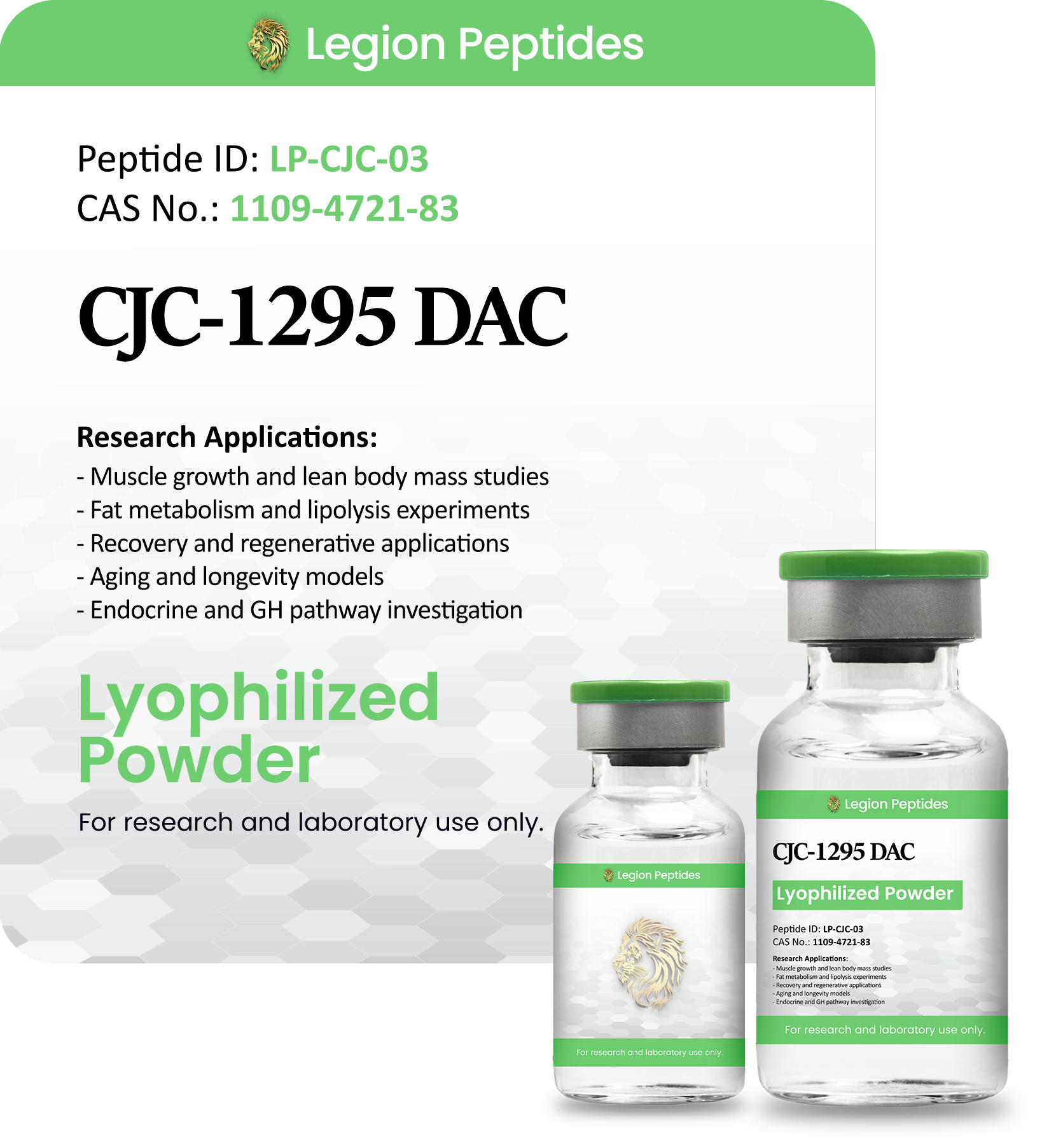
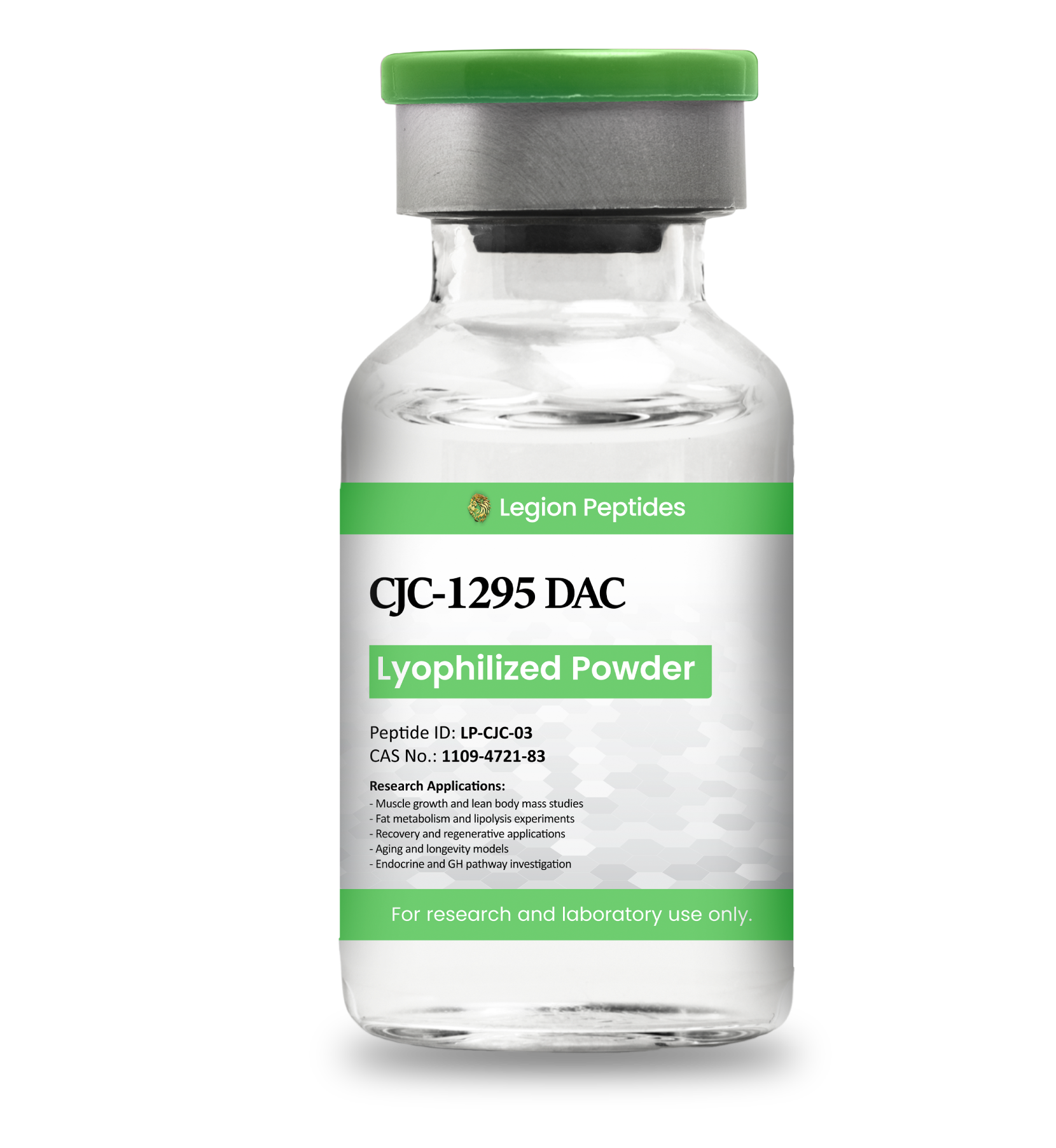
We recommend Legion Peptides for high-purity CJC-1295 DAC (2 mg & 5 mg).
Why Legion Peptides?
- High-purity, third-party-tested lots with batch COAs.
- Consistent, ISO-aligned handling and documentation.
- Reliable fulfillment to maintain cold-chain integrity.
Important Note
This content is intended for therapeutic educational purposes only and does not constitute medical advice, diagnosis, or treatment.
References
- J Clin Endocrinol Metab (2006) — Teichman SL et al. Prolonged stimulation of GH and IGF-1 by CJC-1295 in healthy adults
- J Clin Endocrinol Metab (2006) — Ionescu M et al. Pulsatile GH secretion persists during continuous CJC-1295 stimulation
- Clinical Pharmacology & Therapeutics — DAC technology: albumin-binding for extended peptide half-life
- StatPearls (NCBI Bookshelf) — Brinkman JE et al. Physiology, Growth Hormone
- CDC Pink Book (Chapter 6) — Vaccine administration: subcutaneous route (angle/site; no aspiration)
- PubMed — Physiology of growth hormone secretion during sleep
- Journal of Clinical Endocrinology & Metabolism — Safety and tolerability of CJC-1295 at various dose levels in healthy subjects
- Immunize Canada — How to Vaccinate: Best Practices (subcutaneous injection technique)
- Postgrad Med J (2006) — Ayuk J, Sheppard MC. Growth hormone and its disorders
- Legion Peptides — CJC-1295 DAC (2 mg & 5 mg) product page (quality and batch documentation)