
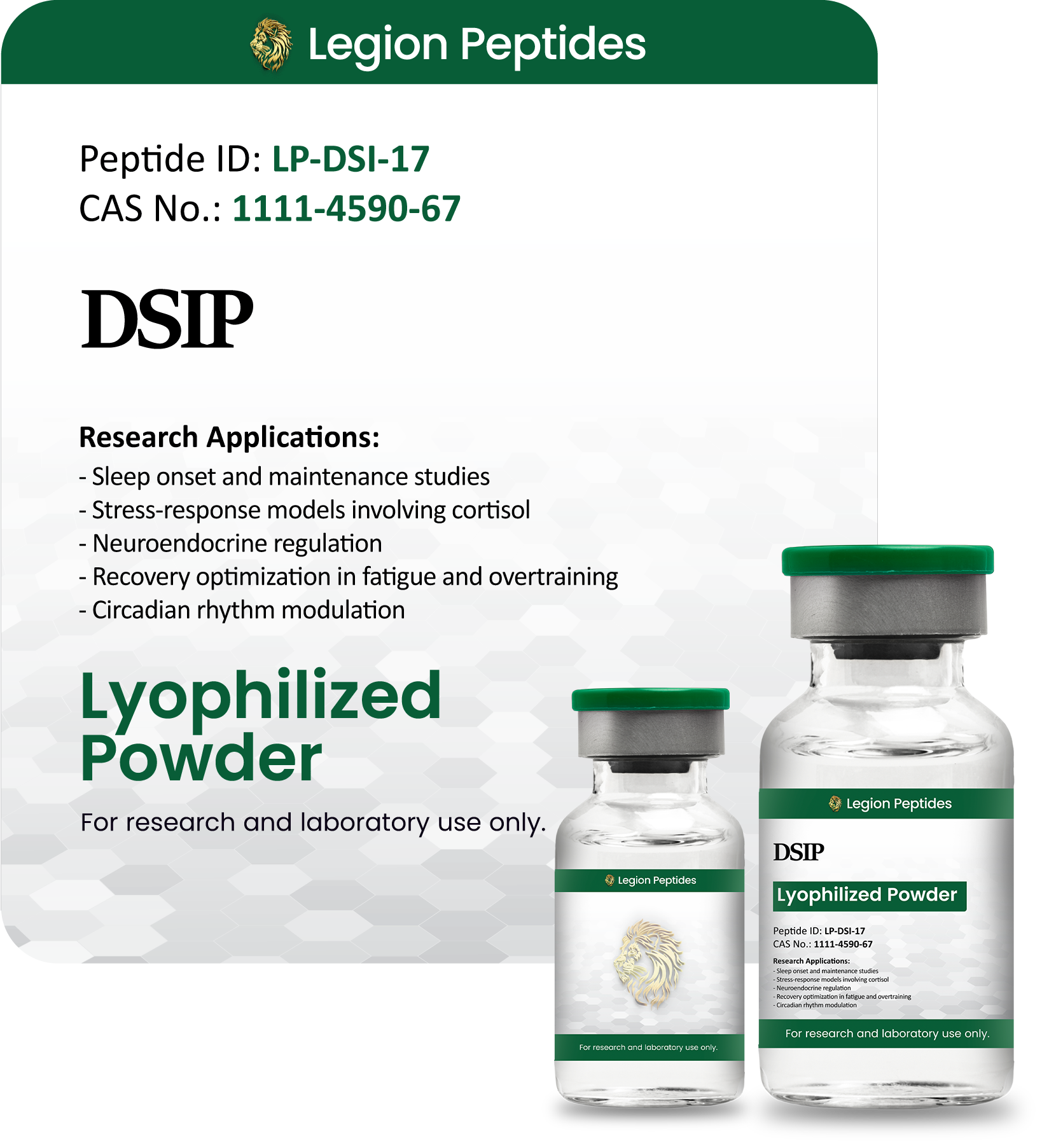
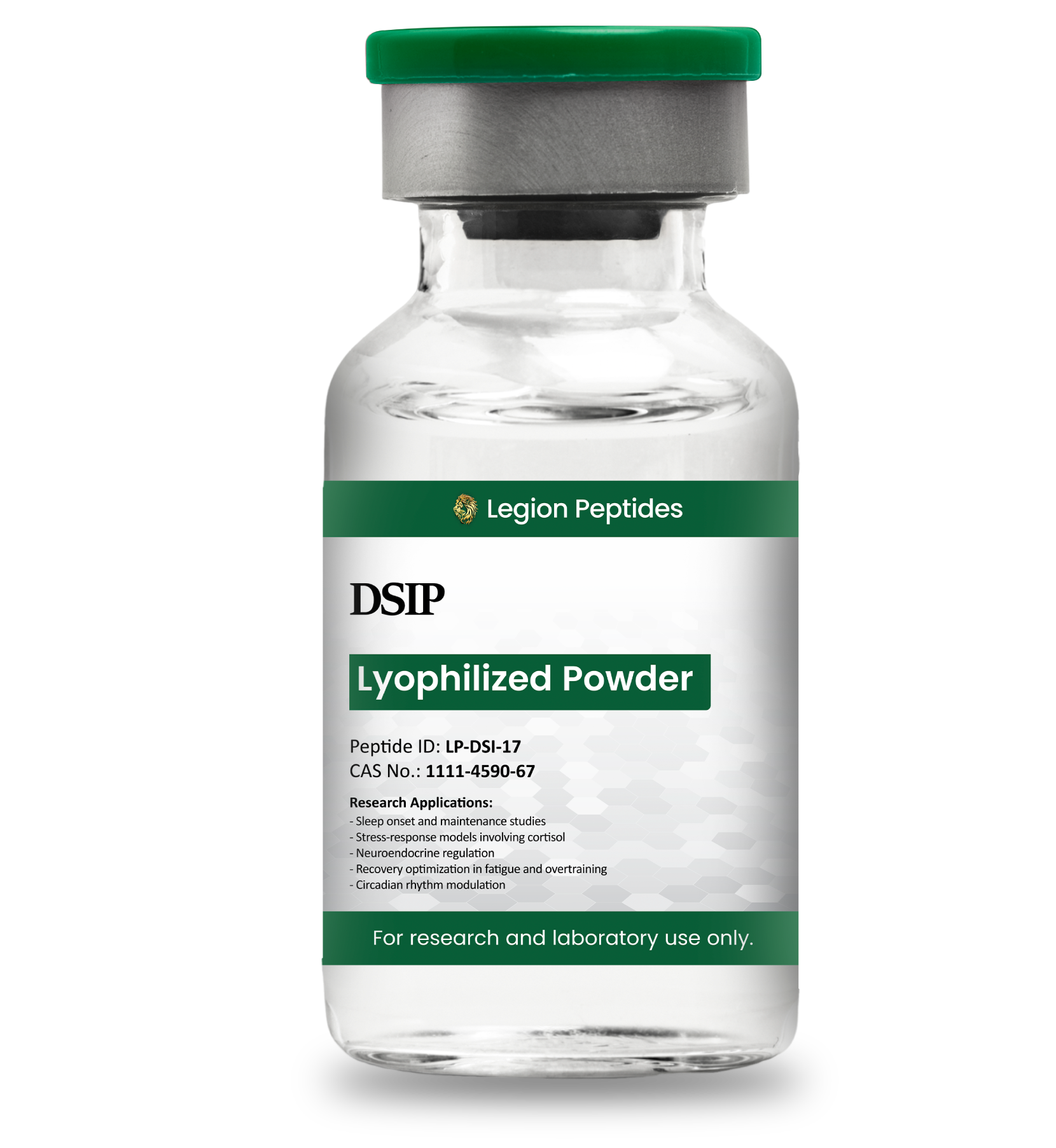
DSIP (5 mg & 10 mg Vial) Dosage Protocol
Quickstart Highlights
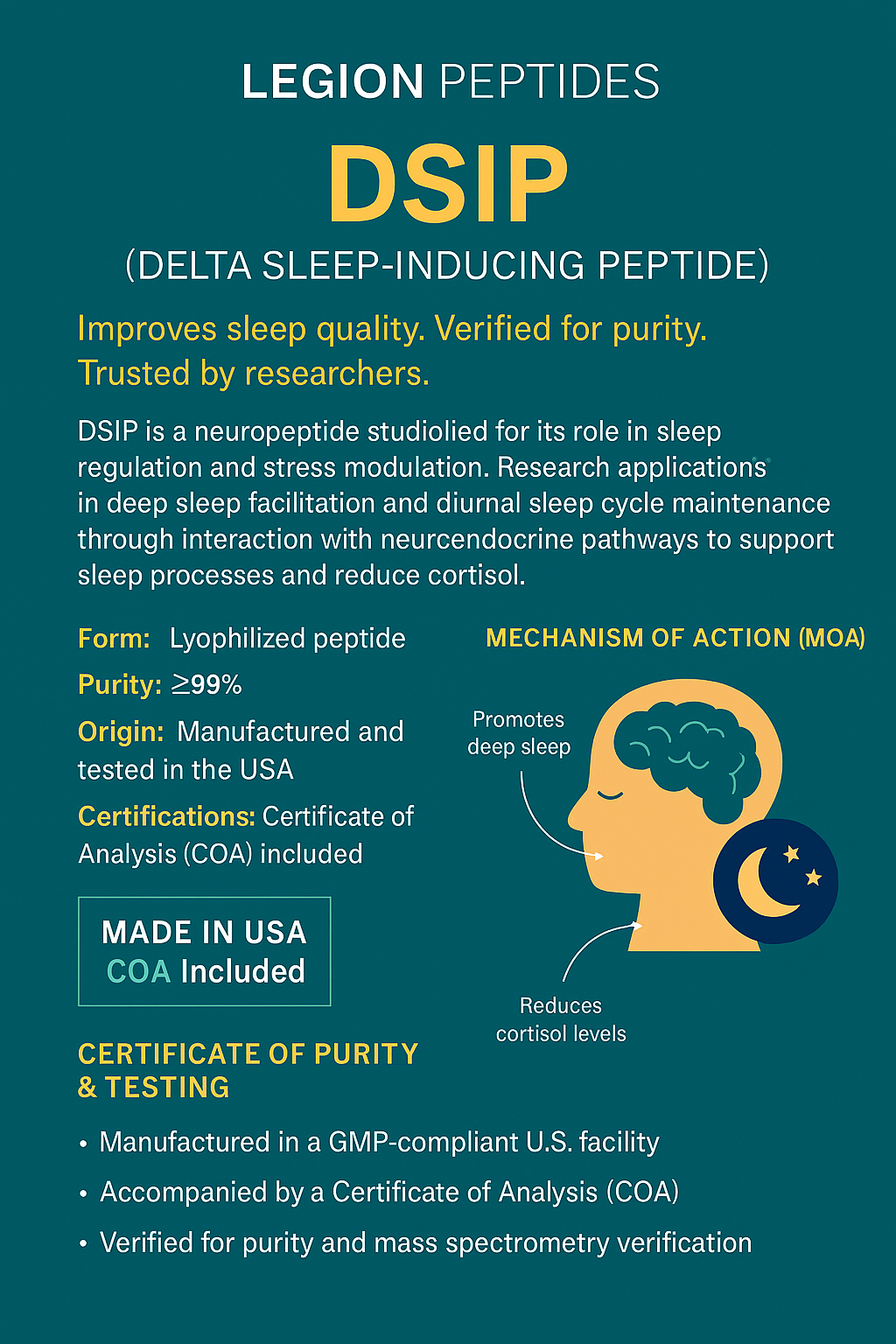
Delta Sleep-Inducing Peptide (DSIP) is a naturally occurring nonapeptide (9 amino acids) first isolated from rabbit brain tissue and studied for its effects on sleep architecture and stress modulation[1][2]. Research indicates DSIP may promote delta-wave (slow-wave) sleep, modulate cortisol and ACTH levels, and exhibit stress-protective properties[3][4]. This educational protocol presents a once-daily subcutaneous evening approach using practical dilutions for clear insulin-syringe measurements.
- 5 mg Vial Reconstitution: Add 3.0 mL bacteriostatic water → ~1.67 mg/mL concentration.
- 10 mg Vial Reconstitution: Add 3.0 mL bacteriostatic water → ~3.33 mg/mL concentration.
- Typical daily range: 100–300 mcg once daily in the evening (gradual titration).
- Easy measuring: At 1.67 mg/mL, 1 unit = 0.01 mL ≈ 16.7 mcg; at 3.33 mg/mL, 1 unit = 0.01 mL ≈ 33.3 mcg.
- Storage: Lyophilized: freeze at −20 °C (−4 °F); after reconstitution, refrigerate at 2–8 °C (35.6–46.4 °F); avoid freeze–thaw cycles.
Dosing & Reconstitution Guide
Educational guide for reconstitution and nightly dosing
Standard / Gradual Approach (Both Vials)
| Week | Daily Dose (mcg) | 5 mg Vial (Units) | 10 mg Vial (Units) |
|---|---|---|---|
| Week 1 | 100 mcg | 6 units (0.06 mL) | 3 units (0.03 mL) |
| Week 2 | 150 mcg | 9 units (0.09 mL) | 5 units (0.05 mL) |
| Week 3 | 200 mcg | 12 units (0.12 mL) | 6 units (0.06 mL) |
| Weeks 4–8 | 250–300 mcg | 15–18 units (0.15–0.18 mL) | 8–9 units (0.08–0.09 mL) |
Frequency: Inject once daily subcutaneously in the evening, approximately 30–60 minutes before bedtime[5]. For ≤10-unit (≤0.10 mL) administrations, consider 30- or 50-unit insulin syringes for improved readability.
Advanced / Extended Approach
| Week | Daily Dose (mcg) | 5 mg Vial (Units) | 10 mg Vial (Units) |
|---|---|---|---|
| Week 5 | 350–400 mcg | 21–24 units (0.21–0.24 mL) | 11–12 units (0.11–0.12 mL) |
| Weeks 6–8+ | 400–500 mcg | 24–30 units (0.24–0.30 mL) | 12–15 units (0.12–0.15 mL) |
Note: Advanced dosing (beyond 300 mcg) is based on anecdotal experience; formal human studies have primarily used doses up to ~300 mcg daily[6]. Use the minimum effective dose and increase only if needed.
Reconstitution Steps
- Draw 3.0 mL bacteriostatic water with a sterile syringe.
- Inject slowly down the vial wall; avoid foaming.
- Gently swirl/roll until dissolved (do not shake).
- Label and refrigerate at 2–8 °C (35.6–46.4 °F), protected from light.
Supplies Needed
Plan based on an 8–12 week nightly protocol with gradual titration.
- Peptide Vials (DSIP):
- 5 mg Vials: 8 weeks at ~200 mcg/day avg ≈ 2–3 vials
- 5 mg Vials: 12 weeks at ~300 mcg/day avg ≈ 5–6 vials
- 10 mg Vials: 8 weeks ≈ 1 vial (10 mg supports ~33–100 doses at 100–300 mcg)
- 10 mg Vials: 12 weeks ≈ 2 vials
- Insulin Syringes (U-100):
- Per week: 7 syringes (1/day)
- 8 weeks: 56 syringes
- 12 weeks: 84 syringes
- Bacteriostatic Water (10 mL bottles): Use ~3.0 mL per vial for reconstitution.
- 5 mg: 3 vials: 9 mL → 1 × 10 mL bottle
- 10 mg: 2 vials: 6 mL → 1 × 10 mL bottle
- Alcohol Swabs: One for the vial stopper + one for the injection site each day.
- Per week: 14 swabs (2/day)
- 8 weeks: 112 swabs → recommend 2 × 100-count boxes
- 12 weeks: 168 swabs → recommend 2 × 100-count boxes
Protocol Overview
Concise summary of the once-daily evening regimen.
- Goal: Support healthy sleep architecture, enhanced delta-wave sleep, and stress modulation over time[3][4].
- Schedule: Daily subcutaneous injections in the evening for 4–12 weeks.
- Dose Range: 100–300 mcg daily with gradual titration; advanced up to 500 mcg.
- Reconstitution: 3.0 mL per vial for accurate unit measurements (1.67 mg/mL for 5 mg, 3.33 mg/mL for 10 mg).
- Storage: Lyophilized frozen; reconstituted refrigerated; avoid repeated freeze–thaw.
Dosing Protocol
Suggested nightly titration approach.
- Start: 100 mcg nightly; increase by ~50 mcg every 1–2 weeks as tolerated.
- Target: 250–300 mcg nightly by Weeks 4–8.
- Frequency: Once per day (subcutaneous), 30–60 minutes before bedtime.
- Cycle Length: 4–12 weeks; consider a break after the cycle.
- Timing: Evening dosing to align with natural sleep onset; rotate injection sites.
Storage Instructions
Proper storage preserves peptide quality.
- Lyophilized: Store at −20 °C (−4 °F) in dry, dark conditions; minimize moisture exposure[7].
- Reconstituted: Refrigerate at 2–8 °C (35.6–46.4 °F); use within ~4 weeks and avoid freeze–thaw[8].
- Allow vials to reach room temperature before opening to reduce condensation uptake.
Important Notes
Practical considerations for consistency and safety.
- Use new sterile insulin syringes; dispose in a sharps container.
- Rotate injection sites (abdomen, thighs, upper arms) to reduce local irritation[9].
- Inject slowly; wait a few seconds before withdrawing the needle.
- Document daily dose and site rotation to maintain consistency.
- Some research suggests DSIP effects may persist for multiple nights after dosing[2]; adjust frequency as needed.
- Avoid other sedatives during DSIP use to clearly evaluate its effects on sleep.
How This Works
DSIP (Trp-Ala-Gly-Gly-Asp-Ala-Ser-Gly-Glu) was first characterized in 1977 as a sleep-modulating factor isolated from rabbit brain[1]. Mechanistic studies suggest DSIP may influence sleep by modulating GABAergic transmission and interacting with opioid receptor systems[10]. Research indicates it can increase delta-wave (slow-wave) sleep duration without significantly altering REM sleep architecture[3]. Beyond sleep, DSIP has demonstrated stress-protective and adaptogenic properties in various models, potentially through modulation of the hypothalamic-pituitary-adrenal axis[4][11]. Unlike conventional sedatives, DSIP tends to normalize sleep architecture without next-day grogginess[12].
Potential Benefits & Side Effects
Observations from preclinical and clinical literature.
- May promote deeper, more restorative slow-wave sleep and improve subjective sleep quality[3][5].
- Research suggests potential stress-protective and anxiolytic-like effects[4][11].
- Some studies indicate DSIP does not induce pharmacological tolerance with continued use[2].
- Remarkably safe profile: animal studies found no lethal dose even at extremely high doses; human studies report only mild, transient side effects[1][13].
- Generally well tolerated; occasional mild injection-site reactions may occur with subcutaneous administration.
Lifestyle Factors
Complementary strategies for best outcomes.
- Maintain consistent sleep-wake schedules to reinforce circadian rhythms.
- Limit blue light exposure and stimulants (caffeine, nicotine) in the hours before bed.
- Create a cool, dark, quiet sleep environment to support natural melatonin production.
- Incorporate regular physical activity, ideally earlier in the day.
- Manage stress through relaxation techniques (meditation, deep breathing).
Injection Technique
General subcutaneous guidance from clinical best-practice resources[14].
- Clean the vial stopper and skin with alcohol; allow to dry.
- Pinch a skinfold; insert the needle at 45–90° into subcutaneous tissue[14][15].
- Do not aspirate for subcutaneous injections; inject slowly and steadily[14].
- Rotate sites systematically (abdomen at least 2 inches from navel, thighs, upper arms) to avoid lipohypertrophy[15].
- Using a 30- or 50-unit insulin syringe improves accuracy when measuring small volumes.
Recommended Source
We recommend Legion Peptides for high-purity DSIP (5 mg & 10 mg).
Why Legion Peptides?
- High-purity, third-party-tested lots with batch COAs.
- Consistent, ISO-aligned handling and documentation.
- Reliable fulfillment to maintain cold-chain integrity.
Important Note
This content is for educational purposes only and is not medical advice. DSIP is for research use only. Not for human consumption. Always consult with qualified professionals before starting any peptide research protocol.
References
- Schoenenberger GA, Monnier M (1977) — Characterization of a delta-electroencephalogram (-sleep)-inducing peptide. Proc Natl Acad Sci USA
- European Journal of Anaesthesiology (2001) — Delta sleep-inducing peptide: editorial review of mechanisms and clinical context
- Schneider-Helmert D, Schoenenberger GA (1983) — Effects of DSIP in man: multifunctional psychophysiological properties. Neuropsychobiology
- Sudakov KV et al. (2004) — Delta-sleep-inducing peptide sequelae: stress protective effect. Ann N Y Acad Sci
- Schneider-Helmert D (1981) — Acute and delayed effects of DSIP on human sleep behavior. Int J Clin Pharmacol Ther Toxicol
- Iyer KS et al. (1988) — Sleep-inducing effect of low doses of DSIP in rats. Indian J Exp Biol
- Manning MC et al. (2010) — Stability of protein pharmaceuticals: an update. Pharm Res
- Wang W (2000) — Lyophilization and development of solid protein pharmaceuticals. Int J Pharm
- MedlinePlus — Subcutaneous Injection Instructions — Site rotation, technique, and patient education
- Yehuda S, Carasso RL (1988) — DSIP: brain mechanisms and function. Int J Neurosci
- Khvatova EM et al. (2003) — Delta sleep-inducing peptide: effect on oxidative stress in brain during different models. Biull Eksp Biol Med
- European Neurology (PubMed) — Effects of delta-sleep-inducing peptide on 24-hour sleep-wake behaviour in severe chronic insomnia
- European Neurology (PubMed) — Therapeutic effects of delta-sleep-inducing peptide (DSIP) in patients with chronic pain episodes
- CDC — Subcutaneous Injection Administration — Technique, angle, aseptic procedure, no aspiration required
- NCBI Bookshelf — Medication Administration: Subcutaneous Injections — Best practices for injection (asepsis, preparation, and administration)