Tri-Agonist
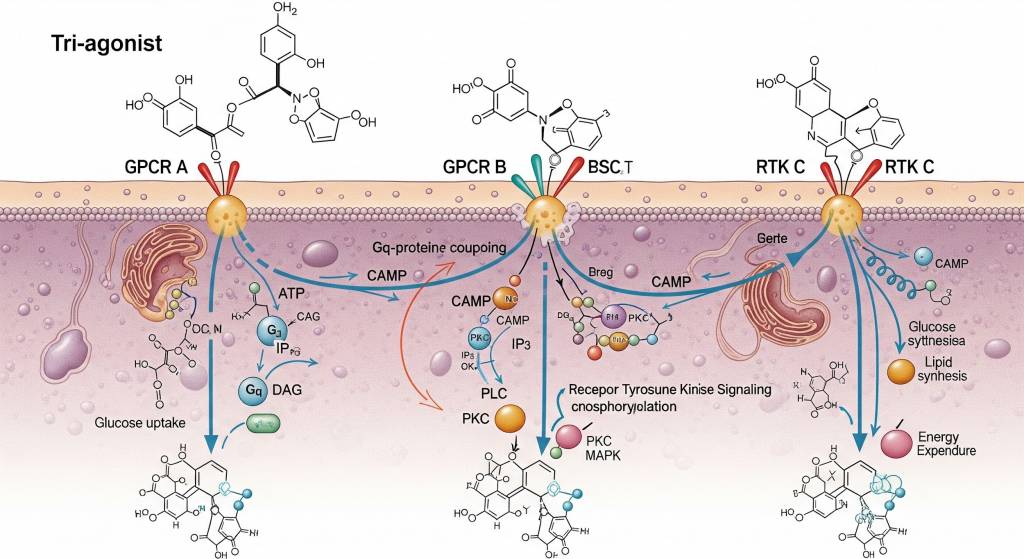
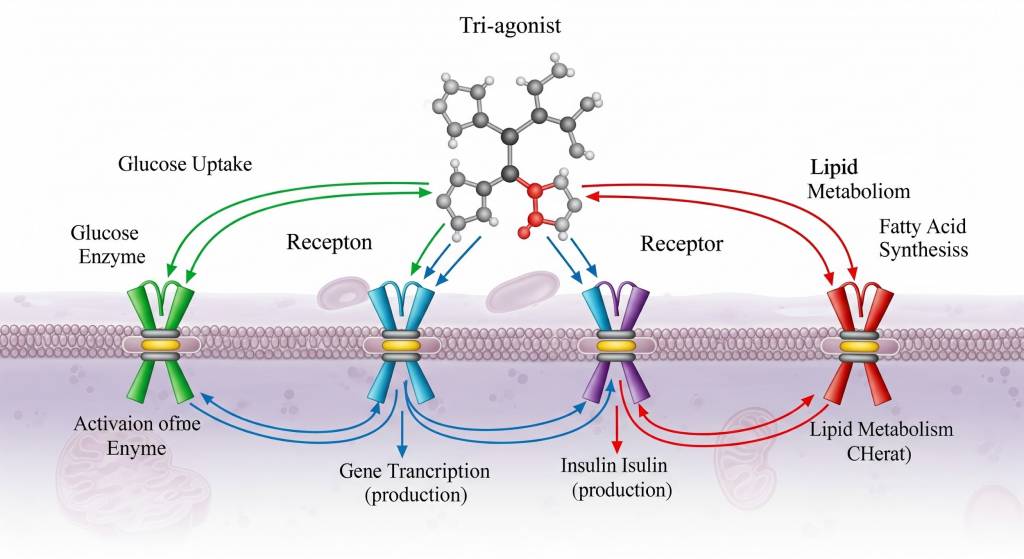
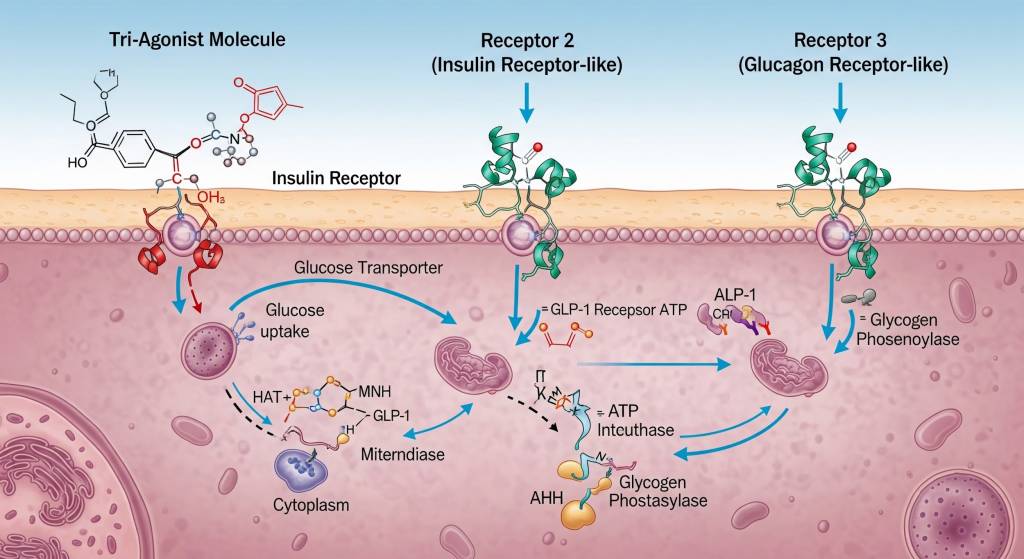
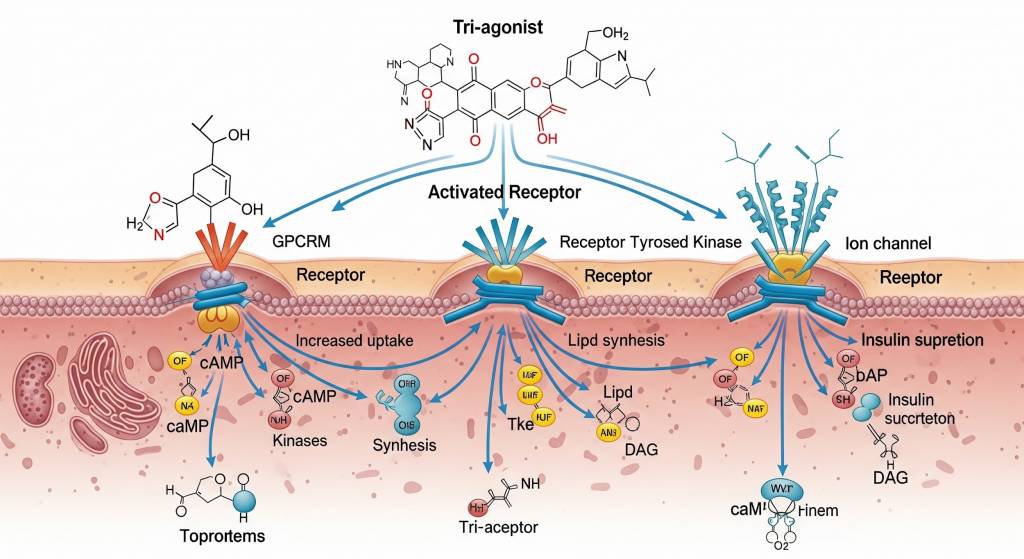
A tri-agonist is a single signaling molecule designed to activate three distinct biological receptors simultaneously. In biological and peptide research, tri-agonists are studied for their ability to coordinate multiple signaling pathways at once, particularly in complex systems such as metabolism, appetite regulation, and energy balance.
Tri-agonist signaling represents an evolution beyond single-receptor and dual-receptor agonists, allowing researchers to explore integrated, system-level biological responses.
⚠️ Research Disclaimer:
This content is provided strictly for educational and research purposes. No information on this page constitutes medical advice, dosing guidance, or instructions for human or animal use.
Research Context
In metabolic and endocrine research, tri-agonists are examined to understand:- Coordinated activation of multiple receptor systems
- Crosstalk between appetite, energy expenditure, and metabolic pathways
- Synergistic signaling effects across tissues
- Central and peripheral signal integration
- System-wide regulation of metabolic signaling
Tri-Agonists in Metabolic Signaling Research
Tri-agonists are most commonly discussed in metabolic and appetite regulation research, where signaling networks are highly interconnected. Scientific studies investigate how tri-agonists:- Influence satiety and hunger signaling
- Coordinate gut–brain communication
- Regulate energy intake and expenditure
- Integrate incretin, glucagon, and related pathways
Comparison to Single & Dual Agonists
From a research perspective:- Single agonists activate one receptor pathway
- Dual agonists activate two complementary receptors
- Tri-agonists activate three receptors simultaneously
Relevance to Peptide Research
Tri-agonists are highly relevant to peptide research because they:- Represent advanced peptide design strategies
- Illustrate multi-receptor coordination principles
- Provide insight into pathway synergy and signaling integration
- Support research into complex metabolic networks
Related Research Compounds
Tri-agonist signaling is commonly referenced in research involving peptides such as:- Retatrutide – studied for tri-agonist metabolic signaling
- Tirzepatide – examined as a dual agonist for comparison studies
- Semaglutide – researched as a single-pathway agonist benchmark
Related Glossary Terms
- Dual Agonist
- GLP-1 Receptor
- Incretin System
- Appetite Regulation Signaling
- Receptor Agonist