Thymic Peptides
Thymic peptides are a group of biologically active peptides produced by the thymus gland that play a central role in immune system development, regulation, and coordination. In biological and immunology research, thymic peptides are studied for their involvement in T-cell maturation, immune signaling balance, and age-related immune changes.
These peptides act as immune signaling modulators, influencing how immune cells differentiate, communicate, and respond to environmental cues.
⚠️ Research Disclaimer:
This content is provided strictly for educational and research purposes. No information on this page constitutes medical advice, dosing guidance, or instructions for human or animal use.
Research Context
In immunology and aging research, thymic peptides are examined to understand:- Development and maturation of T lymphocytes
- Regulation of immune signaling pathways
- Coordination between innate and adaptive immunity
- Age-associated decline in thymic function
- Immune system remodeling over the lifespan
Role of the Thymus in Immune Signaling
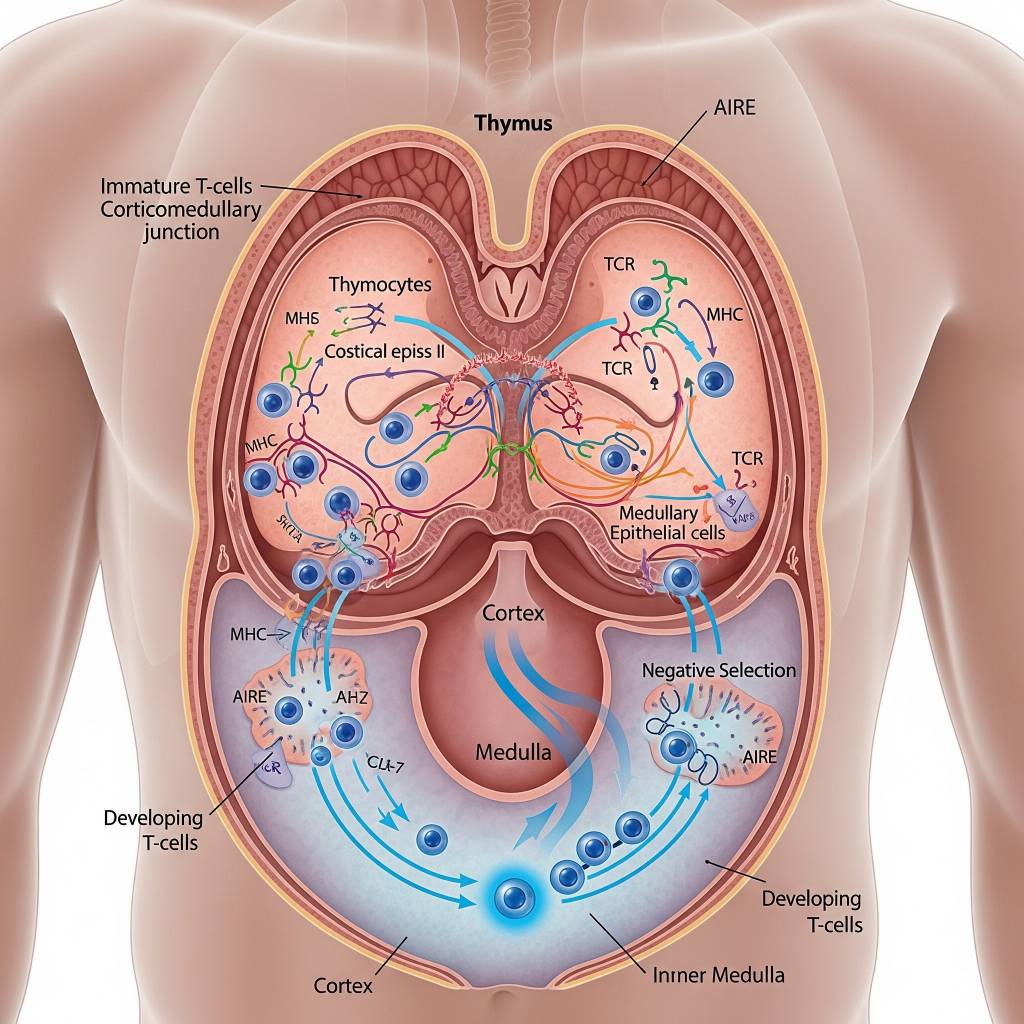
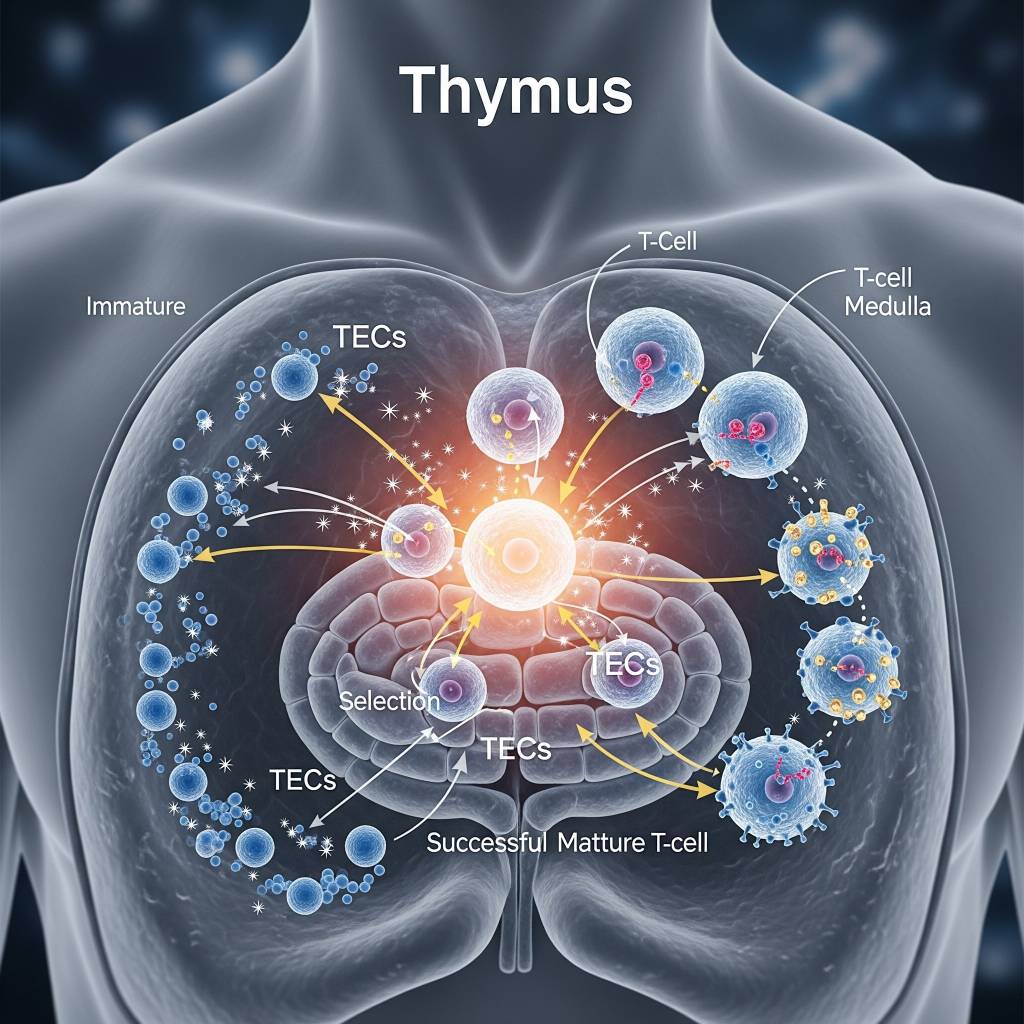
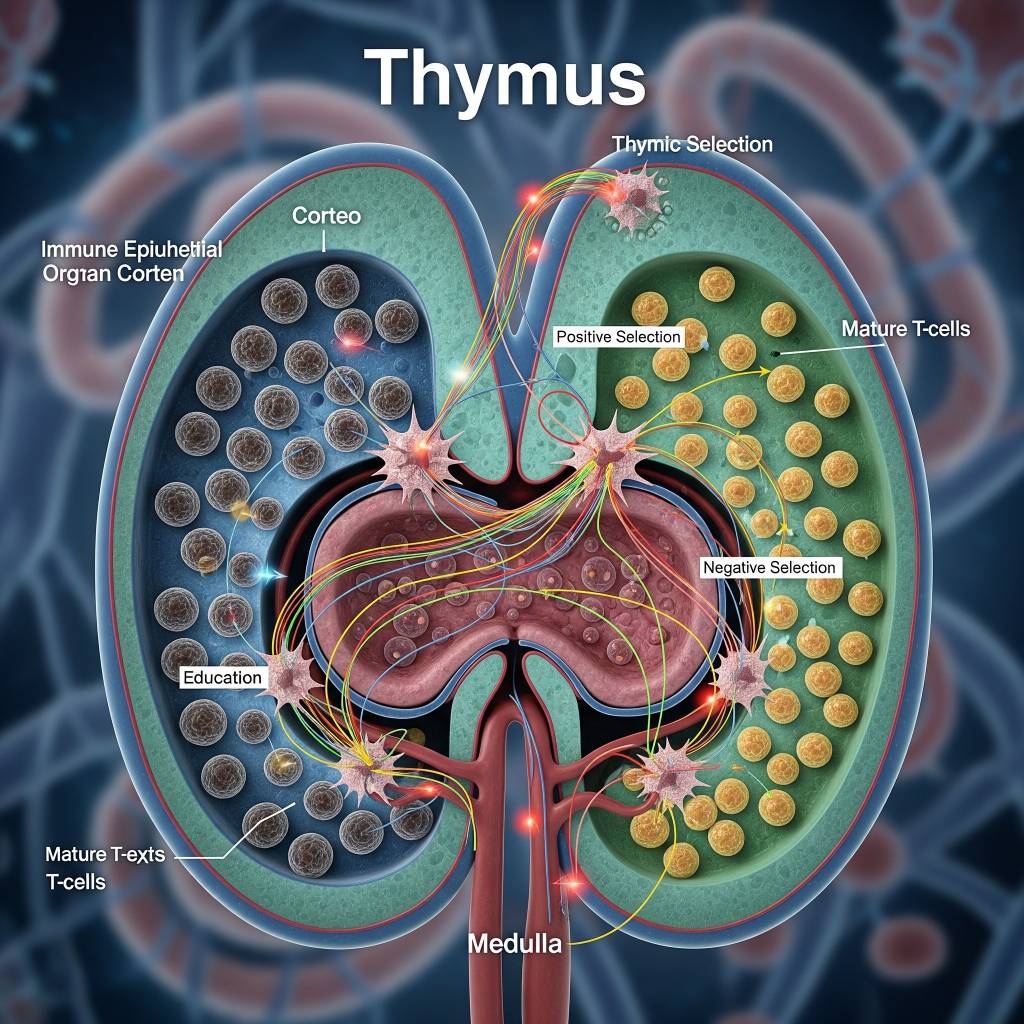
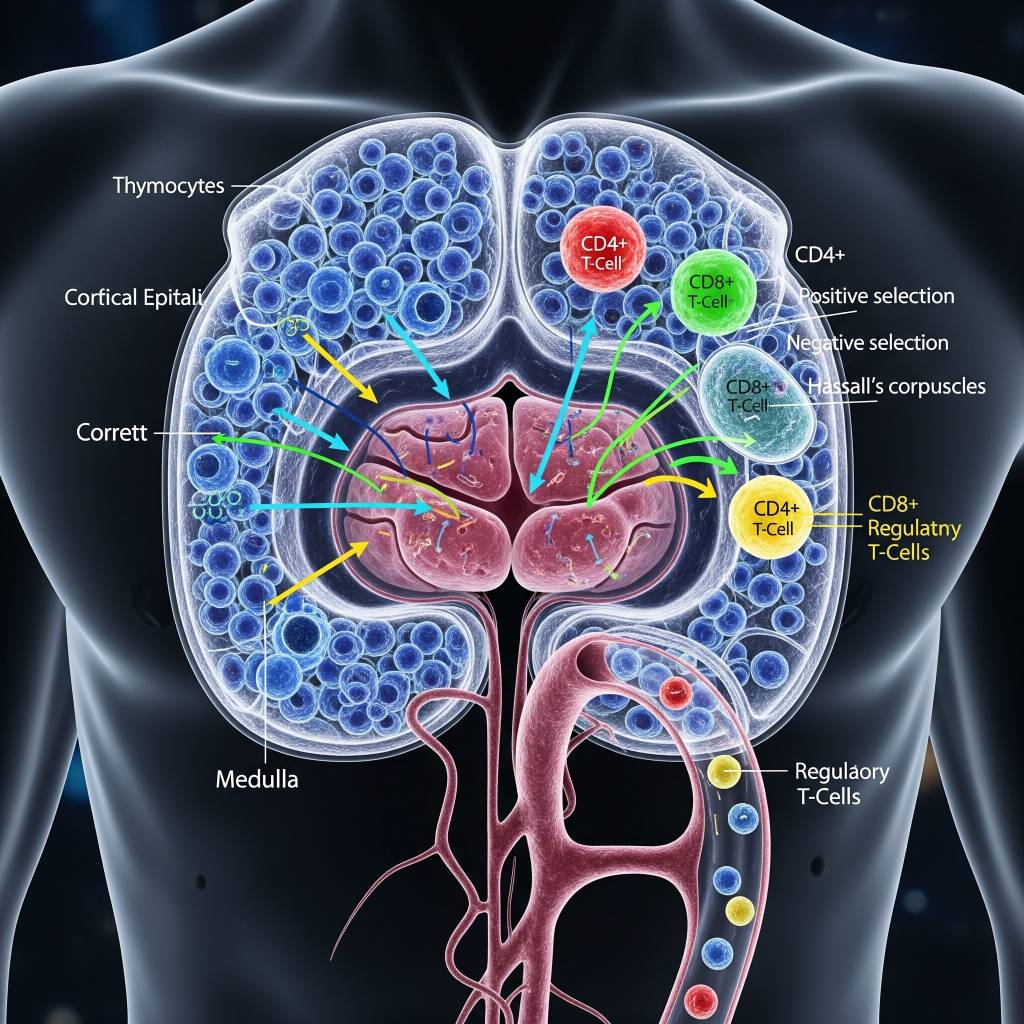
From a research perspective, the thymus functions as a central immune education organ. Thymic peptides contribute to:- Selection and maturation of functional immune cells
- Establishment of immune tolerance
- Regulation of immune responsiveness
- Maintenance of immune system balance
Thymic Peptides and Immunosenescence
Thymic peptides are closely linked to immunosenescence research. Scientific studies investigate how:- Thymic activity declines with age
- Reduced thymic peptide signaling affects immune diversity
- Immune responsiveness changes over time
- Thymic signaling influences long-term immune resilience
Relevance to Peptide Research
Thymic peptides are highly relevant to peptide research because they:- Serve as models for immune-specific peptide signaling
- Illustrate how peptides regulate immune development and coordination
- Provide insight into immune aging and signaling decline
- Bridge immunity, inflammation, and longevity research
Related Research Compounds
Thymic peptide signaling is commonly referenced in research involving peptides such as:- Thymalin – studied for thymic signaling and immune regulation
- Thymogen – examined in immune gene expression research
- Thymosin Alpha-1 – researched in immune coordination contexts
- LL-37 – studied for innate immune and host defense signaling
Related Glossary Terms
- Innate Immunity
- Adaptive Immunity
- Immunosenescence
- Host Defense Peptides
- Cytokine Signaling