Telomeres
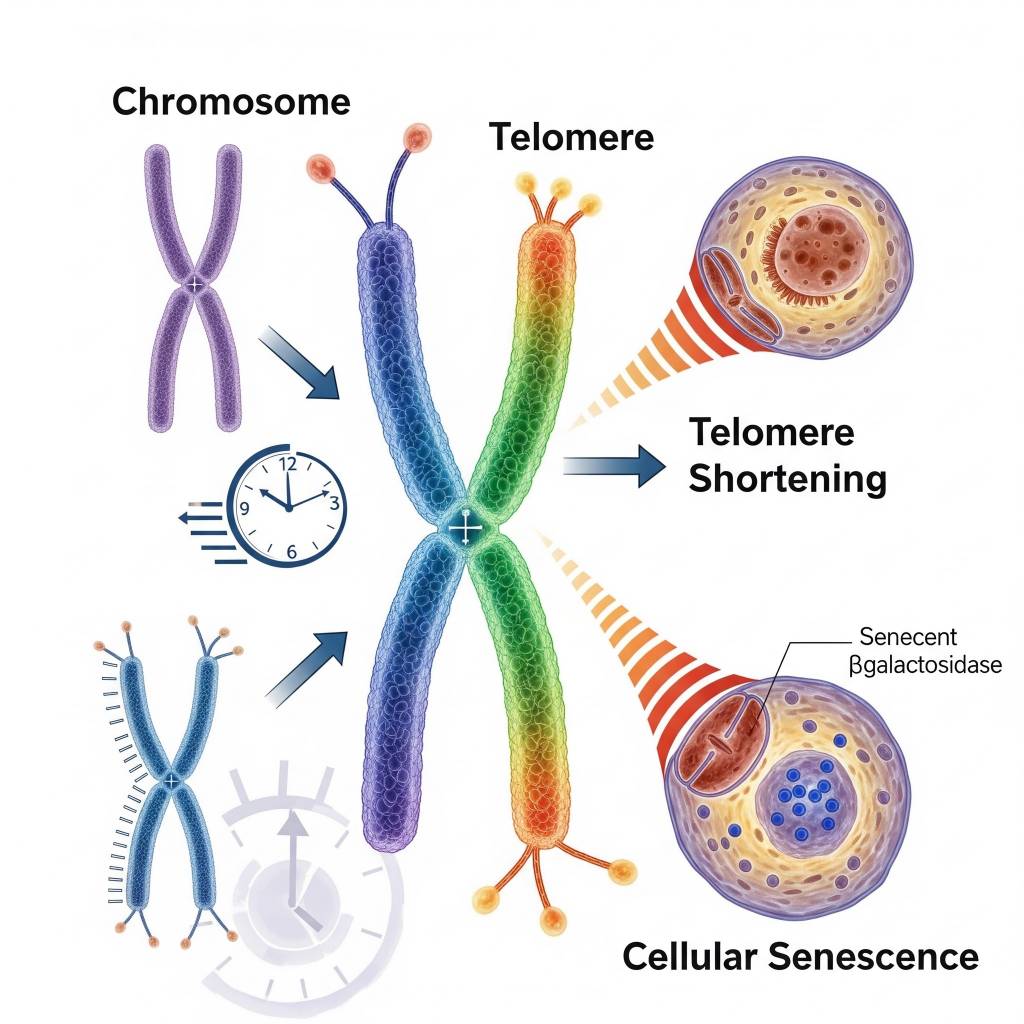
Telomeres are repetitive nucleotide sequences located at the ends of linear chromosomes that serve as protective caps, preserving genomic stability during cell division. In biological research, telomeres are studied for their critical role in chromosome integrity, cellular replication limits, and aging-related processes.
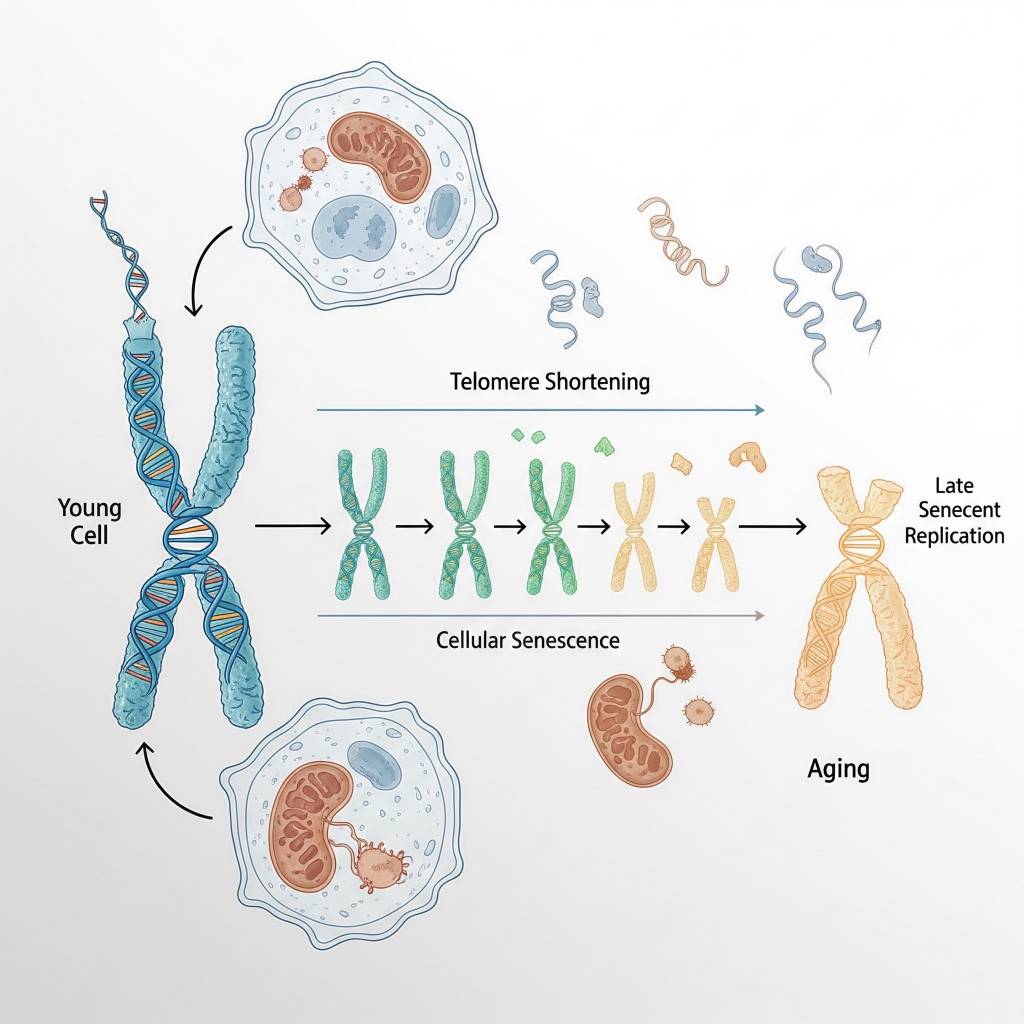
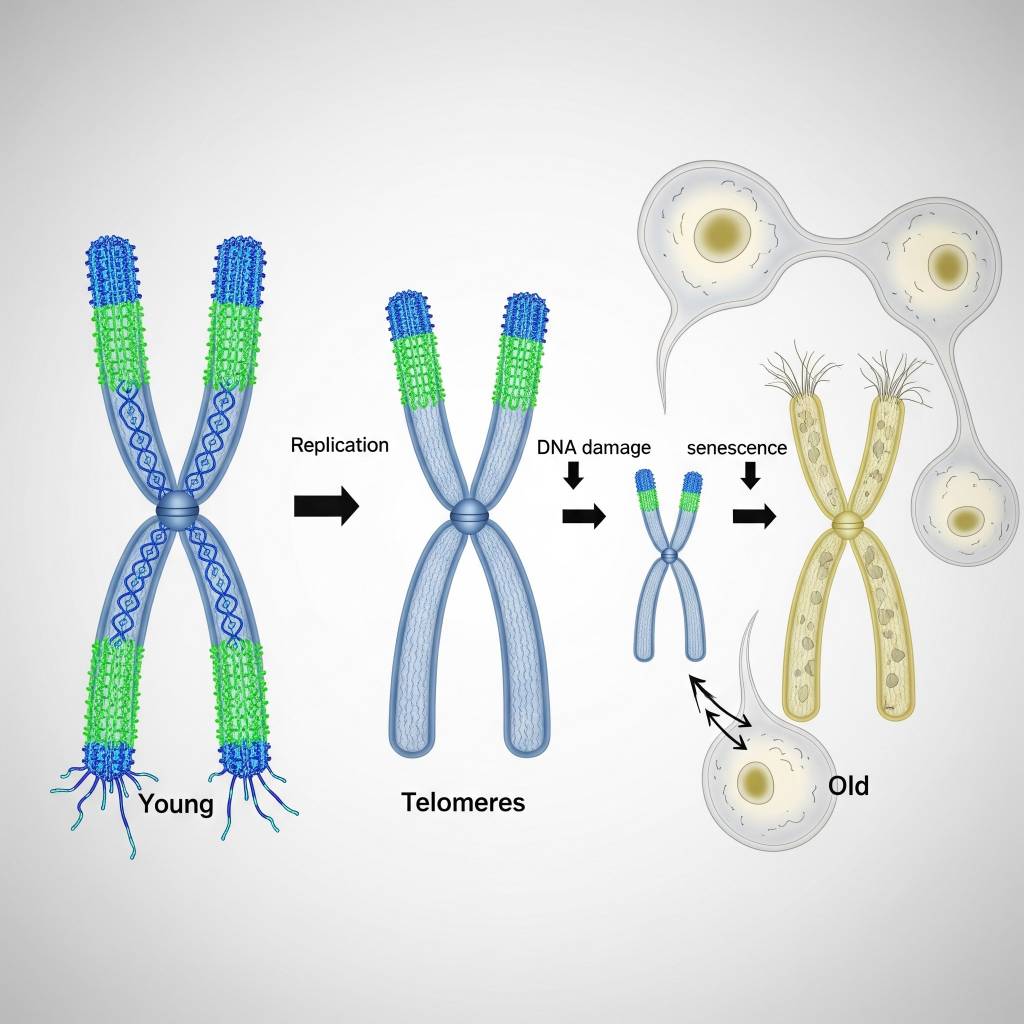
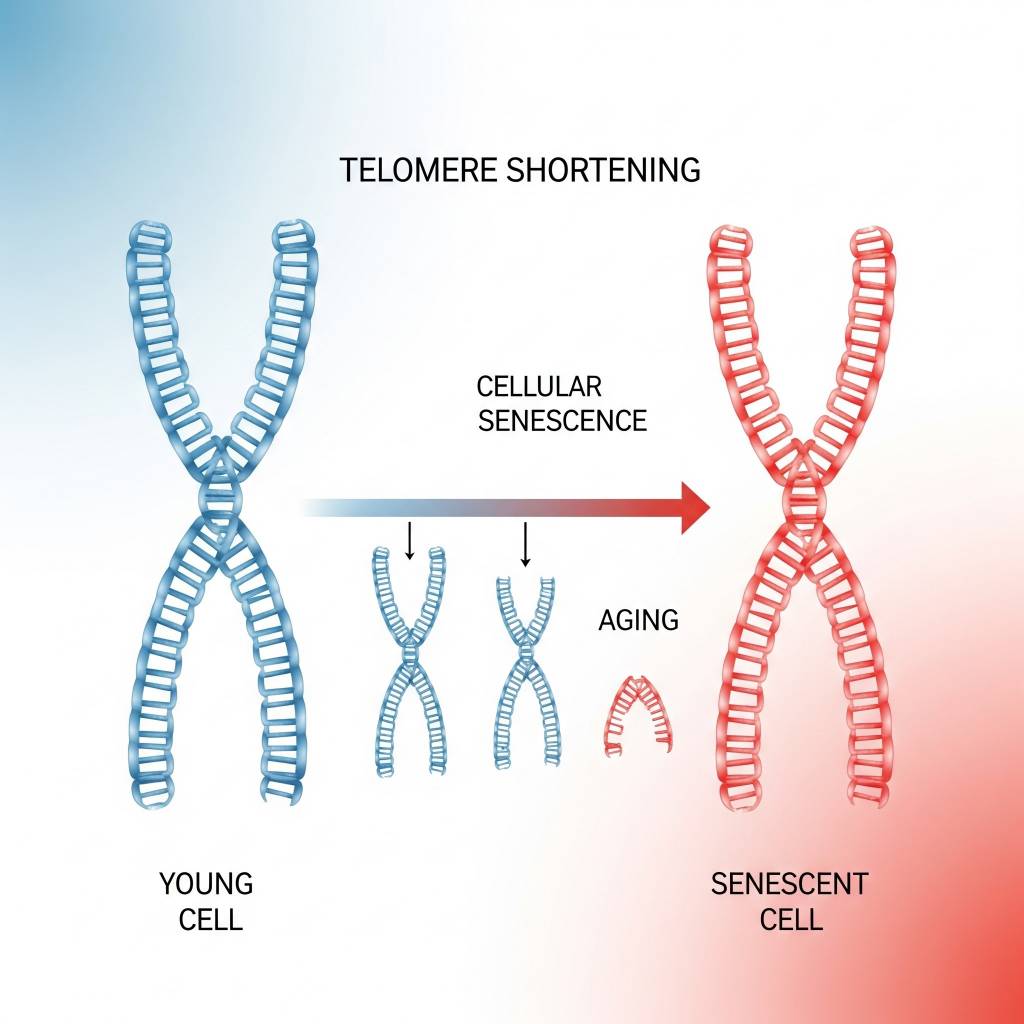
Each time a cell divides, telomeres gradually shorten, making them a central focus in research on cellular lifespan and senescence.
⚠️ Research Disclaimer:
This content is provided strictly for educational and research purposes. No information on this page constitutes medical advice, dosing guidance, or instructions for human or animal use.
Research Context
In molecular biology and aging research, telomeres are examined to understand:- How chromosomes are protected during DNA replication
- Mechanisms limiting cellular division capacity
- The relationship between telomere length and cellular aging
- Genomic stability and DNA damage prevention
- Differences in telomere dynamics across cell types
Telomeres and Cellular Aging
Telomeres are a cornerstone concept in cellular aging research. Scientific studies investigate how:- Progressive telomere shortening contributes to replicative senescence
- Critically short telomeres trigger DNA damage responses
- Telomere attrition influences tissue renewal capacity
- Telomere dynamics interact with oxidative and metabolic stress
Telomeres and Genomic Stability
From a research perspective, telomeres play a protective role by:- Preventing chromosome end-to-end fusion
- Distinguishing natural chromosome ends from DNA breaks
- Maintaining structural integrity during cell division
- Supporting orderly DNA repair processes
Relevance to Peptide Research
Telomeres are highly relevant to peptide research because certain peptides are studied for their roles in:- Aging-related signaling pathways
- Cellular stress and repair mechanisms
- Regulation of gene expression linked to longevity
- Interaction with senescence-associated processes
Related Research Compounds
Telomeres are commonly referenced in research involving peptides such as:- Epitalon – studied in telomere-associated aging research
- FOXO4-DRI – examined in cellular senescence and transcriptional regulation studies
- Humanin – researched for cellular stress-response signaling
- SS-31 (Elamipretide) – studied in mitochondrial and aging-related cellular resilience research
Related Glossary Terms
- Telomerase Activity
- Cellular Senescence
- FOXO Transcription Factors
- Oxidative Stress
- Mitochondrial-Derived Peptides