Synthetic Peptide
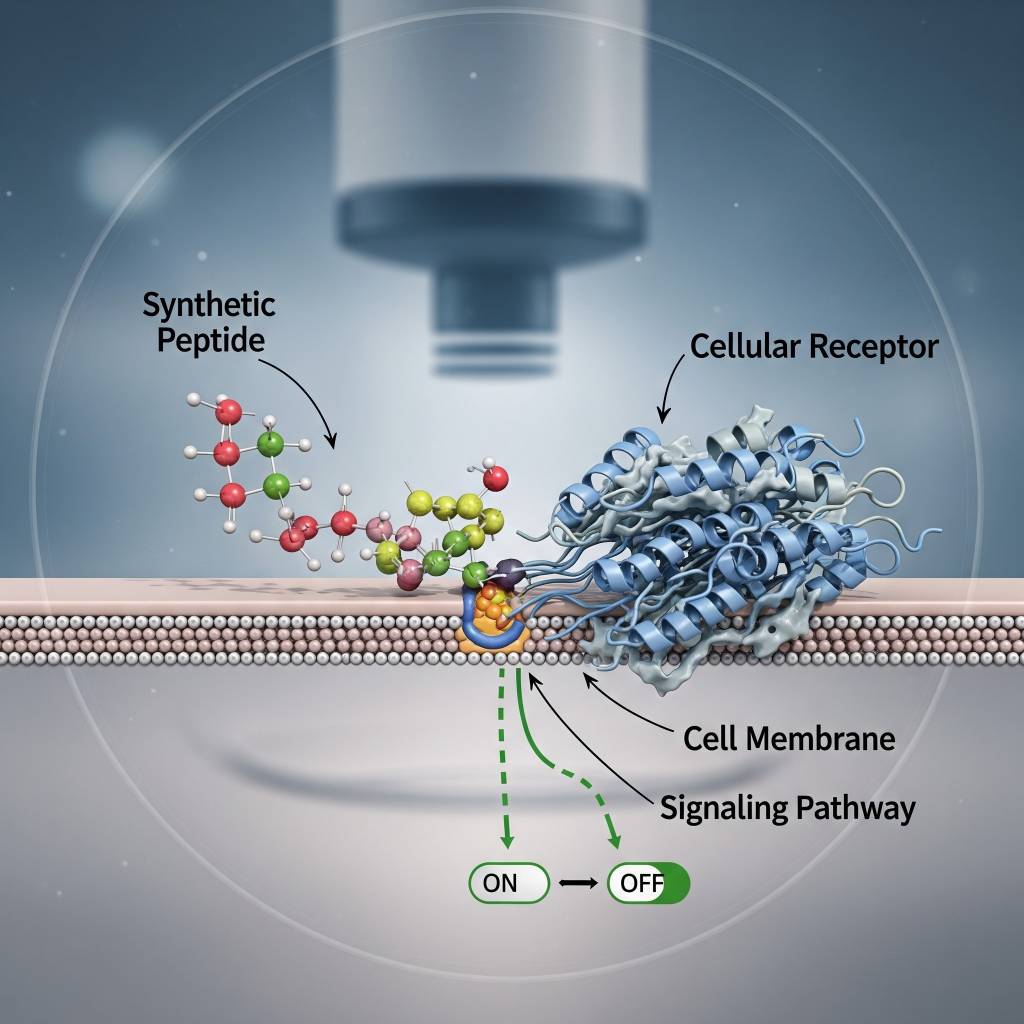
A synthetic peptide is a laboratory-produced chain of amino acids designed to replicate, modify, or study the biological behavior of naturally occurring peptides. In scientific and peptide research, synthetic peptides are used to investigate cellular signaling, receptor interactions, metabolic pathways, immune responses, and aging-related mechanisms under controlled experimental conditions.
Unlike peptides produced endogenously within living organisms, synthetic peptides are created through chemical synthesis techniques that allow for precise control over sequence, length, purity, and structural modifications.
⚠️ Research Disclaimer:
This content is provided strictly for educational and research purposes. No information on this page constitutes medical advice, dosing guidance, or instructions for human or animal use.
Research Context
In molecular biology and biomedical research, synthetic peptides are studied to understand:- Specific receptor–ligand interactions
- Structure–function relationships in peptide signaling
- Pathway-level biological effects
- Mechanisms of endocrine, immune, and metabolic regulation
- Cellular responses to targeted molecular signals
How Synthetic Peptides Are Used in Research
From a research perspective, synthetic peptides are commonly used to:- Mimic endogenous peptide signals
- Enhance or modify natural signaling pathways
- Probe receptor specificity and selectivity
- Study dose-dependent signaling effects
- Investigate pathway interactions without whole-protein complexity



Synthetic Peptides vs Naturally Occurring Peptides
In research literature, synthetic peptides are distinguished from naturally occurring peptides in several ways:- Synthetic peptides are produced via controlled chemical synthesis
- Natural peptides are generated through biological expression systems
- Synthetic peptides allow sequence optimization and modification
- Natural peptides reflect physiological production and regulation
Relevance to Peptide Research
Synthetic peptides are foundational to peptide research because they:- Enable precise study of signaling pathways
- Allow controlled exploration of receptor activation or inhibition
- Serve as standardized research tools across laboratories
- Support investigation of complex biological systems through modular design
Related Research Compounds
Most compounds discussed on this site fall under the category of synthetic peptides, including:- Semaglutide – studied in metabolic and incretin signaling research
- CJC-1295 – researched for neuroendocrine growth hormone signaling
- Ipamorelin – examined for ghrelin receptor–mediated effects
- LL-37 – studied in immune and host defense signaling
- FOXO4-DRI – researched in transcription factor and senescence pathways
Related Glossary Terms
- Peptide
- Signal Transduction
- Receptor Agonist
- Protein–Protein Interaction
- Neuroendocrine Signaling