Signal Transduction
A dual agonist refers to a single signaling molecule or compound that activates two distinct biological receptors or signaling pathways simultaneously. In biological and peptide research, dual agonists are studied to understand how coordinated receptor activation influences complex physiological processes, such as metabolic regulation, neuroendocrine signaling, or immune coordination.
Unlike single-pathway agonists, dual agonists allow researchers to investigate integrated signaling effects that more closely reflect how biological systems operate in interconnected networks.
⚠️ Research Disclaimer:
This content is provided strictly for educational and research purposes. No information on this page constitutes medical advice, dosing guidance, or instructions for human or animal use.
Research Context
In molecular biology, cell biology, and peptide research, signal transduction is examined to understand:
- How receptor activation initiates intracellular signaling
- Coordination of multi-step signaling cascades
- Amplification and modulation of biological signals
- Integration of multiple signals within a single cell
- Regulation of gene expression and cellular function
Researchers study signal transduction to map how information flows from the cell surface to intracellular targets.
Key Components of Signal Transduction
From a research perspective, signal transduction typically involves:
- Ligands (e.g., peptides, hormones, growth factors)
- Cell surface or intracellular receptors
- Second messengers (such as cyclic nucleotides or ions)
- Kinases and signaling proteins
- Transcription factors that influence gene expression
These components function in a coordinated sequence to produce specific and context-dependent cellular responses.
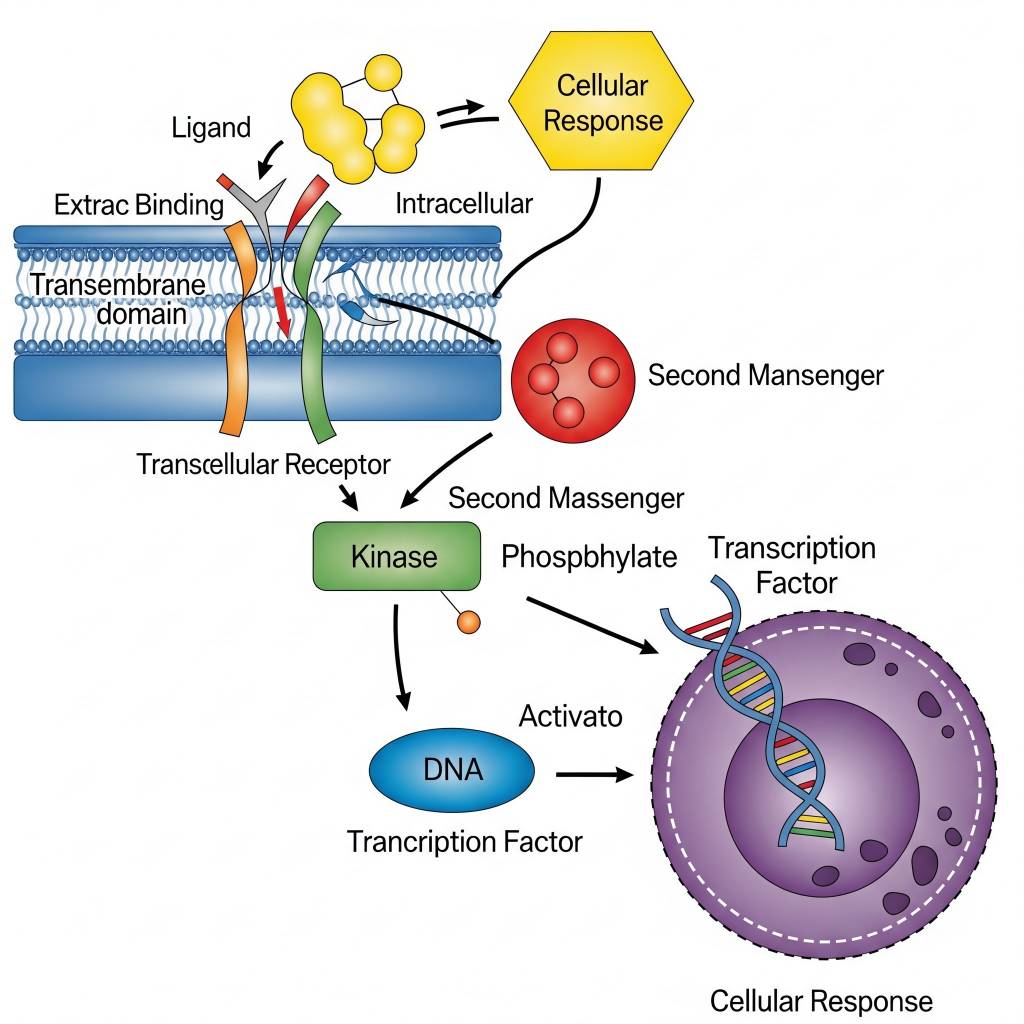
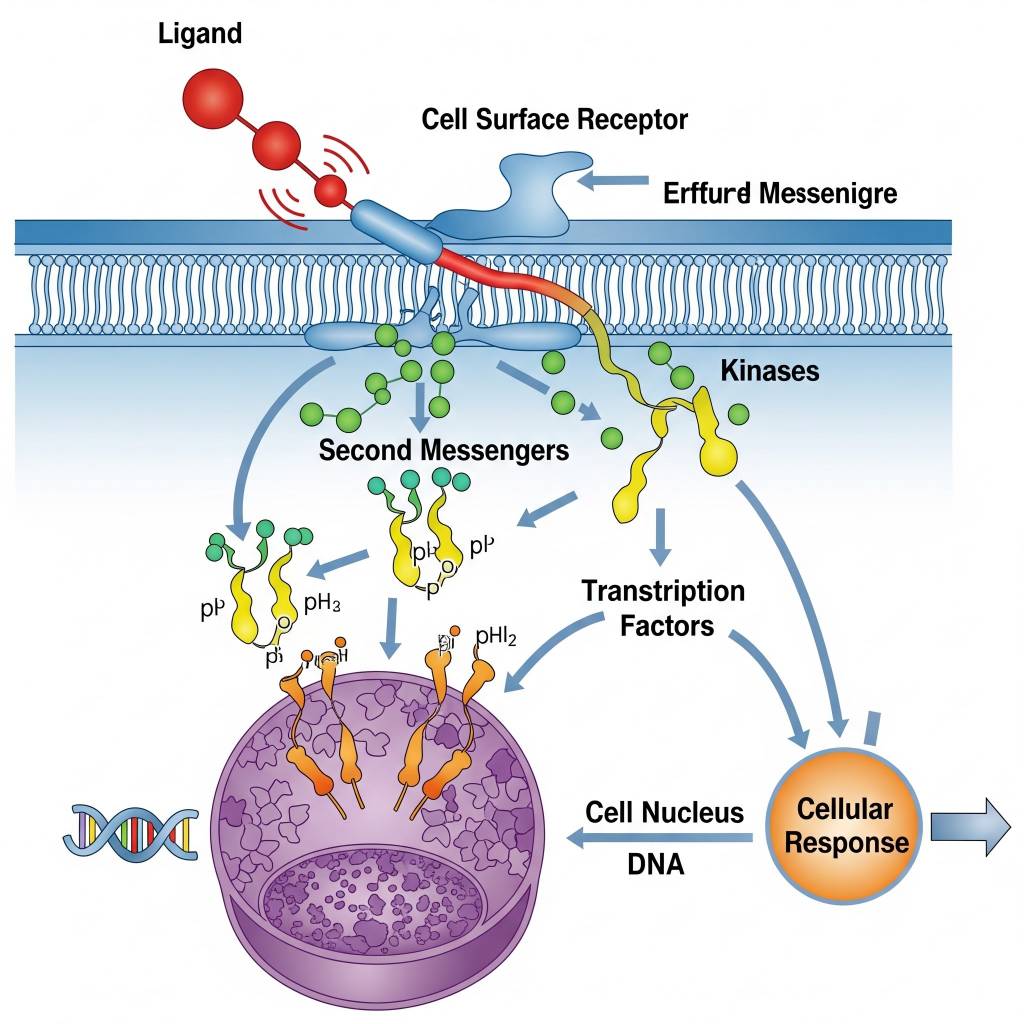
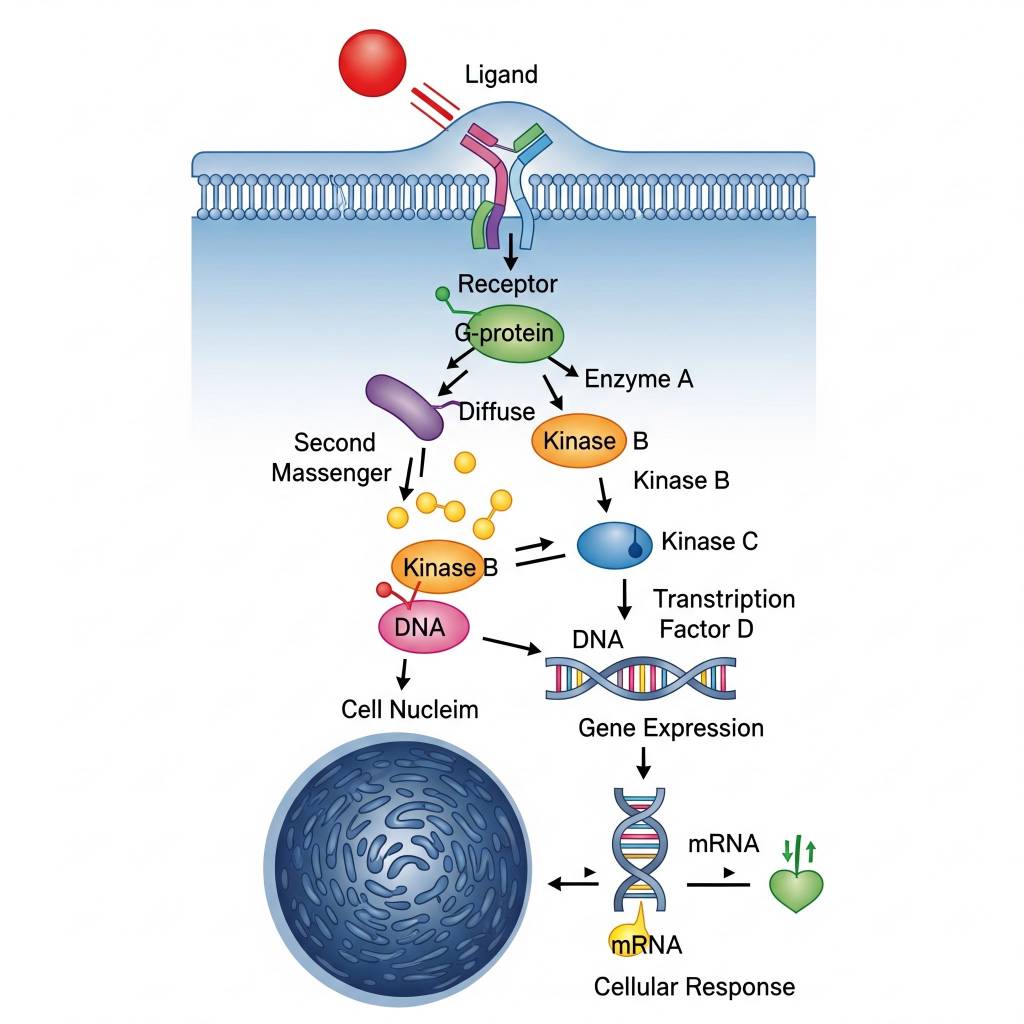
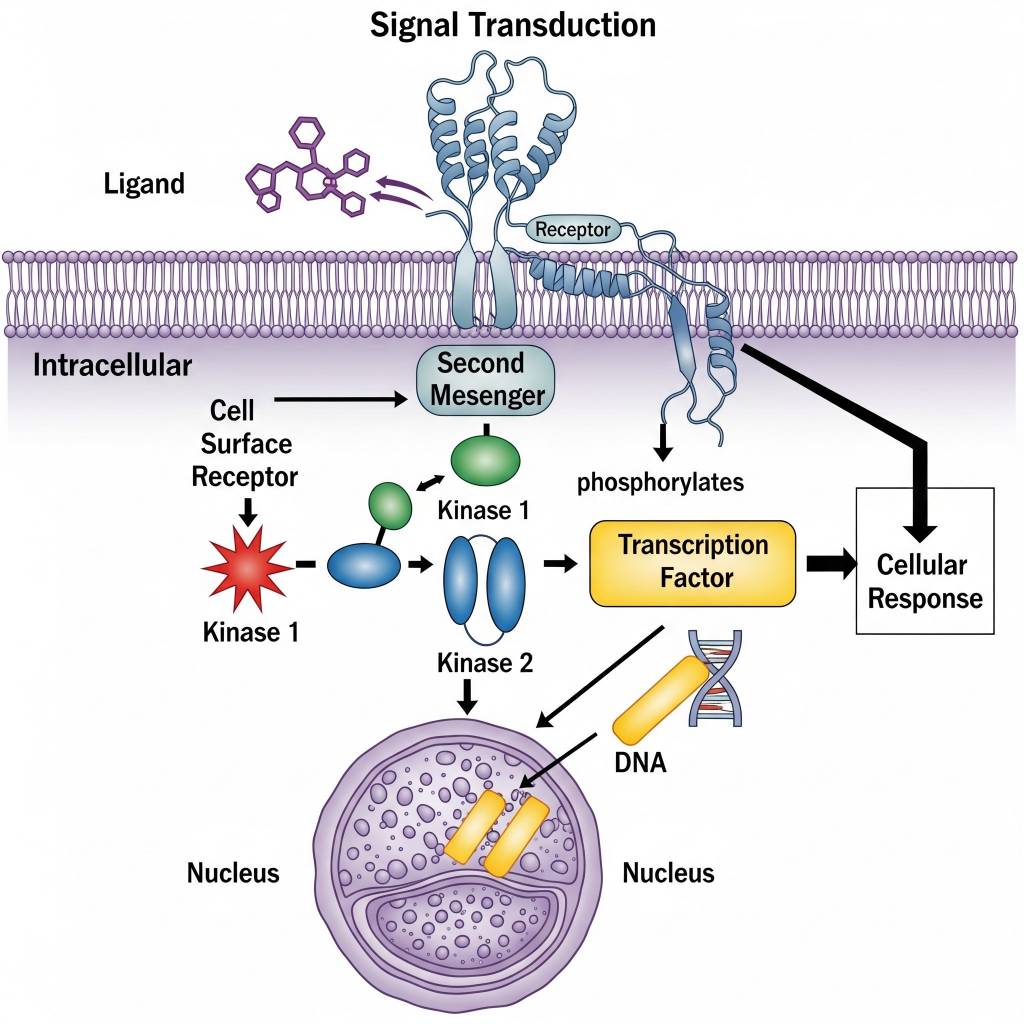
Signal Transduction and Receptor Signaling
Signal transduction begins when a ligand binds to its receptor, leading to:
- Receptor conformational changes
- Activation or inhibition of downstream proteins
- Cascading signaling events
- Regulation of cellular processes such as metabolism, growth, or stress response
Both receptor agonists and antagonists are studied extensively to understand how signal transduction pathways are activated or suppressed.
Signal Transduction in Endocrine & Peptide Research
Signal transduction is foundational to endocrine and peptide research because peptides often act as primary signaling molecules. Scientific studies investigate how peptide-mediated signal transduction:
- Regulates hormone release and feedback loops
- Coordinates neuroendocrine communication
- Influences immune and inflammatory signaling
- Modulates metabolic and mitochondrial pathways
Understanding signal transduction allows researchers to interpret how small molecular signals produce system-wide biological effects.
Relevance to Peptide Research
Signal transduction is central to peptide research because peptides:
- Serve as ligands that initiate signaling cascades
- Demonstrate receptor-specific signaling effects
- Enable targeted investigation of biological pathways
- Provide insight into pathway-level regulation rather than isolated effects
Nearly all peptide-based research is ultimately concerned with how signals are transmitted, amplified, and regulated within cells.
Related Research Compounds
Signal transduction is referenced across many peptide research areas, including studies involving:
- Semaglutide – GLP-1 receptor signal transduction in metabolic pathways
- CJC-1295 – GHRH-mediated neuroendocrine signaling cascades
- Ipamorelin – ghrelin receptor signal transduction research
- LL-37 – immune-related signaling pathway modulation
- FOXO4-DRI – transcription factor-related signaling interactions
Related Glossary Terms
- Receptor Agonist
- Receptor Antagonist
- Protein–Protein Interaction
- Neuroendocrine Signaling
- FOXO Transcription Factors
Educational Disclaimer
This definition is provided for educational and informational purposes only and reflects how signal transduction is discussed in scientific and research contexts. It does not constitute medical, clinical, or therapeutic guidance.