Receptor Antagonist
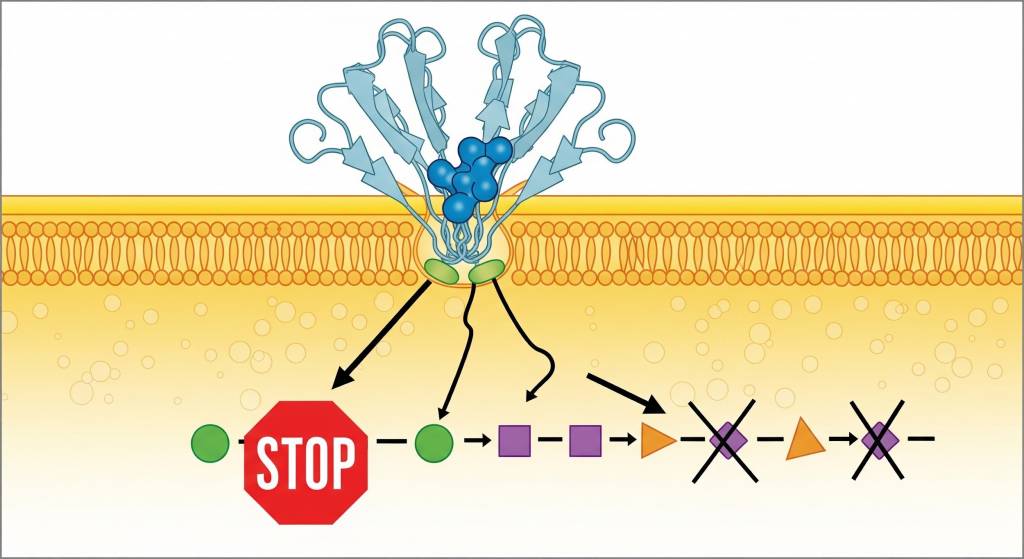
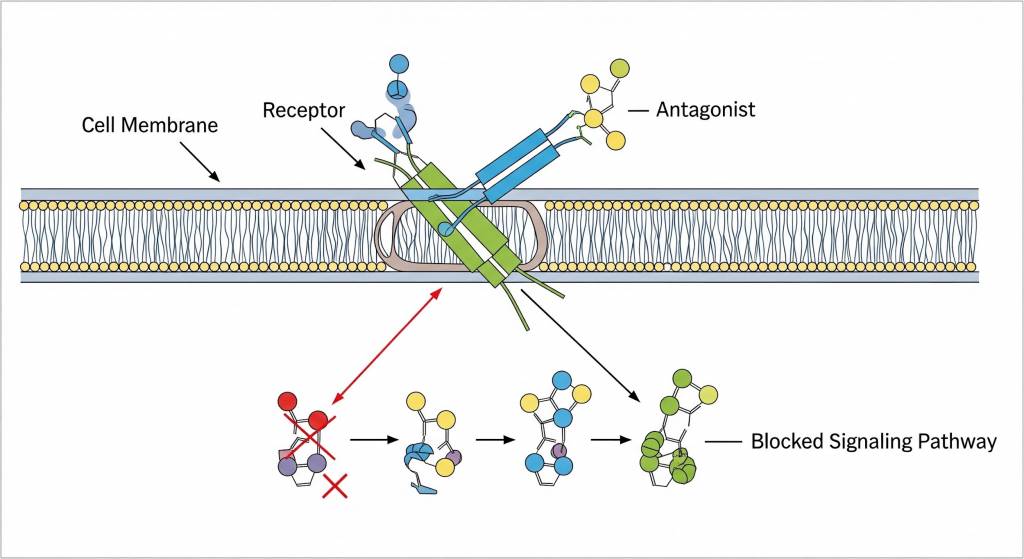
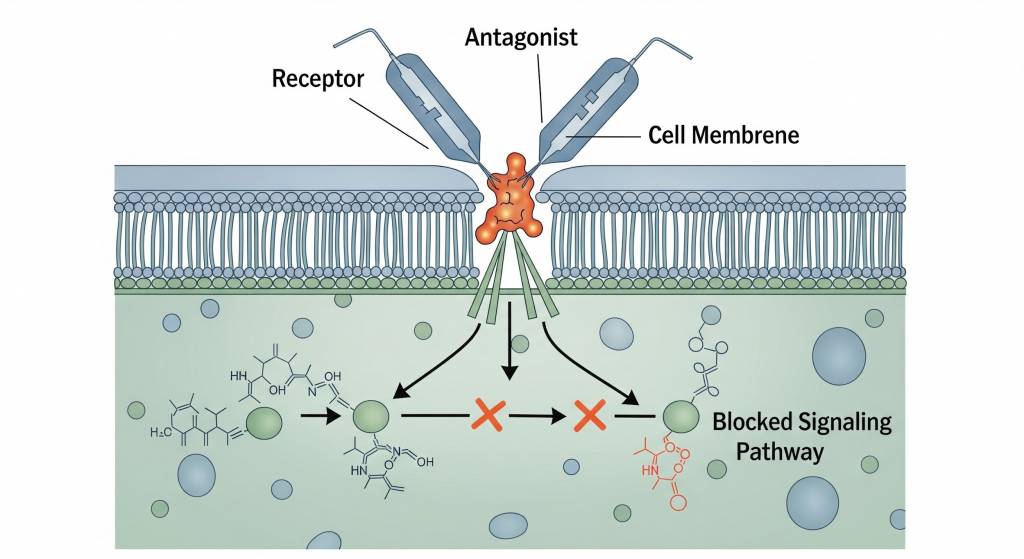
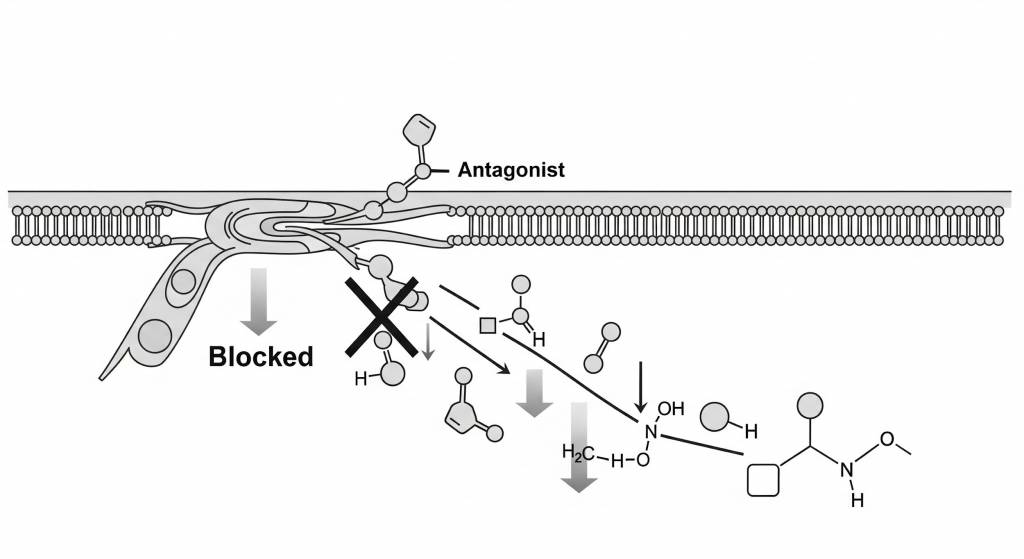
A receptor antagonist is a molecule that binds to a specific receptor without activating it, thereby blocking or reducing the receptor’s ability to respond to agonists. In biological and peptide research, receptor antagonists are studied to understand signal inhibition, pathway regulation, and control of biological responses.
Antagonists play a critical role in research by allowing scientists to isolate signaling pathways, assess receptor function, and understand how biological systems regulate signal intensity and duration.
⚠️ Research Disclaimer:
This content is provided strictly for educational and research purposes. No information on this page constitutes medical advice, dosing guidance, or instructions for human or animal use.
Research Context
In molecular biology, pharmacology, and peptide research, receptor antagonists are examined to understand:- How receptor signaling can be selectively inhibited
- Competitive vs non-competitive binding dynamics
- Regulation of overstimulated signaling pathways
- Feedback control within endocrine and neuroendocrine systems
- Signal balance within complex biological networks
Types of Receptor Antagonists Studied
From a research perspective, receptor antagonists may be classified as:- Competitive antagonists – compete with agonists for the same receptor binding site
- Non-competitive antagonists – bind to alternative receptor sites and inhibit activation
- Inverse agonists – reduce baseline (constitutive) receptor activity
- Selective antagonists – target specific receptor subtypes
Receptor Antagonists in Cell Signaling Research
Receptor antagonists are central to signal transduction research. Scientific studies investigate how antagonists:- Prevent downstream signaling cascade activation
- Alter feedback loop dynamics
- Modulate receptor sensitivity and expression
- Influence gene transcription and cellular behavior
Relevance to Peptide Research
Receptor antagonists are highly relevant to peptide research because they:
- Help define the biological role of peptide ligands
- Allow separation of overlapping signaling pathways
- Provide insight into receptor-specific peptide effects
- Support studies on signaling balance and modulation
Understanding antagonism is critical for interpreting peptide-based signaling research accurately.
Related Research Compounds
Receptor antagonism is commonly referenced in research involving peptides such as:
- Cagrilintide – studied as an amylin receptor antagonist in appetite signaling research
- KPV – examined for modulatory effects in inflammatory signaling pathways
- FOXO4-DRI – studied for interference with transcription factor–protein interactions
- LL-37 – researched for immune signaling modulation contexts
Related Glossary Terms
- Receptor Agonist
- Signal Transduction
- Protein–Protein Interaction
- Neuroendocrine Signaling
- Appetite Regulation Signaling
Educational Disclaimer
This definition is provided for educational and informational purposes only and reflects how receptor antagonists are discussed in scientific and research contexts. It does not constitute medical, clinical, or therapeutic guidance.