Receptor Agonist
A receptor agonist is a molecule that binds to a specific receptor and activates it, triggering a biological response within a cell or tissue. In biological and peptide research, receptor agonists are studied to understand signal initiation, pathway activation, and downstream physiological effects.
Agonists can be endogenous (naturally produced within the body) or synthetic, and their effects depend on receptor type, binding affinity, and signaling context.
⚠️ Research Disclaimer:
This content is provided strictly for educational and research purposes. No information on this page constitutes medical advice, dosing guidance, or instructions for human or animal use.
Research Context
In molecular biology, pharmacology, and peptide research, receptor agonists are examined to understand:- How ligand–receptor binding initiates cellular signaling
- Receptor specificity and selectivity
- Signal amplification and downstream pathway activation
- Differences between partial and full receptor activation
- System-level biological responses to targeted signaling
Types of Receptor Agonists Studied
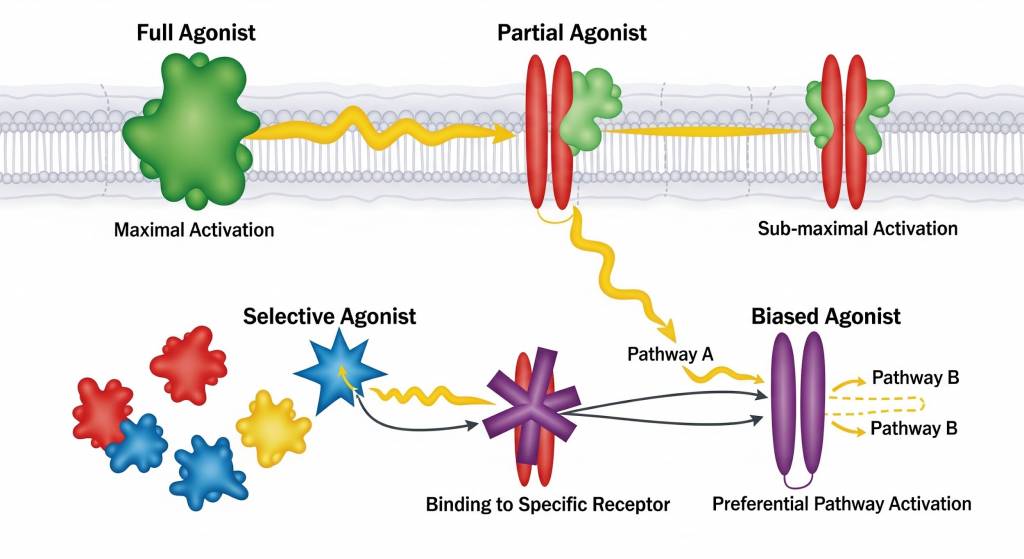
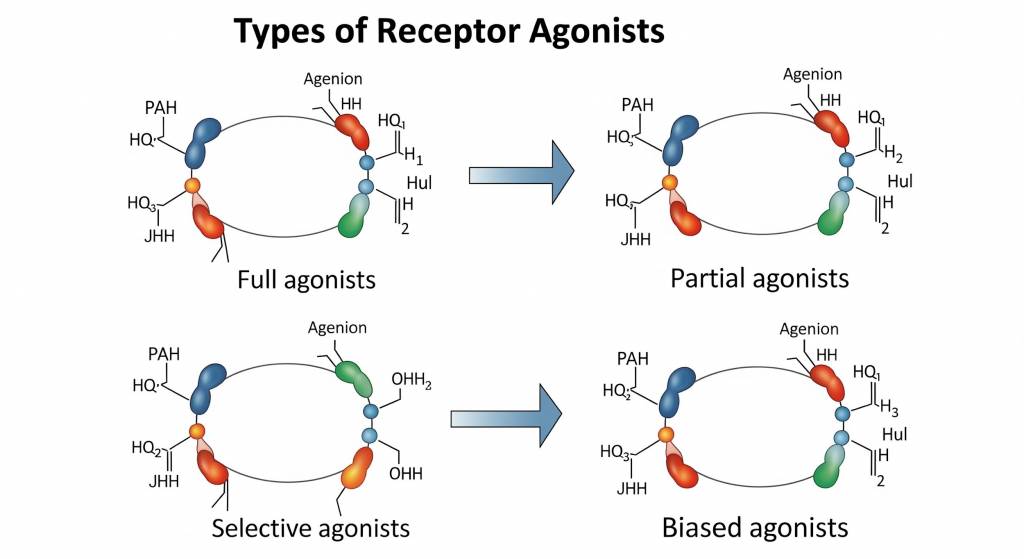
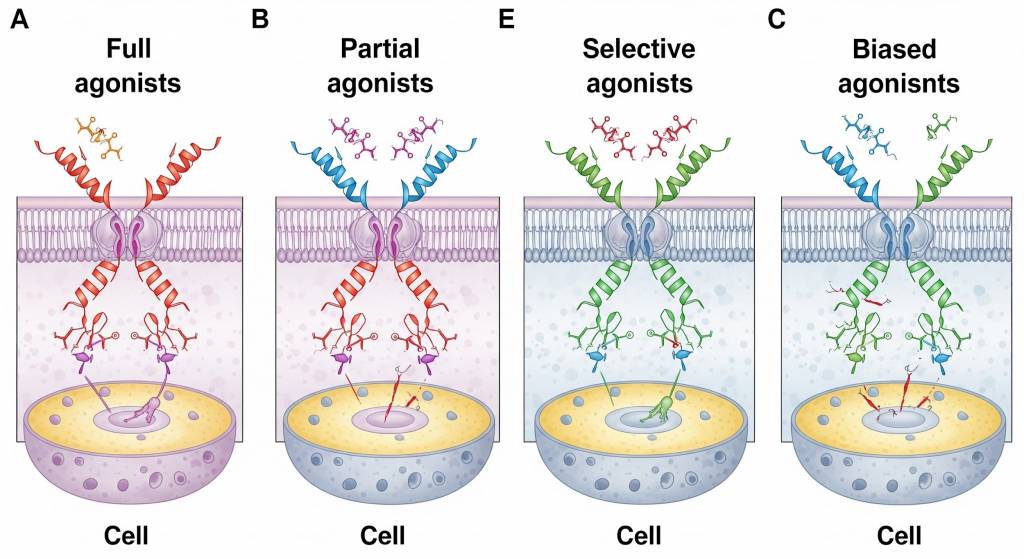
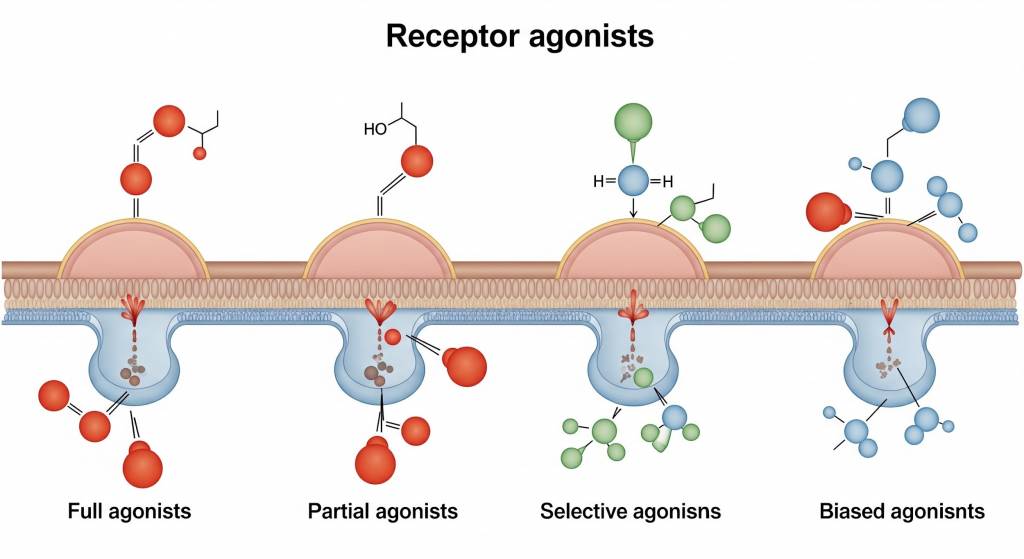
From a research perspective, receptor agonists may be classified as:- Full agonists – produce maximal receptor activation
- Partial agonists – activate receptors to a lesser degree
- Selective agonists – target a specific receptor subtype
- Biased agonists – preferentially activate certain signaling pathways
Receptor Agonists in Cell Signaling Research
Receptor agonists play a central role in signal transduction research. Scientific studies investigate how agonist binding:- Alters receptor conformation
- Activates intracellular second messenger systems
- Modulates gene expression and cellular behavior
- Interacts with feedback and regulatory mechanisms
Relevance to Peptide Research
Receptor agonists are highly relevant to peptide research because many peptides are studied for their ability to:- Act as receptor-specific signaling molecules
- Mimic endogenous ligands
- Modulate neuroendocrine and metabolic pathways
- Influence immune and cellular stress responses
Related Research Compounds
Receptor agonist activity is commonly referenced in research involving peptides such as:- Semaglutide – studied as a GLP-1 receptor agonist in metabolic research
- Tirzepatide – examined for multi-receptor agonist signaling
- Melanotan II – studied for melanocortin receptor agonism
- Ipamorelin – researched for selective ghrelin receptor agonism
Related Glossary Terms
- Receptor Antagonist
- Signal Transduction
- Protein–Protein Interaction
- Neuroendocrine Signaling
- Growth Hormone Secretagogue