Pulsatile Hormone Release
Pulsatile hormone release refers to the rhythmic, intermittent secretion of hormones in discrete bursts rather than a continuous flow. In biological and endocrine research, pulsatility is studied as a fundamental property of hormonal signaling that ensures receptor sensitivity, signaling precision, and proper physiological regulation.
Many hormones—particularly those regulated by the hypothalamic–pituitary axis—are released in pulses, with timing and amplitude playing a critical role in downstream biological effects.
⚠️ Research Disclaimer:
This content is provided strictly for educational and research purposes. No information on this page constitutes medical advice, dosing guidance, or instructions for human or animal use.
Research Context
In endocrine and neurobiology research, pulsatile hormone release is examined to understand:- How hormonal signals are temporally regulated
- The role of pulse frequency and amplitude in signaling outcomes
- Feedback control within neuroendocrine systems
- Coordination between stimulatory and inhibitory signals
- Differences between physiological and dysregulated hormone patterns
Pulsatile Release in the Growth Hormone Axis
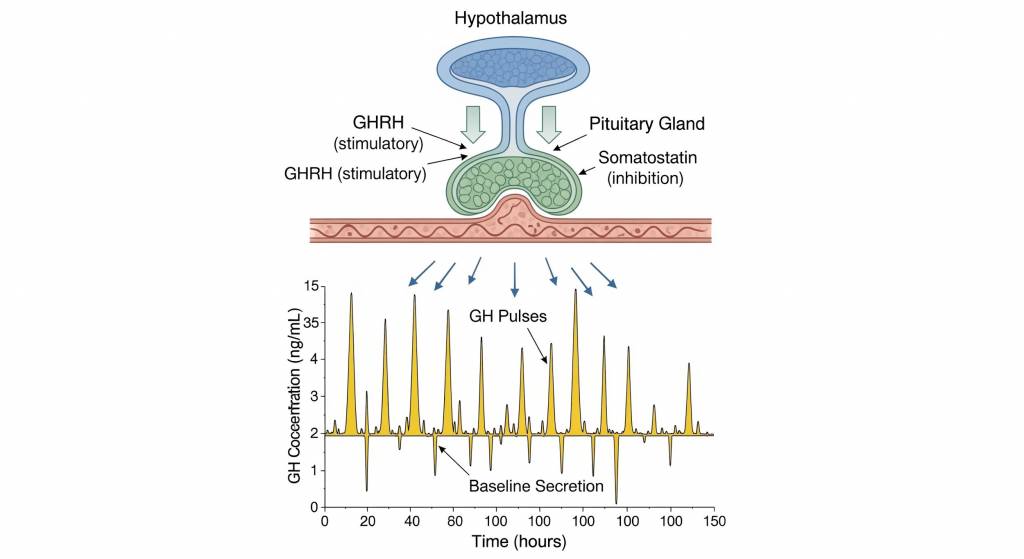
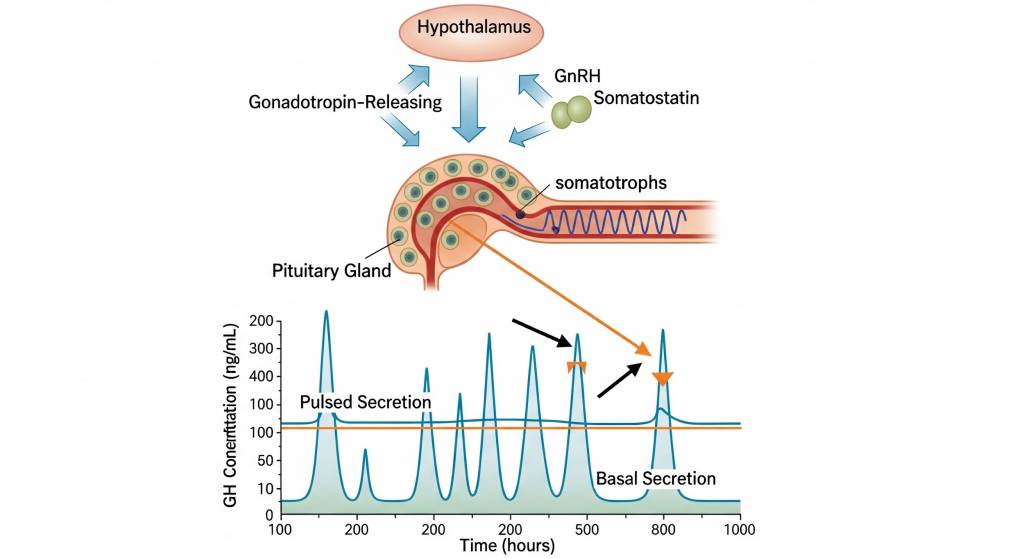
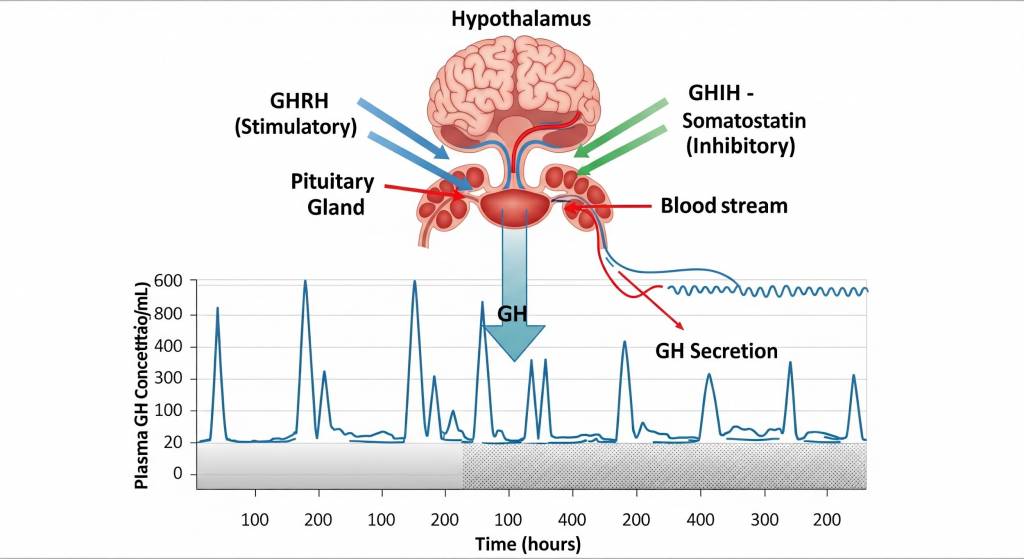
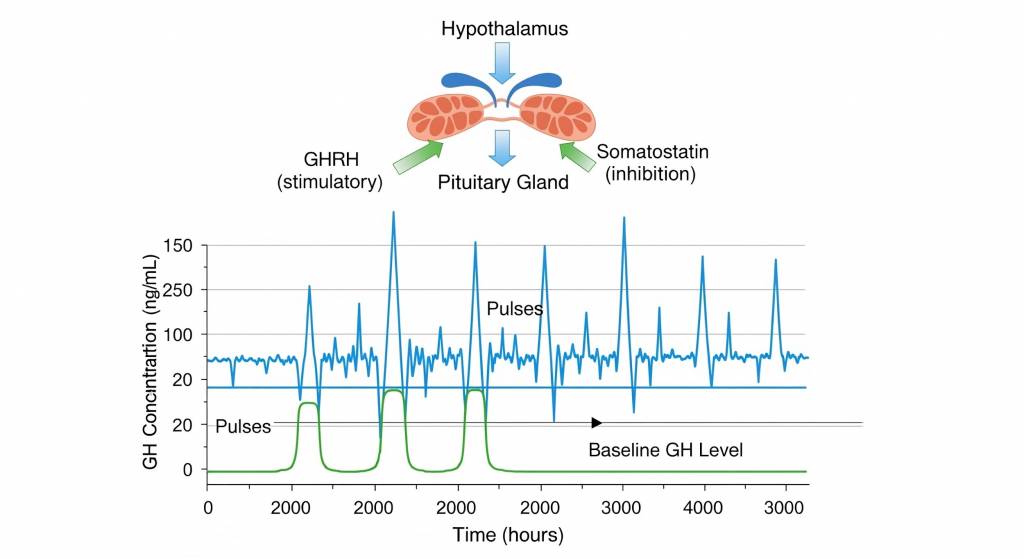
Pulsatile hormone release is especially important in growth hormone (GH) axis research. Scientific studies investigate how:- Growth hormone is secreted in discrete pulses
- Pulse timing is regulated by hypothalamic signals
- Pulsatility preserves receptor responsiveness
- Continuous exposure differs from rhythmic signaling
Mechanisms Regulating Pulsatility
From a research perspective, pulsatile hormone release is regulated by:
- Hypothalamic neuropeptides that stimulate or inhibit release
- Receptor-mediated feedback loops
- Circadian and ultradian rhythms
- Integration of metabolic and neural signals
These mechanisms allow endocrine systems to adapt signaling patterns in response to changing physiological states.
Relevance to Peptide Research
Pulsatile hormone release is highly relevant to peptide research because many peptides are studied for their ability to:
- Influence hormone release timing
- Modulate pulse amplitude or frequency
- Interact with neuroendocrine feedback systems
- Preserve physiological signaling patterns
Understanding pulsatility helps researchers interpret why signal dynamics matter as much as signal strength in peptide-related studies.
Related Research Compounds
Pulsatile hormone release is commonly referenced in research involving peptides such as:
- CJC-1295 – studied in growth hormone pulse modulation research
- Ipamorelin – examined for ghrelin-mediated GH pulsatility
- Tesamorelin – researched for GHRH-related pulse regulation
- GHRP-2 / GHRP-6 – studied for pulse-based GH signaling
Related Glossary Terms
- Growth Hormone Secretagogue
- Ghrelin
- Ghrelin Receptor (GHS-R1a)
- GHRH (Growth Hormone Releasing Hormone)
- Neuroendocrine Signaling
Educational Disclaimer
This definition is provided for educational and informational purposes only and reflects how pulsatile hormone release is discussed in scientific and research contexts. It does not constitute medical, clinical, or therapeutic guidance.