Peptide
A peptide is a short chain of amino acids linked by peptide bonds that functions as a biologically active signaling molecule within living systems. In biological research, peptides are studied for their ability to transmit information between cells, regulate physiological processes, and influence molecular pathways with high specificity.
Peptides are smaller than proteins and often act as regulators rather than structural components, making them especially important in research focused on cell signaling, metabolism, immune regulation, neurobiology, and aging.
⚠️ Research Disclaimer:
This content is provided strictly for educational and research purposes. No information on this page constitutes medical advice, dosing guidance, or instructions for human or animal use.
Research Context
In molecular and cellular research, peptides are examined to understand:- How cells communicate through signaling molecules
- Receptor–ligand interactions and specificity
- Regulation of gene expression and cellular behavior
- Coordination between biological systems
- System-level signaling networks
Peptides vs Proteins (Research Perspective)
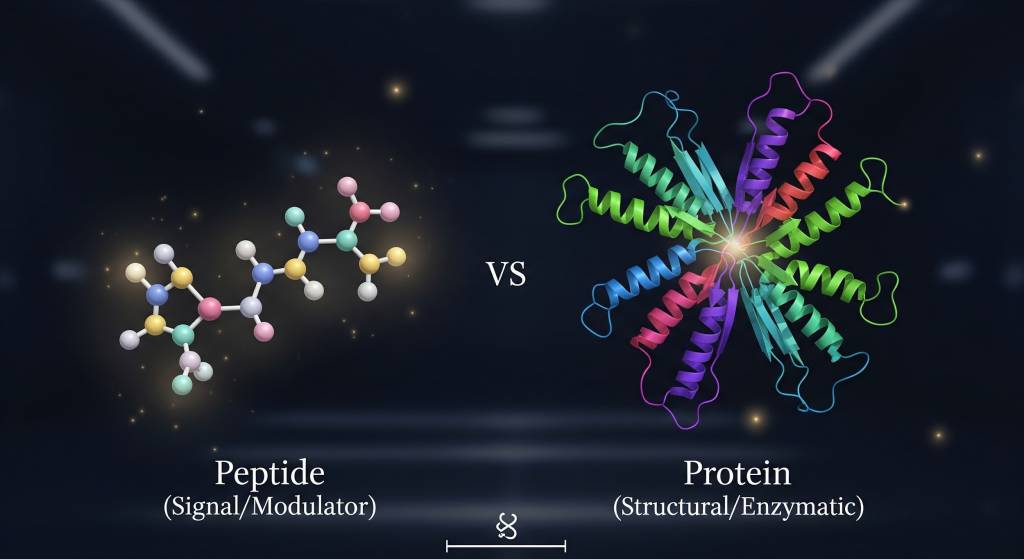
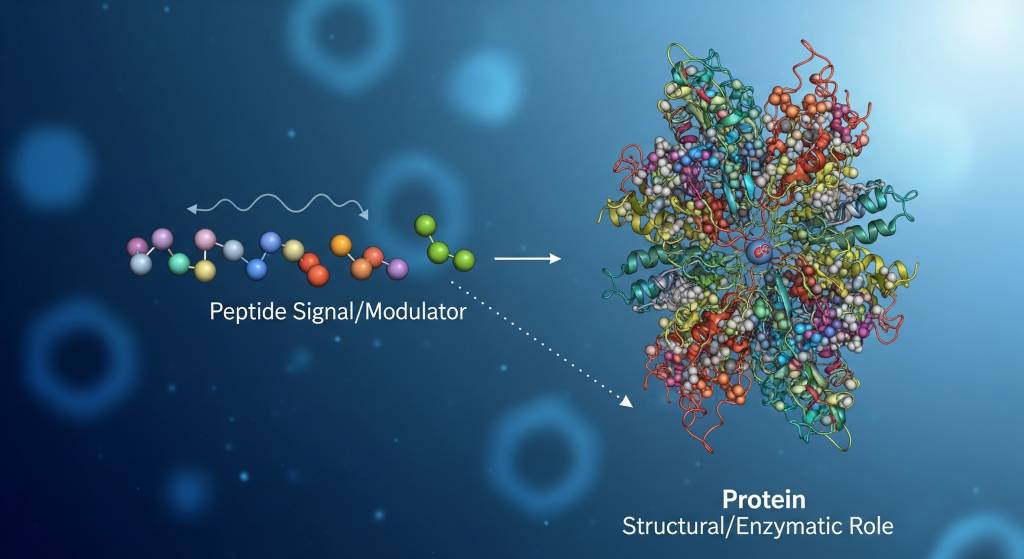
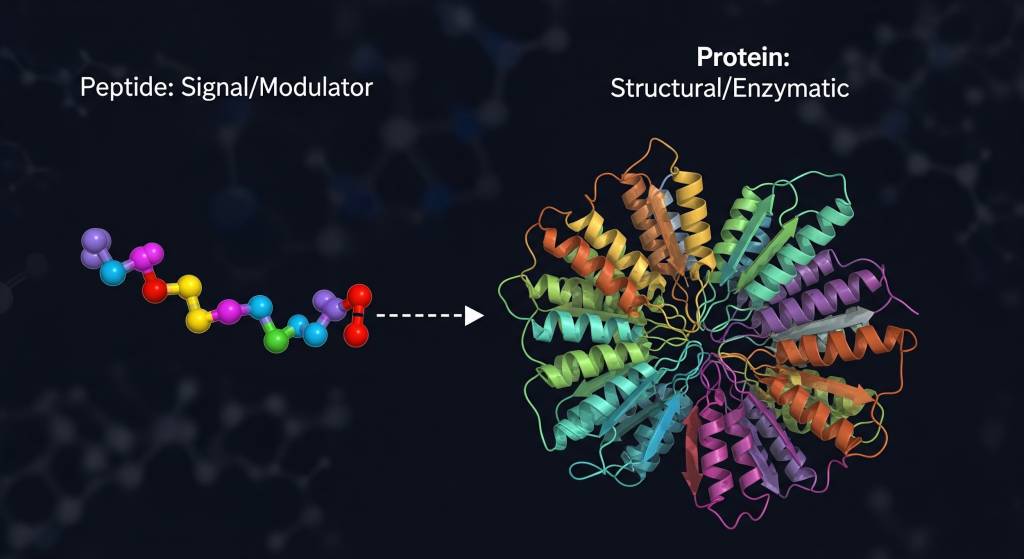
From a research standpoint, peptides differ from proteins in several key ways:- Peptides are shorter chains of amino acids
- Proteins are longer, often folded into complex structures
- Peptides primarily act as signals or modulators
- Proteins often serve structural or enzymatic roles

Types of Peptides Studied in Research
Peptides are categorized in research based on their biological roles, including:- Neuropeptides – involved in nervous system signaling
- Hormonal peptides – regulate endocrine communication
- Immune-related peptides – participate in immune signaling
- Metabolic peptides – influence energy balance and metabolism
- Mitochondrial-derived peptides – coordinate cellular stress and energy signaling
Relevance to Peptide Research
Peptides are central to biological research because they:- Offer high signaling specificity
- Allow targeted pathway investigation
- Mimic endogenous biological signals
- Enable study of complex systems through modular signaling
Related Research Compounds
Peptides as a class are referenced across virtually all research compounds on this site, including but not limited to:- Semaglutide – studied in metabolic peptide signaling
- CJC-1295 – researched in neuroendocrine peptide pathways
- LL-37 – examined as an immune-related peptide
- MOTS-c – studied as a mitochondrial-derived peptide
- Epitalon – researched in aging-related peptide signaling
Related Glossary Terms
- Neuropeptide
- Synthetic Peptide
- Signal Transduction
- Receptor Agonist
- Neuroendocrine Signaling