Oxidative Stress
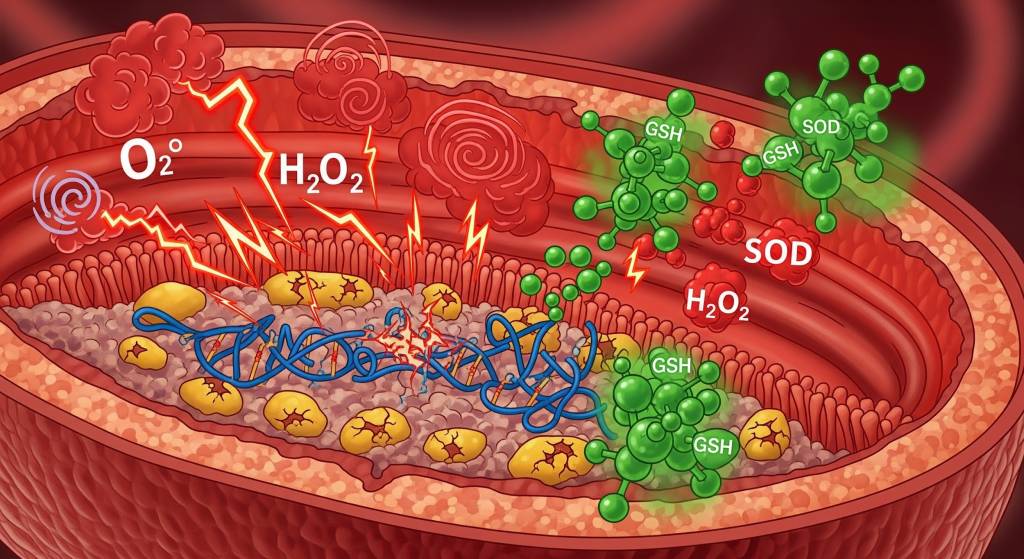
Oxidative stress refers to a biological condition in which the production of reactive oxygen species (ROS) exceeds the capacity of cellular antioxidant systems, leading to potential disruption of cellular structures and signaling processes. In biological research, oxidative stress is studied as a fundamental mechanism influencing cellular aging, metabolic regulation, mitochondrial function, and stress-response signaling.
Rather than being inherently harmful in all contexts, oxidative stress is examined as a dose- and context-dependent signaling phenomenon that can influence normal cellular adaptation or contribute to dysfunction when dysregulated.
⚠️ Research Disclaimer:
This content is provided strictly for educational and research purposes. No information on this page constitutes medical advice, dosing guidance, or instructions for human or animal use.
Research Context
In cellular, metabolic, and aging research, oxidative stress is examined to understand:- How cells respond to metabolic and environmental stressors
- Regulation of redox signaling pathways
- Interactions between oxidative stress and mitochondrial function
- Links between oxidative signaling and cellular aging
- Stress-induced changes in gene expression and signaling balance
Oxidative Stress and Mitochondrial Function
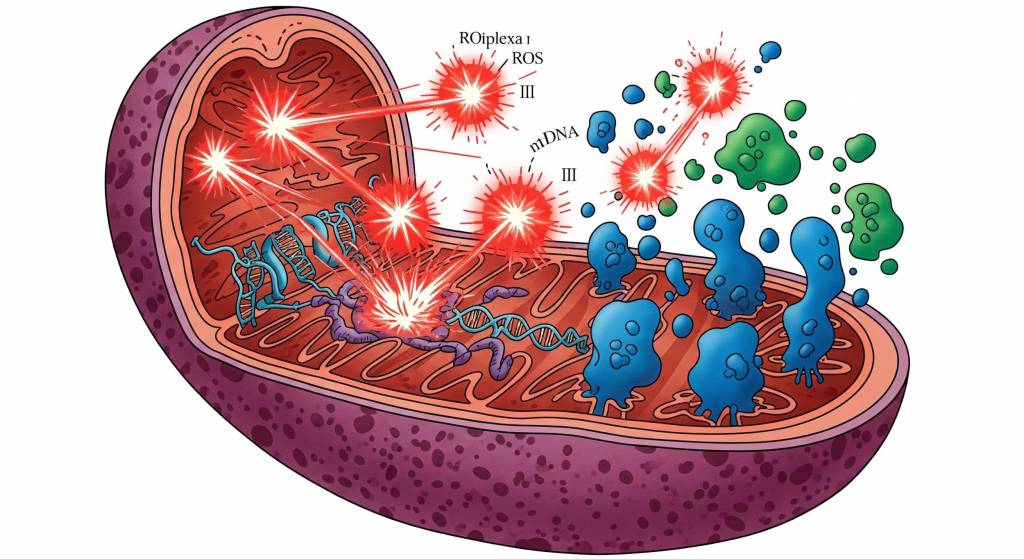
Mitochondria are a central focus in oxidative stress research because they are both:- A primary source of reactive oxygen species
- A key target of oxidative signaling effects
- Mitochondrial efficiency and signaling
- Energy production and metabolic coordination
- Cellular survival and stress-response pathways
- Crosstalk between mitochondria and nuclear signaling
Oxidative Stress and Cellular Aging
Oxidative stress is closely associated with aging biology and cellular senescence research. Studies explore how chronic or dysregulated oxidative signaling may contribute to:
- Accumulation of cellular damage
- Altered stress-response signaling
- Changes in mitochondrial communication
- Shifts in cellular repair and maintenance mechanisms
Understanding oxidative stress helps researchers investigate how cells balance adaptation versus decline over time.
Relevance to Peptide Research
Oxidative stress is highly relevant to peptide research because certain peptides are studied for their roles in:
- Modulating oxidative signaling pathways
- Supporting mitochondrial stress responses
- Influencing cellular resilience mechanisms
- Coordinating metabolic and redox communication
Peptide research often examines how signaling molecules interact with oxidative stress pathways to better understand cellular adaptation and survival signaling.
Related Research Compounds
Oxidative stress is commonly referenced in research involving peptides such as:
- SS-31 (Elamipretide) – studied for mitochondrial and oxidative stress-related signaling
- Humanin – examined for cellular stress-response and survival signaling
- MOTS-c – researched for metabolic and mitochondrial stress coordination
- Epitalon – studied in aging-related cellular signaling contexts
Related Glossary Terms
- Mitochondrial-Derived Peptides
- Cellular Senescence
- FOXO Transcription Factors
- Signal Transduction
- Neuroendocrine Signaling
Educational Disclaimer
This definition is provided for educational and informational purposes only and reflects how oxidative stress is discussed in scientific and research contexts. It does not constitute medical, clinical, or therapeutic guidance.