Neuroendocrine Signaling
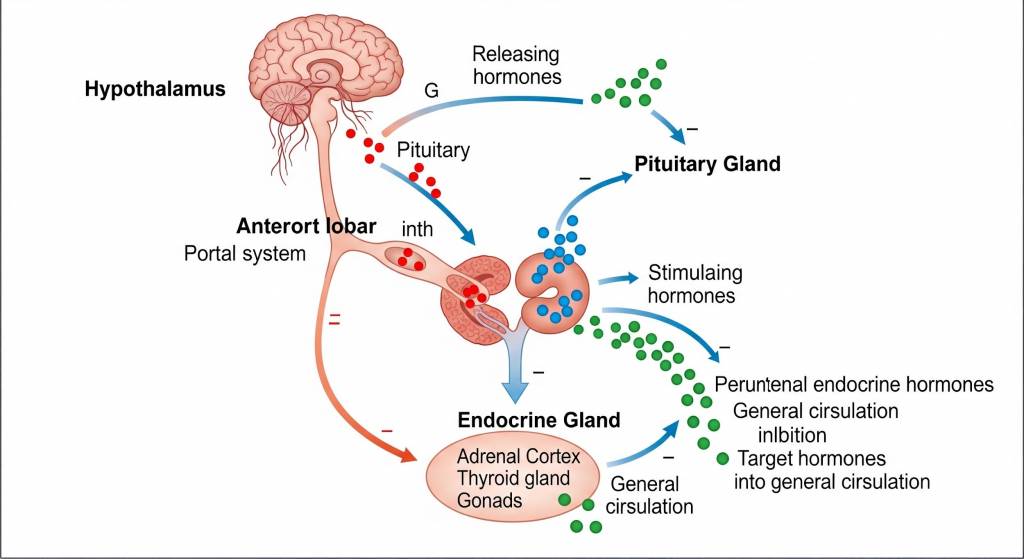
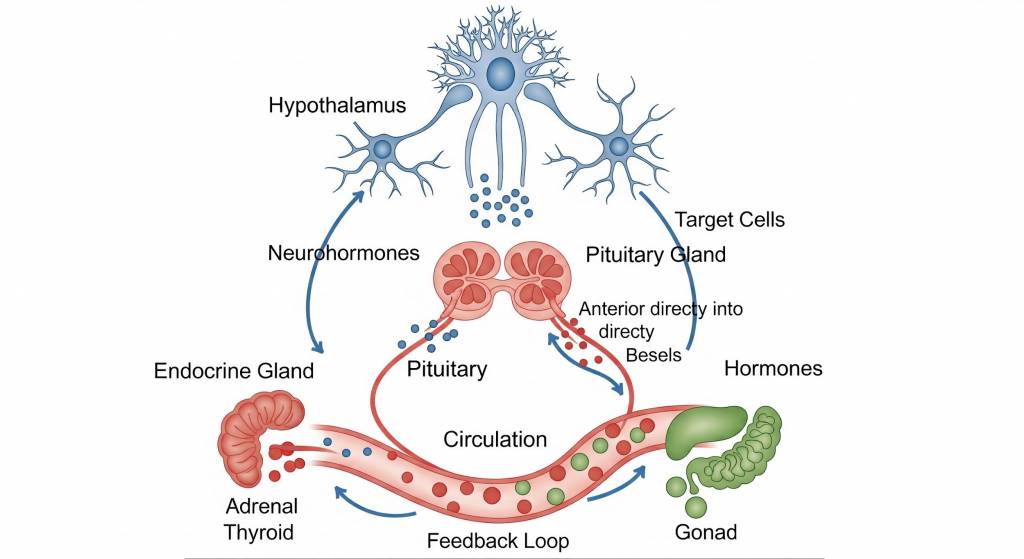
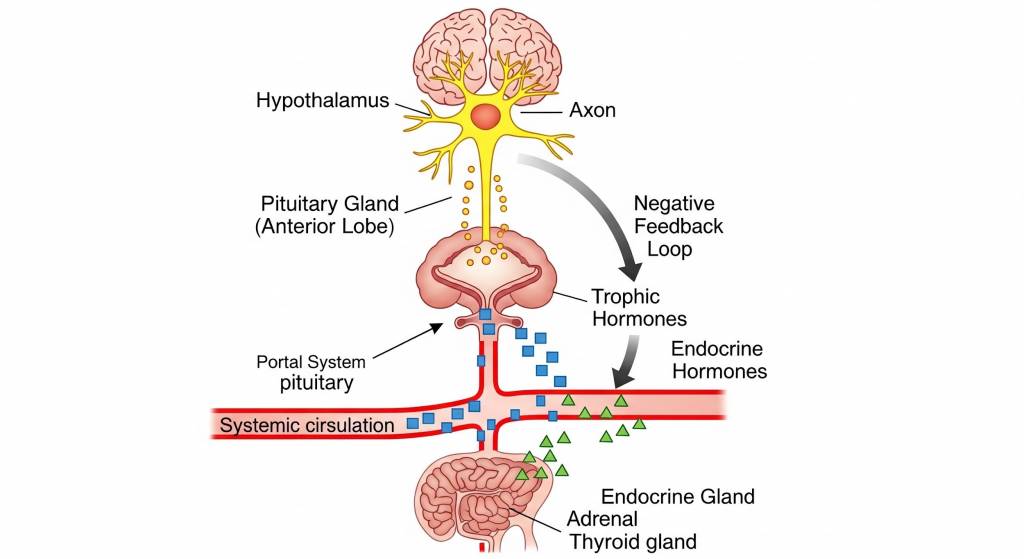
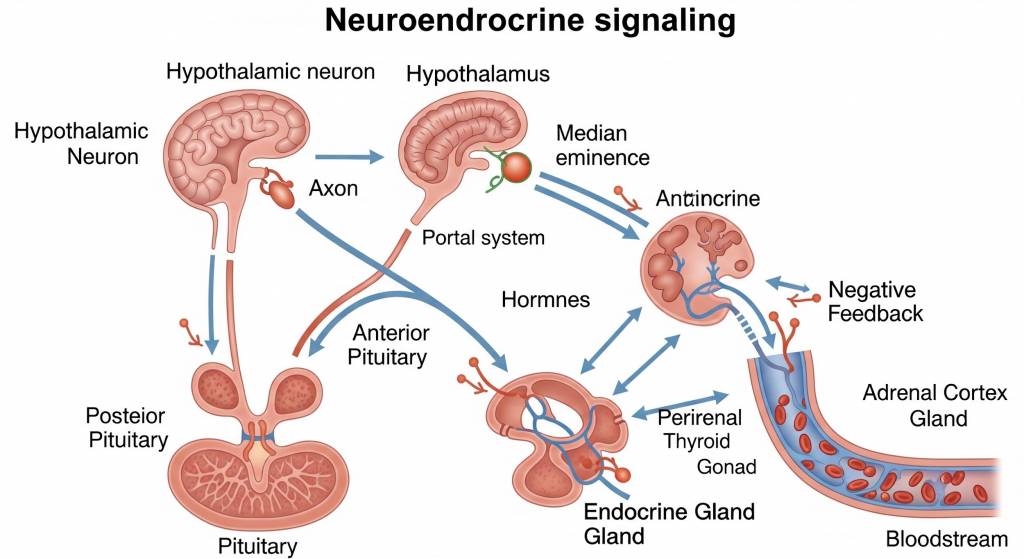
Neuroendocrine signaling refers to the integrated communication network between the nervous system and the endocrine system, where neurons and endocrine cells coordinate to regulate hormonal release, metabolic balance, stress responses, and systemic homeostasis. In biological research, neuroendocrine signaling is studied to understand how neural inputs are translated into hormonal outputs that affect tissues throughout the body.
This signaling system enables rapid neural signals to produce longer-lasting endocrine effects, allowing organisms to adapt to internal and external changes.
⚠️ Research Disclaimer:
This content is provided strictly for educational and research purposes. No information on this page constitutes medical advice, dosing guidance, or instructions for human or animal use.
Research Context
In neurobiology and endocrine research, neuroendocrine signaling is examined to better understand:- Communication between the brain and peripheral organs
- Regulation of hormonal rhythms and feedback loops
- Integration of metabolic, stress, and behavioral signals
- Coordination of appetite, growth, and energy balance
- System-level control of physiological responses
Key Components of Neuroendocrine Signaling
From a research perspective, neuroendocrine signaling commonly involves:- Hypothalamic neurons that integrate sensory and metabolic inputs
- Pituitary signaling pathways that relay hormonal signals
- Endocrine glands that release hormones into circulation
- Feedback mechanisms that regulate signal intensity and duration
Neuroendocrine Signaling and Hormonal Regulation
Neuroendocrine signaling plays a central role in regulating:
- Growth hormone and reproductive hormone release
- Stress-response signaling via hormonal mediators
- Appetite and energy balance coordination
- Circadian and rhythmic hormone secretion
Research focuses on how timing, amplitude, and feedback determine physiological outcomes.
Relevance to Peptide Research
Neuroendocrine signaling is highly relevant to peptide research because many peptides are studied for their ability to:
- Act as neuropeptides or hormone-releasing factors
- Influence hypothalamic–pituitary signaling
- Modulate endocrine feedback loops
- Coordinate neural and hormonal responses
Peptide research frequently examines how signaling molecules bridge neural communication and endocrine regulation.
Related Research Compounds
Neuroendocrine signaling is commonly referenced in research involving peptides such as:
- CJC-1295 – studied in hypothalamic–pituitary growth hormone signaling
- Ipamorelin – examined for ghrelin-mediated neuroendocrine effects
- Tesamorelin – researched for GHRH-related endocrine coordination
- PT-141 (Bremelanotide) – studied for neuroendocrine melanocortin signaling
- Semax – examined in neuropeptide-related signaling research
Related Glossary Terms
- Ghrelin
- Ghrelin Receptor (GHS-R1a)
- Growth Hormone Secretagogue
- Appetite Regulation Signaling
- Signal Transduction
Educational Disclaimer
This definition is provided for educational and informational purposes only and reflects how neuroendocrine signaling is discussed in scientific and research contexts. It does not constitute medical, clinical, or therapeutic guidance.