Incretin System
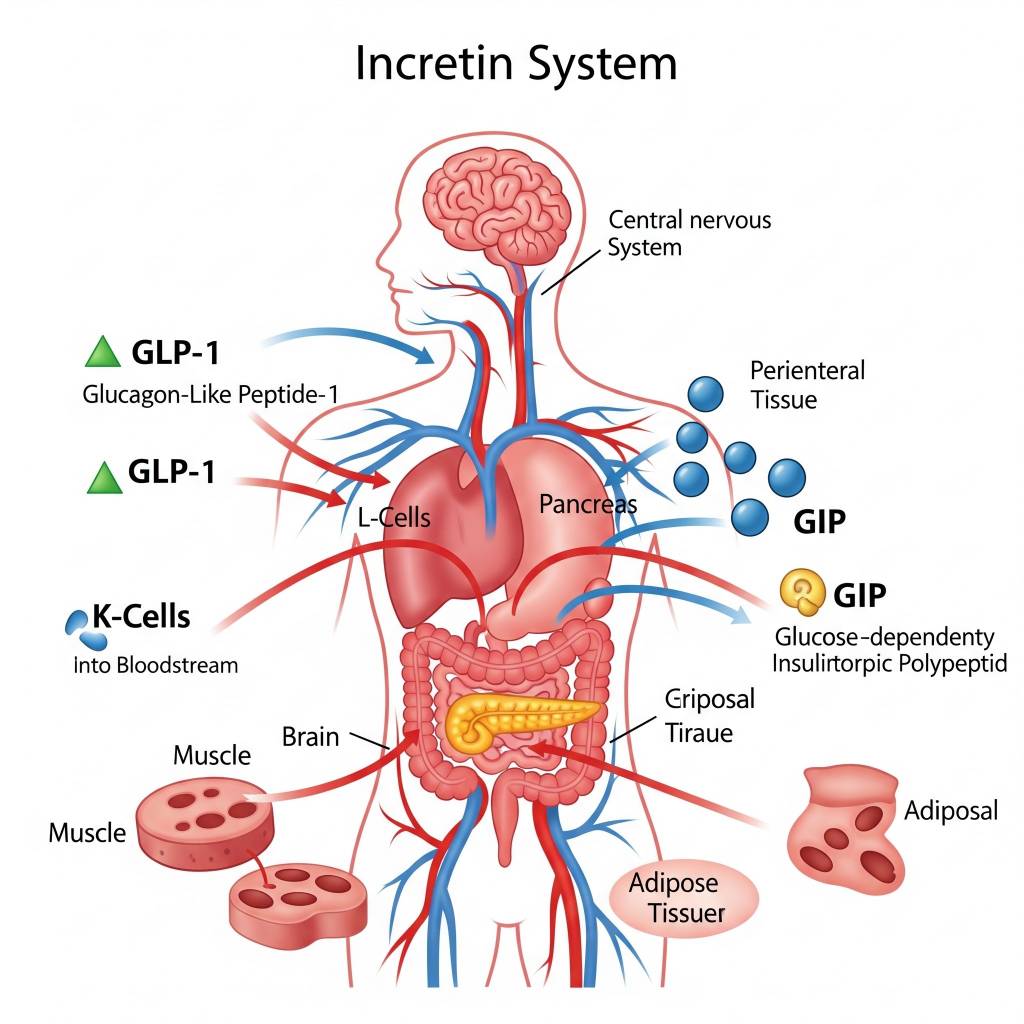
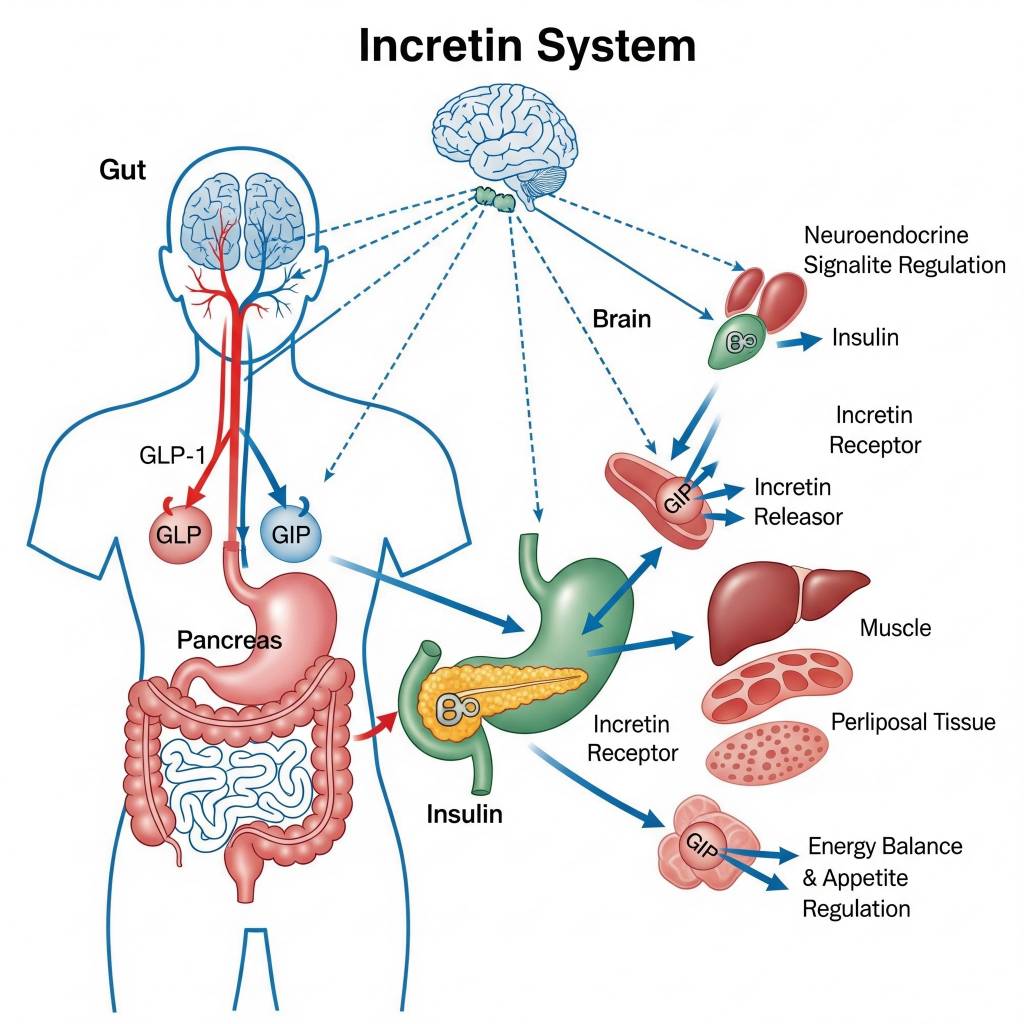
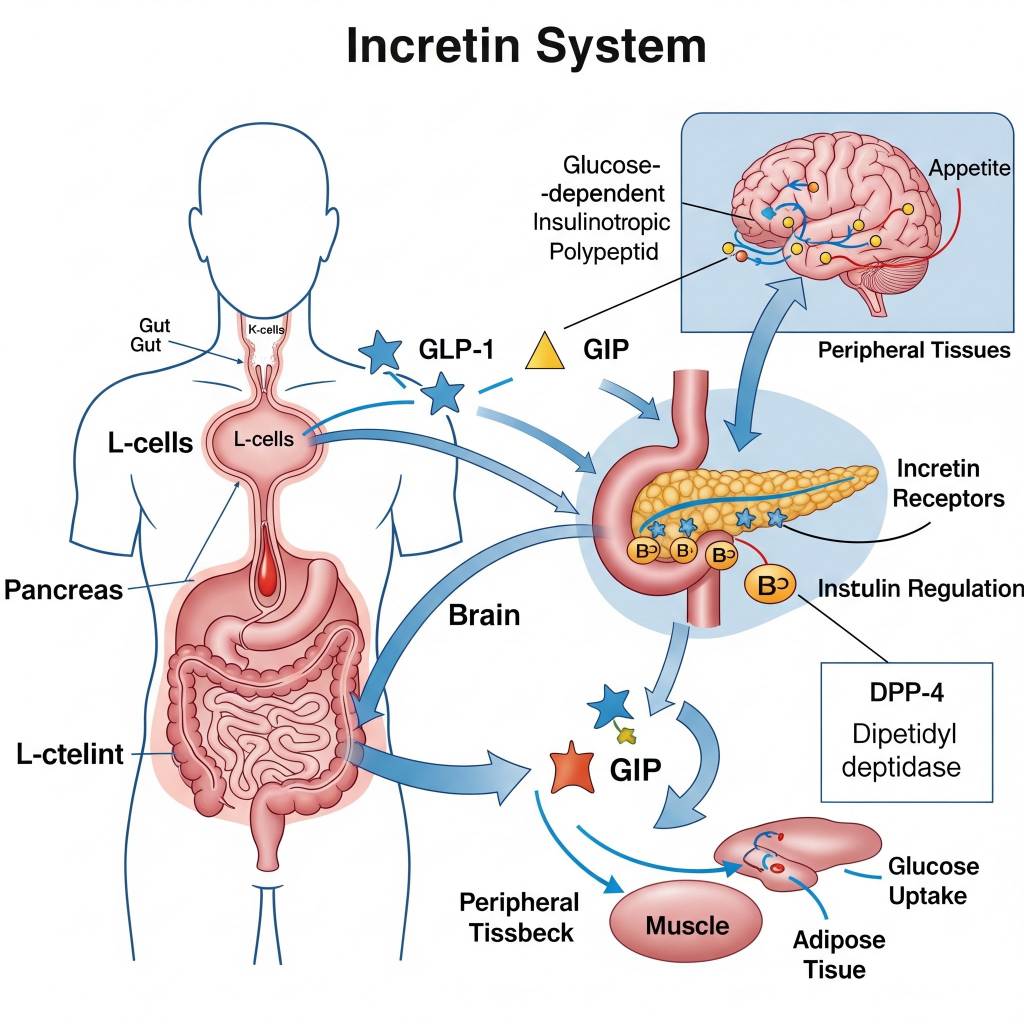
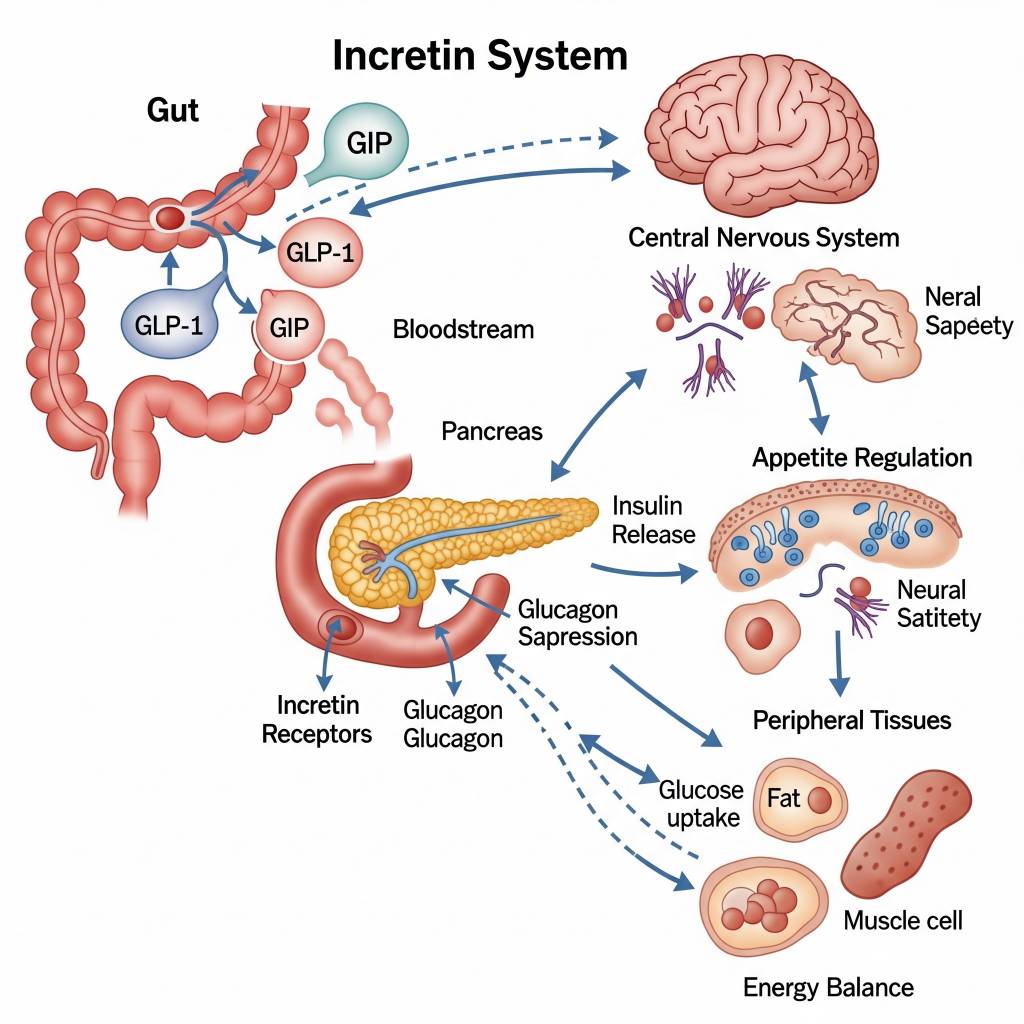
The incretin system refers to a physiological signaling network involving gut-derived peptide hormones that influence metabolic regulation, appetite signaling, and energy balance. In biological research, the incretin system is studied to understand how signals originating in the gastrointestinal tract communicate with the pancreas, central nervous system, and peripheral tissues following nutrient intake.
The two most commonly studied incretin hormones in research are glucagon-like peptide-1 (GLP-1) and glucose-dependent insulinotropic polypeptide (GIP), both of which play key roles in metabolic signaling pathways.
⚠️ Research Disclaimer:
This content is provided strictly for educational and research purposes. No information on this page constitutes medical advice, dosing guidance, or instructions for human or animal use.
Research Context
In metabolic and endocrine research, the incretin system is examined to better understand:- Gut–brain communication pathways
- Regulation of post-prandial metabolic signaling
- Integration of appetite and satiety signals
- Coordination between gastrointestinal and endocrine systems
- Cross-talk between metabolic hormones
Key Components of the Incretin System
From a research perspective, the incretin system involves:- Incretin hormones (e.g., GLP-1, GIP) released from the gut
- Incretin receptors expressed in metabolic and neural tissues
- Neuroendocrine signaling pathways that integrate peripheral signals
- Feedback mechanisms regulating energy balance and appetite
Incretin System and Appetite Regulation Research
The incretin system is closely associated with appetite regulation signaling. Scientific research investigates how incretin-related pathways influence:
- Satiety signaling and food intake behavior
- Interaction with central nervous system appetite circuits
- Crosstalk with ghrelin and melanocortin pathways
- Energy intake and expenditure coordination
Because appetite regulation involves multiple overlapping signals, incretin research is often conducted alongside studies of GLP-1, dual agonists, and tri-agonist signaling models.
Relevance to Peptide Research
The incretin system is highly relevant to peptide research because:
- Many peptides are studied for their interaction with incretin pathways
- Incretin signaling provides insight into multi-system metabolic regulation
- Peptide-based signaling models help researchers understand complex appetite and energy balance networks
Understanding the incretin system helps contextualize how metabolic peptides are discussed in scientific literature and experimental research.
Related Research Compounds
Incretin system signaling is commonly referenced in research involving peptides such as:
- Semaglutide – studied for GLP-1 receptor–mediated incretin signaling
- Tirzepatide – examined for dual incretin pathway activation
- Retatrutide – researched for integrated incretin and metabolic signaling
- Cagrilintide – studied alongside incretin-related appetite signaling pathways
Related Glossary Terms
- GLP-1 Receptor
- Dual Agonist
- Tri-Agonist
- Appetite Regulation Signaling
- Neuroendocrine Signaling
Educational Disclaimer
This definition is provided for educational and informational purposes only and reflects how the incretin system is discussed in scientific and research contexts. It does not constitute medical, clinical, or dietary guidance.