Immunosenescence
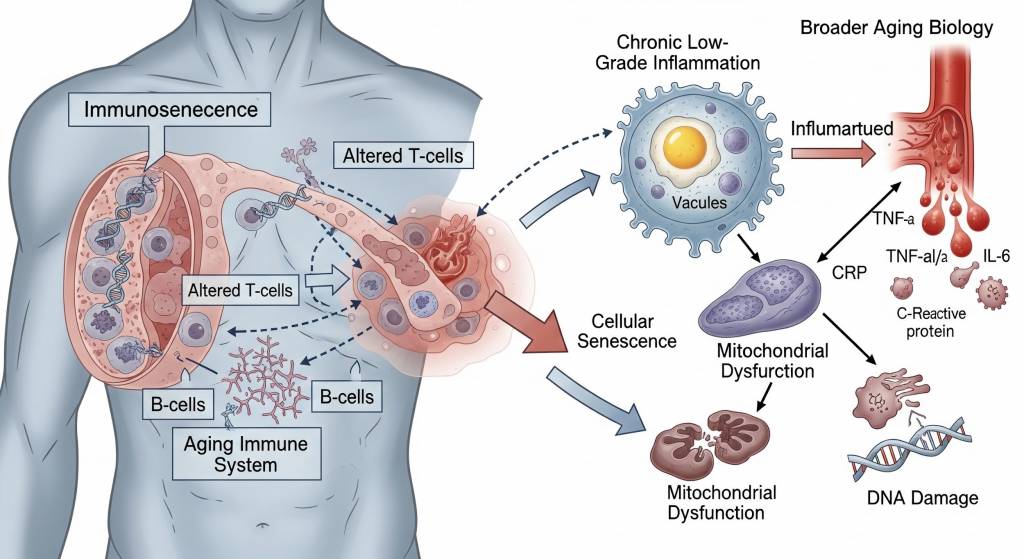
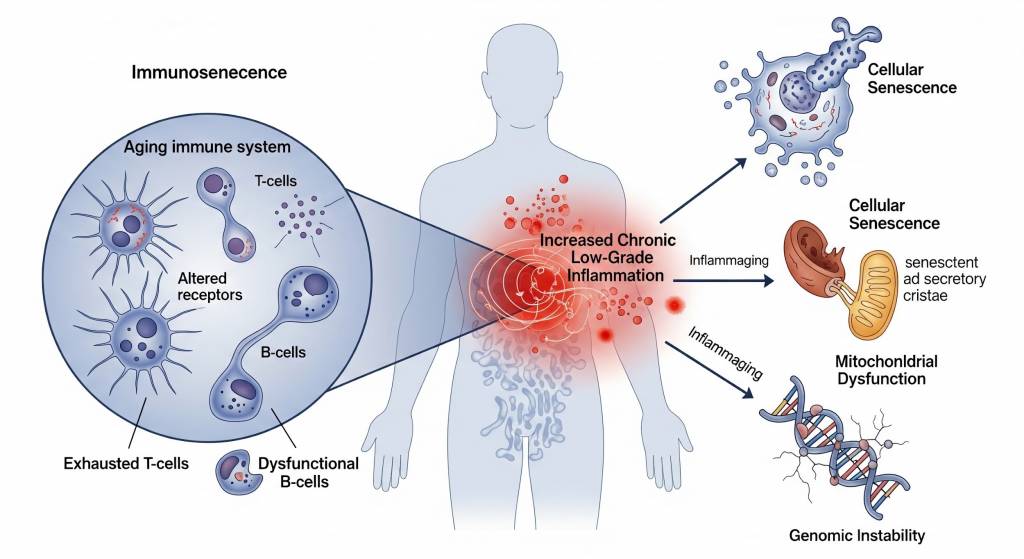
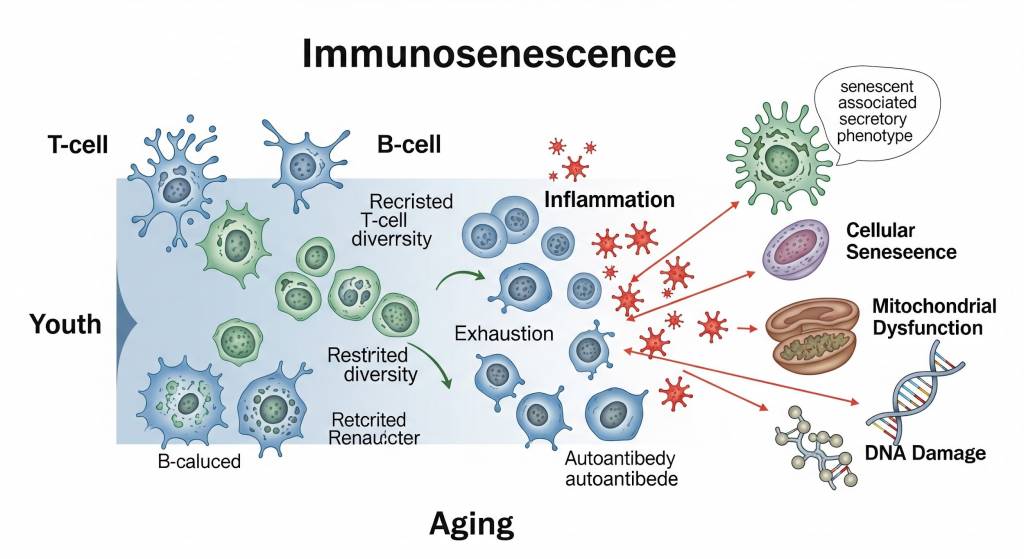
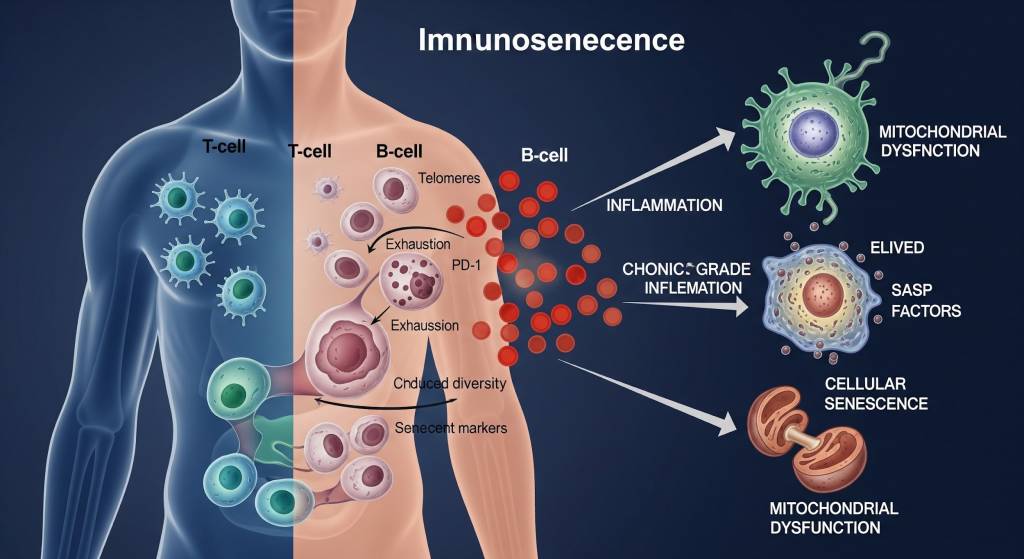
Immunosenescence refers to the gradual, age-associated changes in immune system structure and function that occur over time. In biological research, immunosenescence is studied to understand how aging influences immune responsiveness, immune regulation, and immune signaling balance across both innate and adaptive immune systems.
Rather than a single defect, immunosenescence represents a complex remodeling of immune function, involving altered cell populations, signaling pathways, and immune coordination mechanisms.
⚠️ Research Disclaimer:
This content is provided strictly for educational and research purposes. No information on this page constitutes medical advice, dosing guidance, or instructions for human or animal use.
Research Context
In immunology and aging research, immunosenescence is examined to better understand:- Age-related changes in immune cell populations
- Alterations in immune signaling and responsiveness
- Reduced adaptability of immune responses
- Increased baseline inflammatory signaling
- Interactions between immune aging and cellular senescence
Key Features Studied in Immunosenescence Research
From a research perspective, immunosenescence is commonly associated with:- Changes in T-cell and B-cell function
- Reduced immune repertoire diversity
- Altered cytokine signaling profiles
- Shifts in innate immune responsiveness
- Increased immune system dysregulation
Immunosenescence and Aging Biology
Immunosenescence is closely linked to broader aging and longevity research. Scientific studies investigate how immune aging interacts with:- Cellular senescence
- Chronic low-grade inflammation
- Mitochondrial and metabolic function
- Tissue repair and regeneration capacity
- Stress-response signaling systems
Relevance to Peptide Research
Immunosenescence is highly relevant to peptide research because certain peptides are studied for their role in:
- Immune signaling modulation
- Thymic and immune-associated pathways
- Cytokine signaling balance
- Cellular communication in aging systems
Peptide research often examines how signaling molecules influence immune coordination and resilience in aging-related experimental models.
Related Research Compounds
Immunosenescence is commonly referenced in research involving peptides such as:
- Thymalin – studied in immune regulation and thymic signaling research
- Thymogen – examined for immune gene expression and signaling modulation
- Thymosin Alpha-1 – researched in immune coordination contexts
- Epitalon – studied in aging and immune-associated signaling pathways
Related Glossary Terms
- Cellular Senescence
- Innate Immunity
- Adaptive Immunity
- Cytokine Signaling
- Thymic Peptides
Educational Disclaimer
This definition is provided for educational and informational purposes only and reflects how immunosenescence is discussed in scientific and research contexts. It does not constitute medical, clinical, or therapeutic guidance.