Host Defense Peptides
Host defense peptides (HDPs) are a broad class of endogenously produced peptides that play a key role in innate immune defense and immune system regulation. In biological research, host defense peptides are studied for their ability to participate in first-line immune responses, cellular communication, and regulation of inflammatory signaling.
Unlike antibodies, which are part of adaptive immunity, host defense peptides act rapidly and are considered a foundational component of the innate immune system.
⚠️ Research Disclaimer:
This content is provided strictly for educational and research purposes. No information on this page constitutes medical advice, dosing guidance, or instructions for human or animal use.
Research Context
In immunology and peptide research, host defense peptides are examined to understand:- Early immune response signaling
- Cellular defense mechanisms against environmental challenges
- Regulation of inflammatory pathways
- Interaction between immune cells and tissues
- Coordination between innate and adaptive immunity
Mechanisms Studied in Host Defense Peptide Research
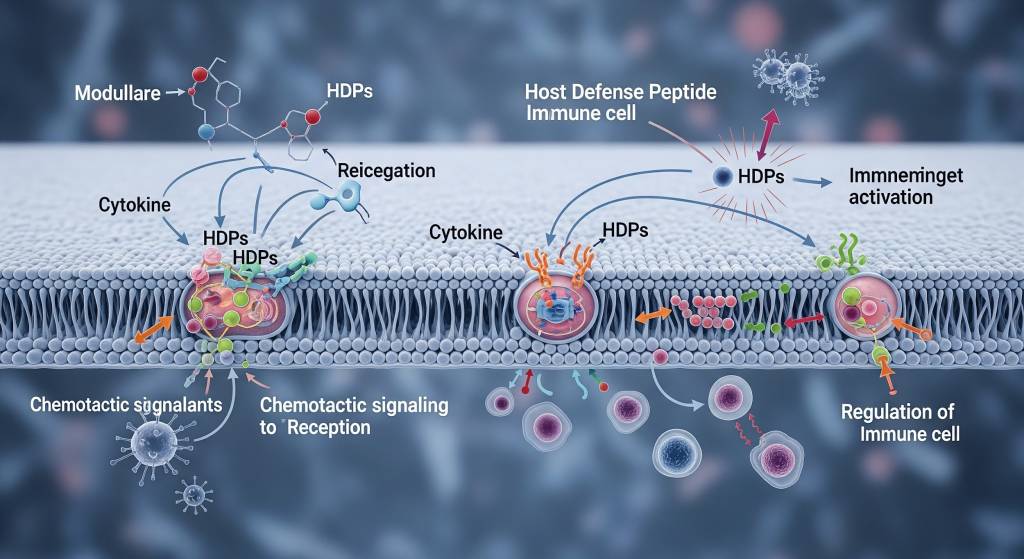
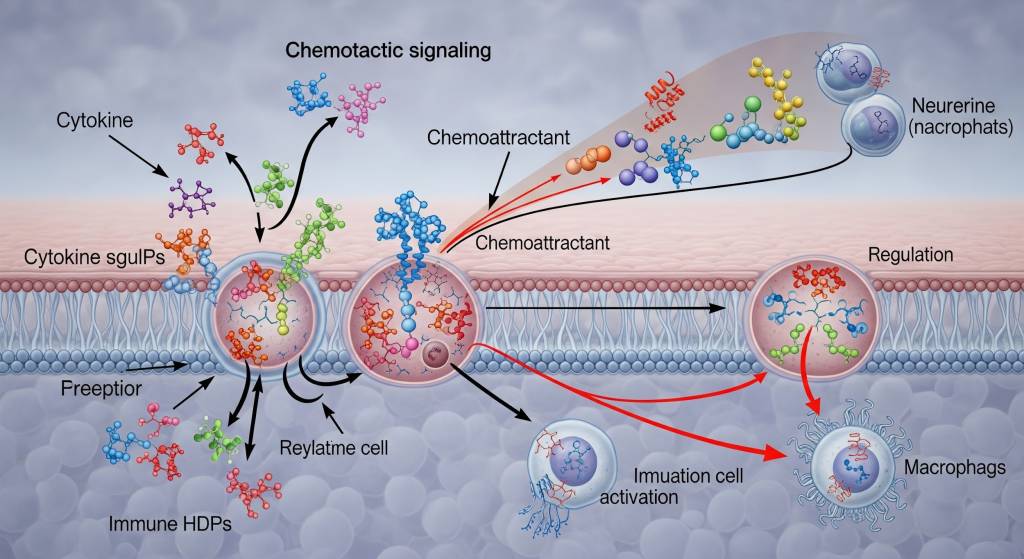
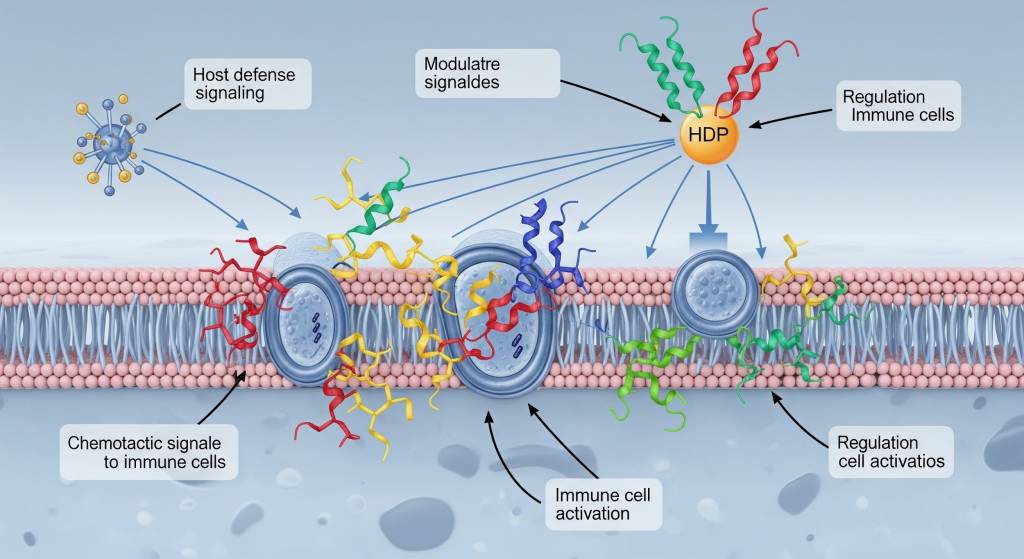
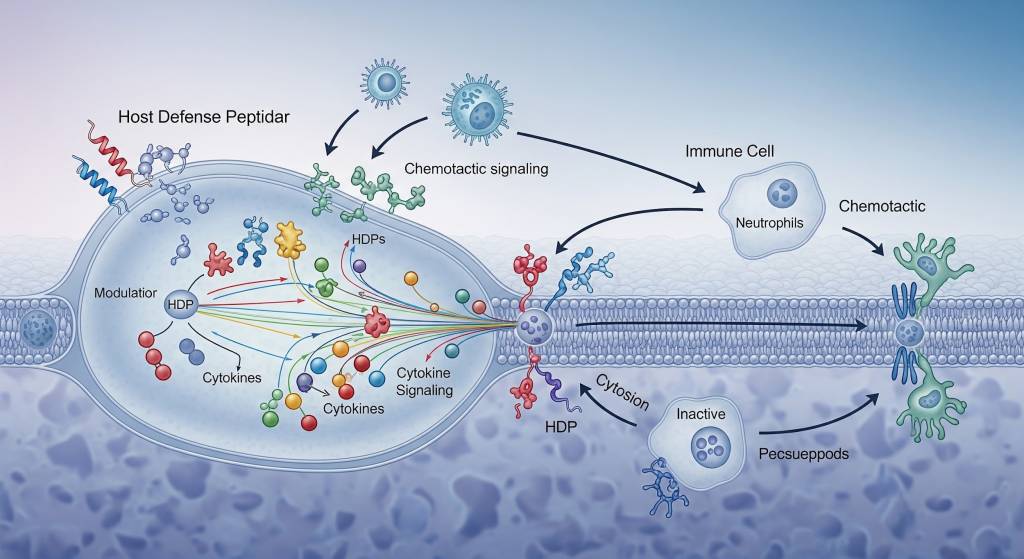
From a research perspective, host defense peptides are investigated for their roles in:- Membrane interaction and cellular signaling
- Modulation of cytokine signaling pathways
- Chemotactic signaling to immune cells
- Regulation of immune cell activation
- Tissue-level immune communication
Host Defense Peptides and Immune Balance
Beyond direct defense signaling, host defense peptides are researched for their ability to:- Shape inflammatory environments
- Support immune system coordination
- Influence wound and tissue-associated immune responses
- Maintain immune homeostasis
Relevance to Peptide Research
Host defense peptides are highly relevant to peptide research because they:- Serve as models for innate immune signaling peptides
- Illustrate how small peptides regulate complex immune responses
- Provide insight into immune communication at the molecular level
- Bridge immunity, inflammation, and tissue signaling research
Related Research Compounds
Host defense peptide research is commonly referenced in studies involving peptides such as:- LL-37 – studied for innate immune signaling and host defense mechanisms
- KPV – examined in inflammation and immune modulation research
- GHK-Cu – researched for tissue signaling and immune-associated pathways
- Thymosin Alpha-1 – studied in immune coordination contexts
Related Glossary Terms
- Innate Immunity
- Adaptive Immunity
- Cytokine Signaling
- Thymic Peptides
- Immunosenescence