GLP-1 Receptor
Research Context
In metabolic and endocrine research, the GLP-1 receptor is examined to understand:
- How incretin hormones influence metabolic signaling
- Gut-derived peptide communication with the brain
- Regulation of appetite and satiety pathways
- Coordination of peripheral and central metabolic cues
- Receptor signaling dynamics and pathway specificity
Researchers study GLP-1 receptor activation to map how metabolic signals are integrated across biological systems under controlled experimental conditions.
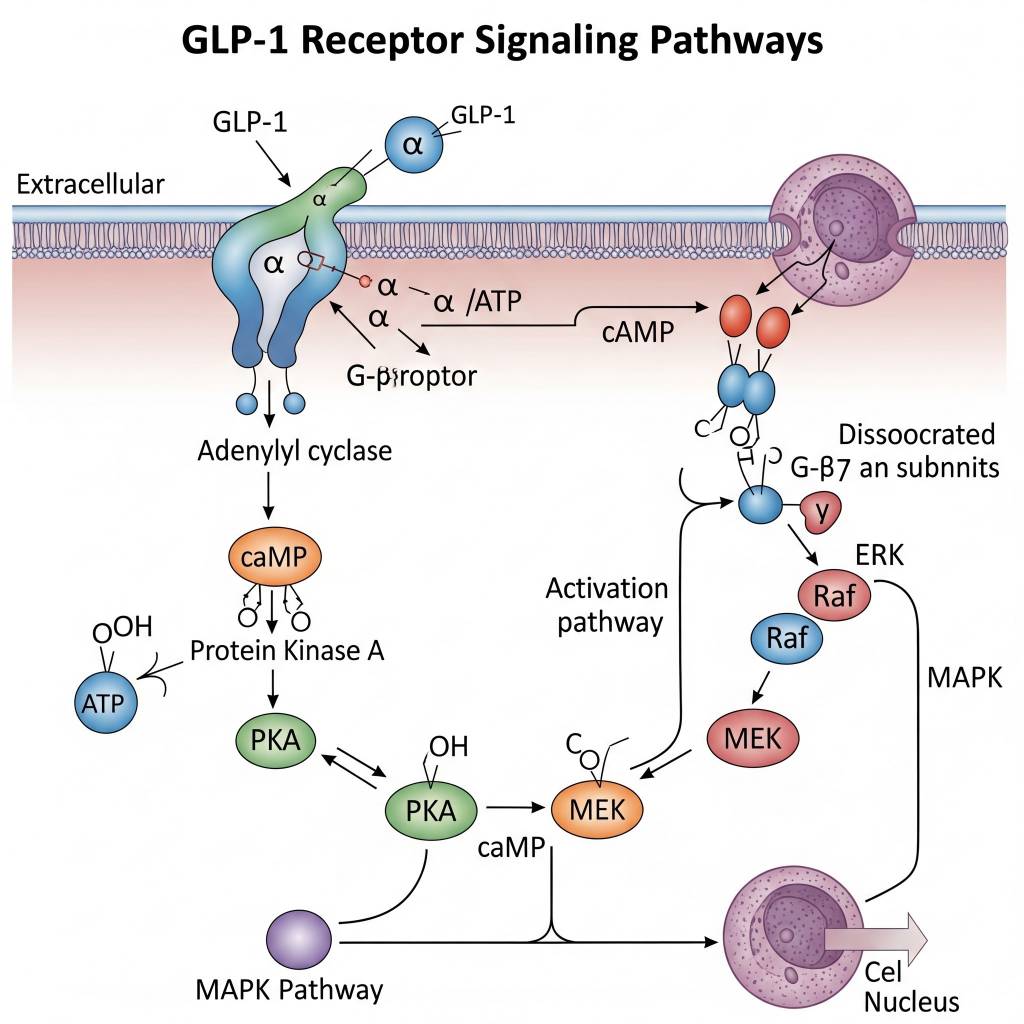
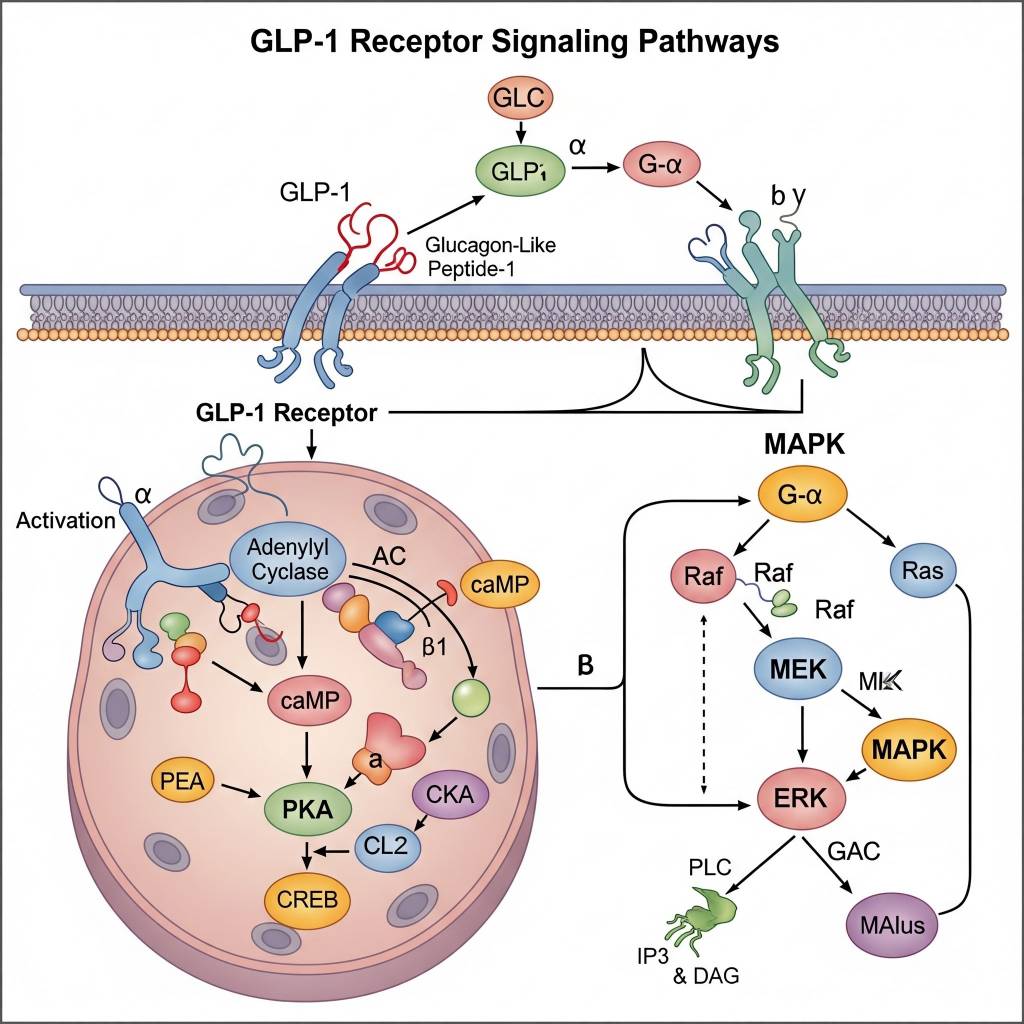
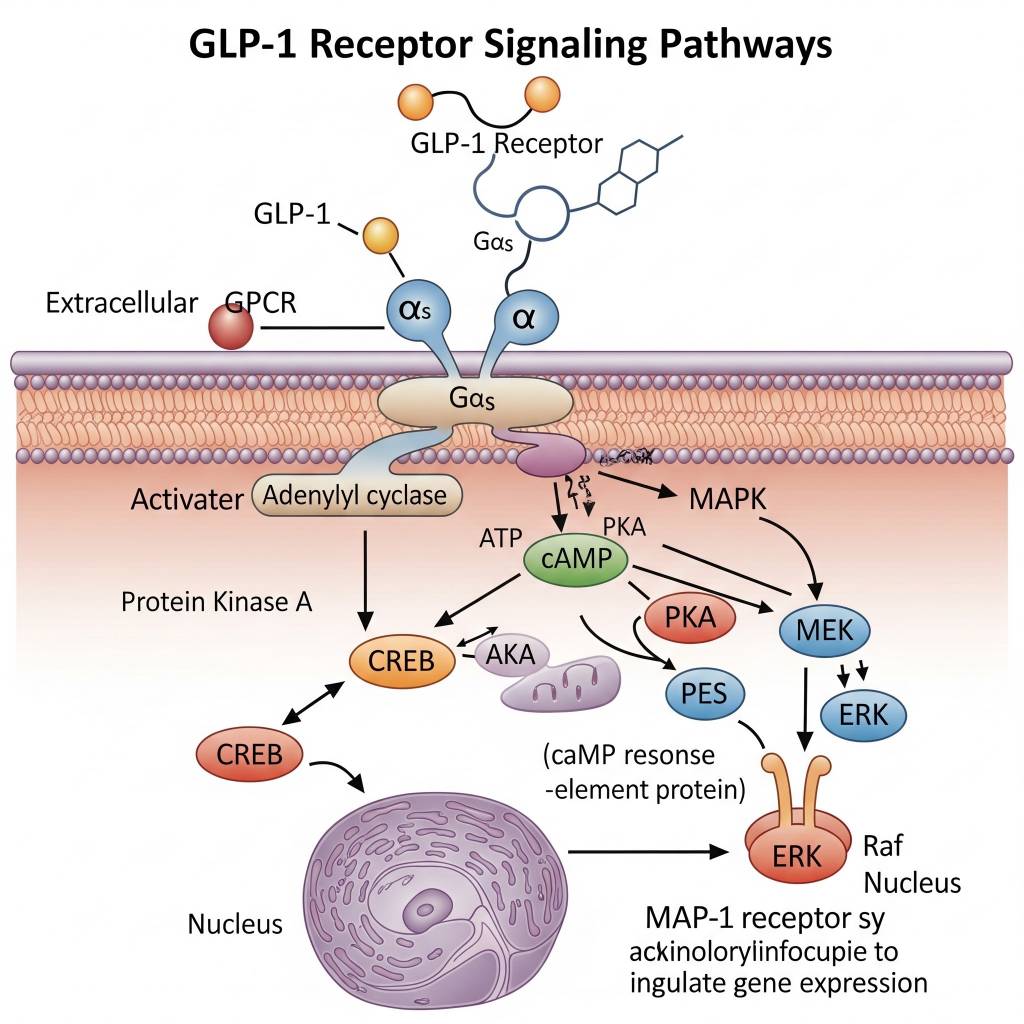
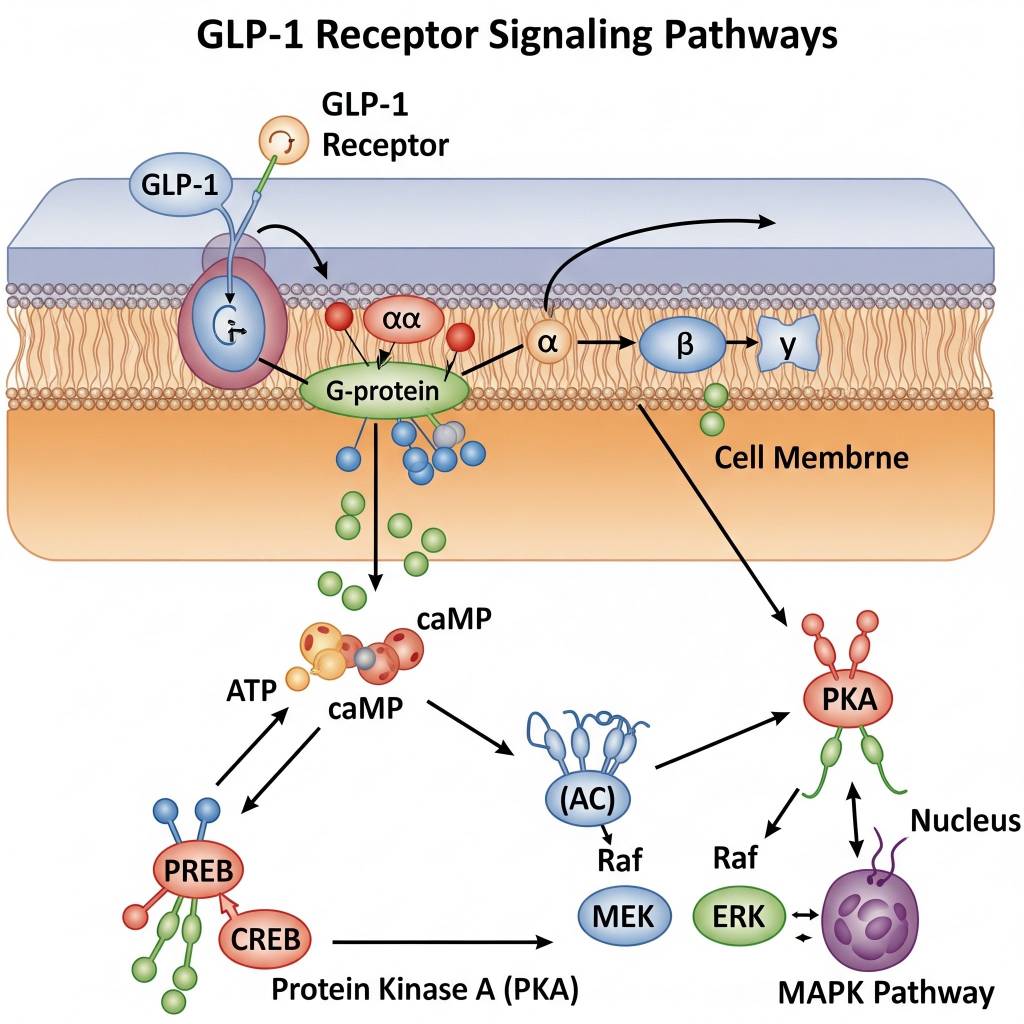
GLP-1 Receptor Signaling Pathways
From a research perspective, GLP-1 receptor activation initiates intracellular signaling cascades that may involve:
- G-protein–mediated second messenger systems
- Modulation of cyclic AMP (cAMP) signaling
- Interaction with MAPK-related pathways
- Crosstalk with other metabolic and neuroendocrine receptors
These pathways are studied to understand signal strength, duration, and downstream biological effects.
⚠️ Research Disclaimer:
This content is provided strictly for educational and research purposes. No information on this page constitutes medical advice, dosing guidance, or instructions for human or animal use.
Research Context
In research settings, dual agonists are examined to explore:- Synergistic effects between two receptor pathways
- Cross-talk between signaling systems
- Amplification or modulation of biological responses
- Improved signaling efficiency compared to single agonists
- System-level regulation rather than isolated pathway effects
Dual Agonists in Metabolic Research
From a metabolic research perspective, dual agonists are commonly studied in relation to:- Appetite regulation signaling
- Glucose and insulin-related pathways
- Energy expenditure coordination
- Gut–brain communication systems
Role in Appetite & Energy Regulation Research
The GLP-1 receptor is a central component of appetite regulation signaling research. Scientific studies investigate how GLP-1 receptor signaling contributes to:
- Satiety signaling mechanisms
- Regulation of food intake behavior
- Integration of gastrointestinal and central nervous system signals
- Coordination of energy balance pathways
Because appetite regulation involves multiple overlapping signals, GLP-1 receptor research is often conducted alongside studies of ghrelin, melanocortin, and incretin pathways.
Relevance to Peptide Research
The GLP-1 receptor is highly relevant to peptide research because:
- It serves as a model receptor for incretin-based signaling studies
- Many peptides are studied for their interaction with GLP-1 receptor pathways
- GLP-1 signaling provides insight into multi-system metabolic regulation
Understanding the GLP-1 receptor helps researchers interpret how metabolic peptides are discussed in scientific literature and experimental research.
Related Research Compounds
GLP-1 receptor signaling is commonly referenced in research involving peptides such as:
- Semaglutide – studied for GLP-1 receptor–mediated metabolic signaling
- Tirzepatide – examined for dual incretin-related pathway activation
- Retatrutide – researched for integrated metabolic and appetite signaling
- Cagrilintide – studied alongside incretin signaling pathways
Related Glossary Terms
- Incretin System
- Dual Agonist
- Tri-Agonist
- Appetite Regulation Signaling
- Neuroendocrine Signaling
Educational Disclaimer
This definition is provided for educational and informational purposes only and reflects how the GLP-1 receptor is discussed in scientific and research contexts. It does not constitute medical, clinical, or therapeutic guidance.