Cellular Senescence
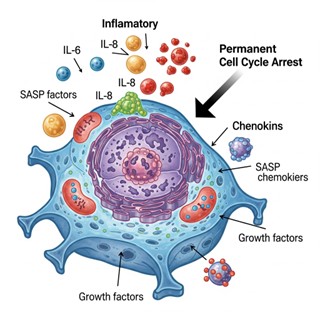
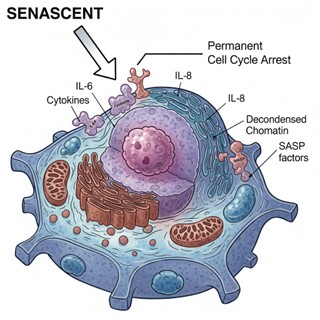
Cellular senescence refers to a biological state in which cells permanently exit the cell cycle and lose the ability to divide, while remaining metabolically active. In research contexts, senescent cells are characterized by cell cycle arrest, altered gene expression, and the secretion of signaling molecules that influence surrounding tissues.
Cellular senescence is studied as a fundamental process in aging biology, tissue remodeling, stress response, and disease-related cellular dysfunction, making it a central concept in longevity and regenerative research.
⚠️ Research Disclaimer:
This content is provided strictly for educational and research purposes. No information on this page constitutes medical advice, dosing guidance, or instructions for human or animal use.
Research Context
In molecular and cellular research, cellular senescence is examined to understand:- How cells respond to DNA damage and stress
- Mechanisms of irreversible cell cycle arrest
- Changes in gene expression associated with aging
- Intercellular signaling effects of senescent cells
- The role of senescence in tissue homeostasis
Key Characteristics of Senescent Cells
From a research perspective, senescent cells commonly exhibit:- Permanent withdrawal from the cell cycle
- Activation of stress-response pathways
- Altered chromatin structure and transcriptional profiles
- Increased secretion of inflammatory and signaling molecules
- Resistance to apoptosis under certain conditions
Senescence and Aging Research
Cellular senescence is closely associated with aging because senescent cells tend to accumulate over time in tissues. Research investigates how this accumulation affects:- Tissue regeneration capacity
- Inflammatory signaling environments
- Mitochondrial and metabolic function
- Immune system interactions
- Overall cellular resilience
Relevance to Peptide Research
Cellular senescence is highly relevant to peptide research because certain peptides are studied for their role in:- Senescence-associated signaling pathways
- Stress-response and survival signaling
- Transcription factor regulation related to aging
- Mitochondrial resilience and cellular maintenance
Related Research Compounds
Cellular senescence is commonly referenced in research involving peptides such as:- FOXO4-DRI – studied for its role in senescence-associated signaling pathways
- Epitalon – researched in cellular aging and longevity contexts
- Humanin – examined for cellular stress-response and survival signaling
- SS-31 (Elamipretide) – studied in mitochondrial function and aging-related research
Related Glossary Terms
- Immunosenescence
- FOXO Transcription Factors
- Telomerase Activity
- Oxidative Stress
- Mitochondrial-Derived Peptides