Appetite Regulation Signaling
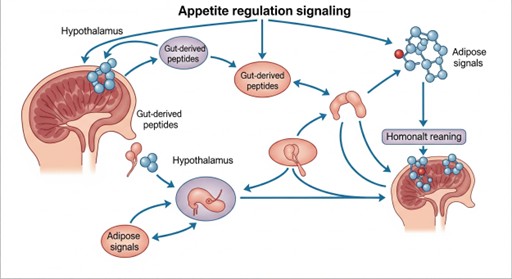
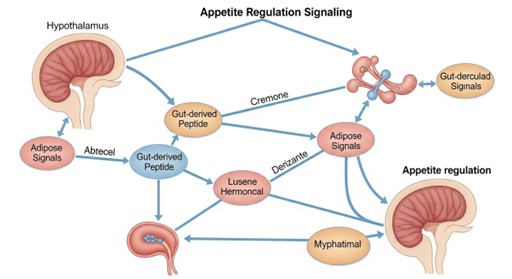
Appetite regulation signaling refers to the complex network of hormonal, neural, and molecular pathways that coordinate sensations of hunger, satiety, and energy balance. In biological research, these signaling systems are studied to understand how the body integrates central nervous system signals, peripheral metabolic cues, and gastrointestinal hormones to regulate food intake and energy homeostasis.
This signaling network involves interactions between the hypothalamus, gut-derived peptides, adipose-derived signals, and neuroendocrine feedback loops, making it a major focus of metabolic and endocrine research.
⚠️ Research Disclaimer:
This content is provided strictly for educational and research purposes. No information on this page constitutes medical advice, dosing guidance, or instructions for human or animal use.
Research Context
In peptide and metabolic research, appetite regulation signaling is examined to better understand:
- How hunger and satiety signals are generated
- Central nervous system integration of metabolic cues
- Gut–brain communication pathways
- Hormonal feedback mechanisms influencing feeding behavior
- Energy balance regulation under different physiological states
Researchers study appetite signaling to map how specific receptors and pathways respond to signaling molecules under controlled experimental conditions.
Key Biological Pathways Involved
From a research perspective, appetite regulation signaling commonly involves:
- Incretin signaling pathways (e.g., GLP-1–related signaling)
- Hypothalamic neuropeptide circuits
- Melanocortin signaling pathways
- Ghrelin-mediated hunger signaling
- Leptin-associated satiety feedback
Peptide research often focuses on how modifying one signaling node affects downstream appetite-related responses.
Relevance to Peptide Research
Appetite regulation signaling is central to peptide research because many peptides are studied for their ability to:
- Interact with appetite-related receptors
- Influence satiety or hunger signaling pathways
- Modulate central and peripheral metabolic communication
- Affect energy balance signaling without direct nutrient input
Understanding appetite regulation signaling provides critical context for interpreting how metabolic peptides are discussed in scientific literature.
Related Research Compounds
Appetite regulation signaling is commonly referenced in research involving peptides such as:
- Semaglutide – studied for incretin-related appetite signaling
- Tirzepatide – examined for multi-pathway metabolic signaling
- Retatrutide – researched for integrated appetite and energy regulation
- Cagrilintide – studied in satiety-related signaling pathways
- Tesofensine – referenced in central appetite regulation research
(Each compound name links to its respective Research Overview page.)
Related Glossary Terms
- Incretin System
- GLP-1 Receptor
- Melanocortin Receptors
- Ghrelin Receptor
- Neuroendocrine Signaling
Educational Disclaimer
This definition is provided for educational and informational purposes only and reflects how appetite regulation signaling is discussed in scientific and research contexts. It does not constitute medical, dietary, or clinical guidance.