Adaptive Immunity
Adaptive immunity refers to the specialized branch of the immune system that develops targeted responses to specific antigens through prior exposure. Unlike innate immunity, which provides immediate and non-specific defense, adaptive immunity is characterized by specificity, memory, and adaptability.
In biological research, adaptive immunity is studied to understand how immune cells recognize pathogens, generate antigen-specific responses, and retain immunological memory over time. This system is primarily mediated by T lymphocytes and B lymphocytes, which coordinate highly regulated immune signaling pathways.
⚠️ Research Disclaimer:
This content is provided strictly for educational and research purposes. No information on this page constitutes medical advice, dosing guidance, or instructions for human or animal use.
Research Context
In peptide and immunology research, adaptive immunity is examined for its role in:- Antigen recognition and immune specificity
- T-cell and B-cell activation pathways
- Immune memory formation
- Cytokine-mediated immune coordination
- Age-related immune system changes
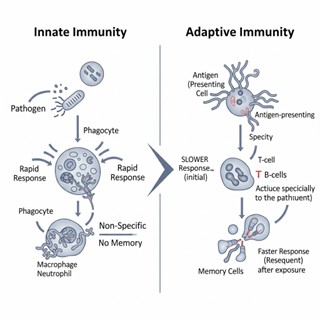
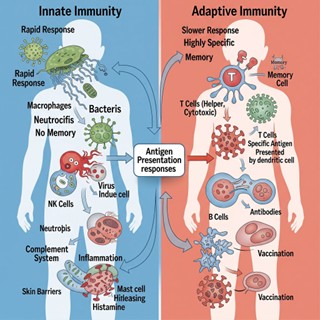
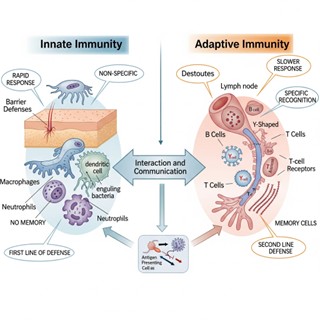
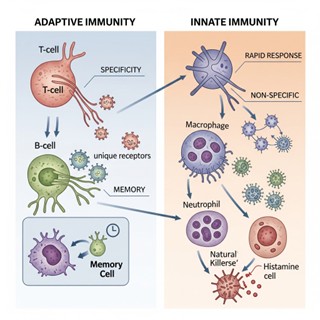
Adaptive Immunity vs Innate Immunity (Research Perspective)
From a research standpoint:- Innate immunity provides rapid, non-specific defense
- Adaptive immunity develops over time and generates targeted responses
Relevance to Peptide Research
Adaptive immunity is highly relevant to peptide research because peptides are often studied for their ability to:
- Modulate immune signaling pathways
- Influence cytokine communication
- Support immune balance and regulation
- Interact with thymic and immune-associated pathways
Understanding adaptive immunity helps contextualize how immune-related peptides are discussed in scientific literature.
Related Research Compounds
Adaptive immunity is commonly referenced in research involving peptides such as:
- Thymalin – studied in immune regulation and thymic signaling
- Thymogen – examined for immune gene expression modulation
- Thymosin Alpha-1 – referenced in T-cell–related immune research
- LL-37 – studied for immune defense and immune signaling interactions
(Each compound name links to its respective Research Overview page.)
Related Glossary Terms
- Innate Immunity
- Cytokine Signaling
- Thymic Peptides
- Immunosenescence
Educational Disclaimer
This definition is provided for educational and informational purposes only and reflects how adaptive immunity is discussed in scientific and research contexts. It does not constitute medical or clinical guidance.