Tesamorelin – Research Overview
Tesamorelin is a synthetic growth hormone–releasing hormone (GHRH) analog peptide that has been extensively studied in preclinical and laboratory research for its role in growth hormone signaling, endocrine axis modulation, and pituitary receptor activation. Due to its structural similarity to endogenous GHRH, tesamorelin is frequently referenced in growth hormone secretagogue research, endocrinology studies, and metabolic signaling investigations.
This page provides a research-focused, educational overview of tesamorelin, including its molecular classification, mechanism of action in research contexts, and major areas of scientific investigation.
⚠️ Research Disclaimer:
This content is provided strictly for educational and research purposes. No information on this page constitutes medical advice, dosing guidance, or instructions for human or animal use.
Compound Overview
Tesamorelin is classified as a synthetic analog of human growth hormone–releasing hormone (GHRH). In laboratory research environments, it is studied for its ability to interact with GHRH receptors in the pituitary gland and influence growth hormone release signaling.
Because tesamorelin closely mimics endogenous GHRH, researchers use it to examine physiologic growth hormone stimulation patterns, endocrine feedback mechanisms, and downstream metabolic signaling pathways under controlled experimental conditions.
Research Background & Classification
From a molecular research perspective, tesamorelin belongs to a class of peptide hormones and hormone analogs designed to preserve receptor specificity while improving stability and signaling consistency. Researchers study tesamorelin to better understand how native-like GHRH signaling affects:
- Growth hormone secretion dynamics
- Pituitary endocrine communication
- Hormonal feedback loop regulation
- Downstream metabolic and anabolic signaling pathways
Its close alignment with endogenous GHRH makes tesamorelin a valuable reference compound in comparative endocrine research and growth hormone physiology studies.
Mechanism of Action (Research Context)
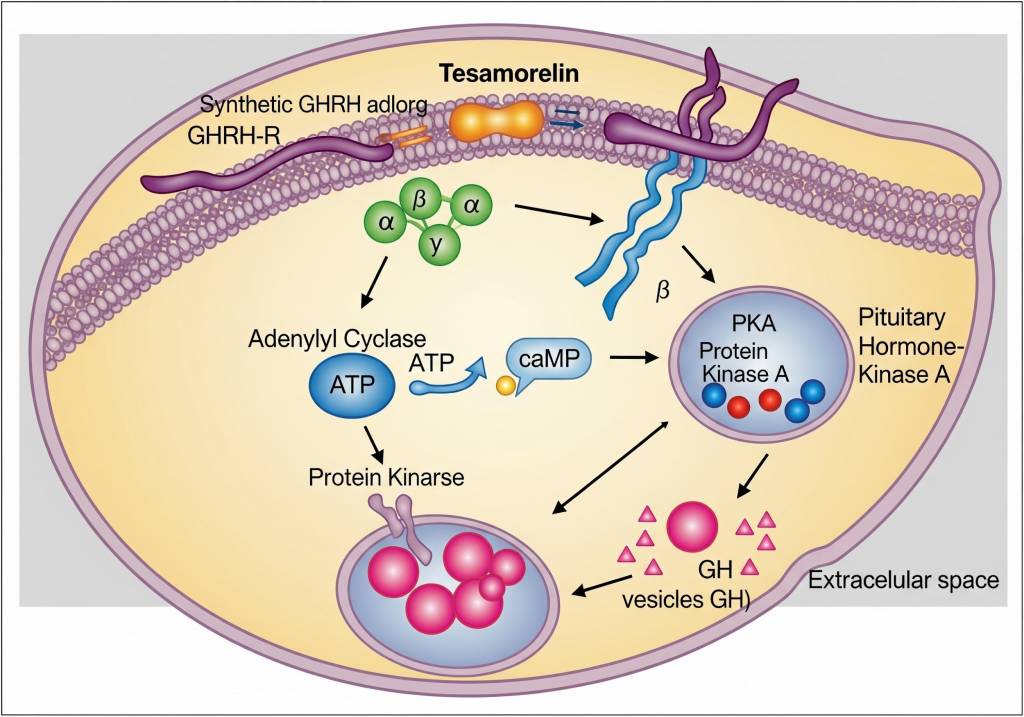
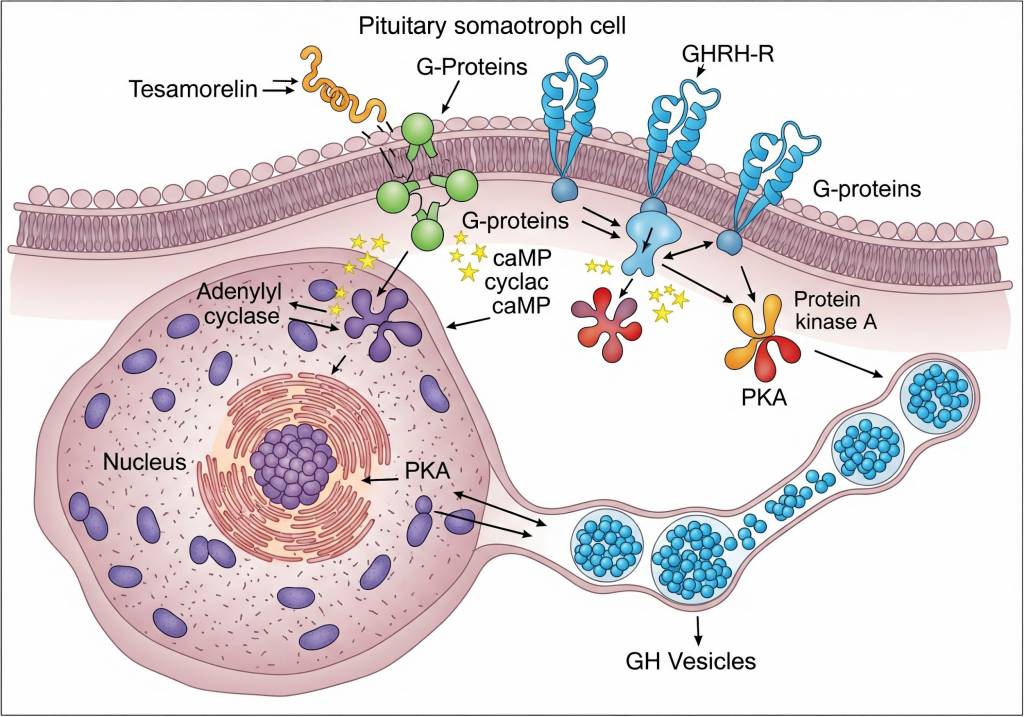
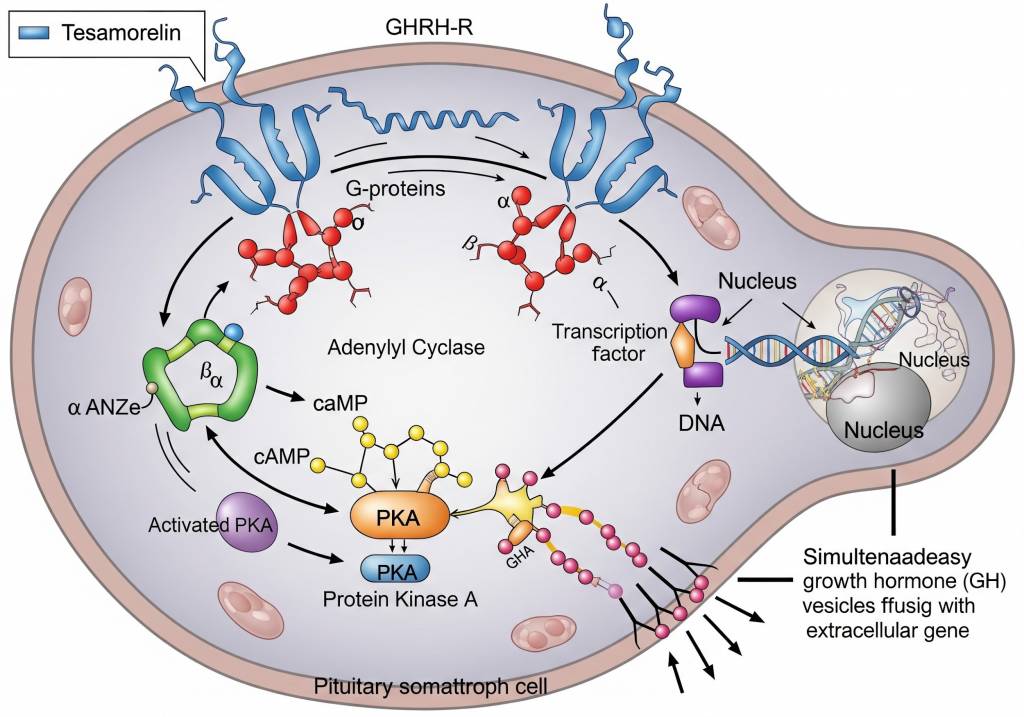
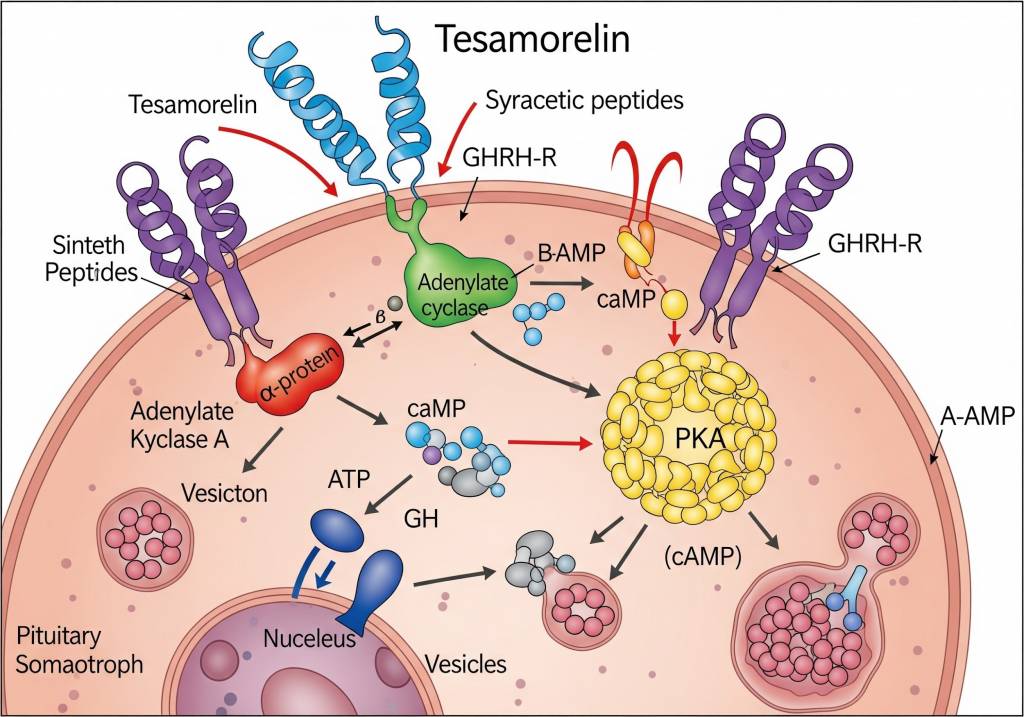
In laboratory research settings, tesamorelin has been studied for its interaction with growth hormone–releasing hormone receptors (GHRH-R) on pituitary somatotroph cells. Researchers analyze how tesamorelin influences growth hormone pulse amplitude, signal timing, and second-messenger activation within endocrine signaling cascades.
Tesamorelin is also examined in studies evaluating GH-mediated metabolic signaling, lipid and glucose pathway interactions, and endocrine system coordination. All mechanisms are discussed strictly within a research context, without implication of clinical or therapeutic use.
Areas of Scientific Research Interest
Tesamorelin has been referenced in scientific research related to:
- Growth hormone–releasing hormone (GHRH) signaling
- Endocrine axis regulation
- Growth hormone pulse dynamics
- Pituitary receptor activation research
- Metabolic signaling pathway studies
- Hormonal feedback loop modeling
- Comparative studies of GHRH analog peptides
These areas support broader investigation into how GHRH analogs influence endocrine signaling networks in preclinical research models.
Stability & Handling Considerations
In laboratory environments, tesamorelin is handled according to standard peptide research protocols. Like many synthetic peptides, it is sensitive to temperature, light exposure, and moisture, which may affect molecular integrity.
Researchers account for these factors during storage evaluations, stability testing, and extended-duration endocrine signaling experiments involving GHRH analog peptides.
Research Context Notes
This overview is intended for educational and informational purposes for individuals studying peptide chemistry, endocrinology, molecular biology, and hormone signaling pathways. It does not replace peer-reviewed scientific literature, experimental protocols, regulatory documentation, or institutional research standards.
Researchers who have reviewed this compound overview may proceed to review available research compounds.