PT-141 (Bremelanotide) – Research Overview
PT-141, also known as Bremelanotide, is a synthetic melanocortin peptide analog that has been extensively studied in preclinical and laboratory research for its role in central nervous system signaling, melanocortin receptor activation, and neurobehavioral pathway modulation. Unlike peripheral vasodilatory compounds, PT-141 is frequently referenced in research exploring centrally mediated libido signaling, sexual behavior pathways, and hypothalamic neuropeptide regulation.
This page provides a research-focused, educational overview of PT-141, including its molecular classification, mechanism of action in research contexts, and primary areas of scientific investigation.
⚠️ Research Disclaimer:
This content is provided strictly for educational and research purposes. No information on this page constitutes medical advice, dosing guidance, or instructions for human or animal use.
Compound Overview
PT-141 is classified as a synthetic melanocortin receptor agonist, structurally derived from α-melanocyte-stimulating hormone (α-MSH). In laboratory research environments, PT-141 is studied for its ability to influence melanocortin signaling within the central nervous system, particularly pathways associated with motivation, reward, and behavioral response. Its mechanism distinguishes it from compounds that act through vascular or hormonal pathways, positioning PT-141 as a focal point in central neuropeptide research.Research Background & Classification
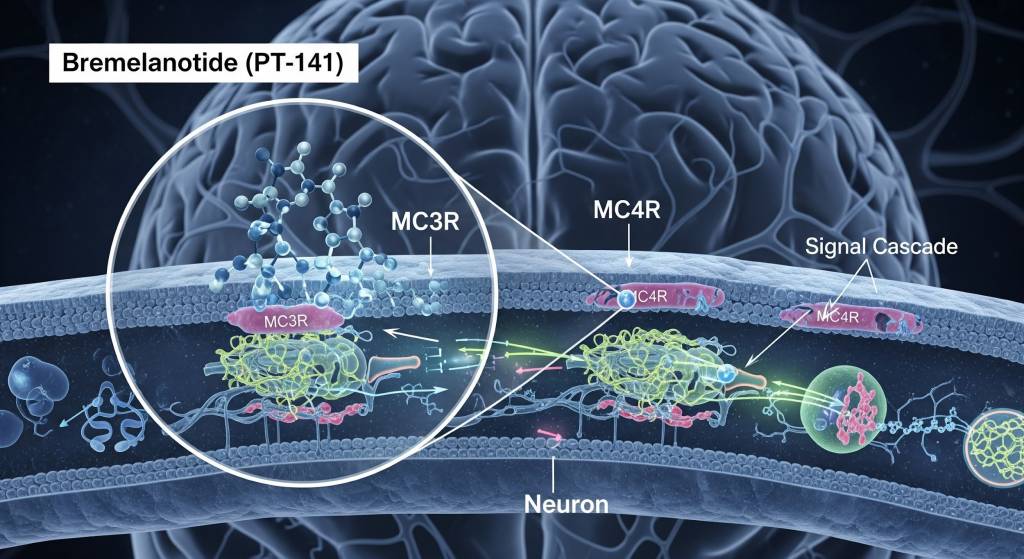
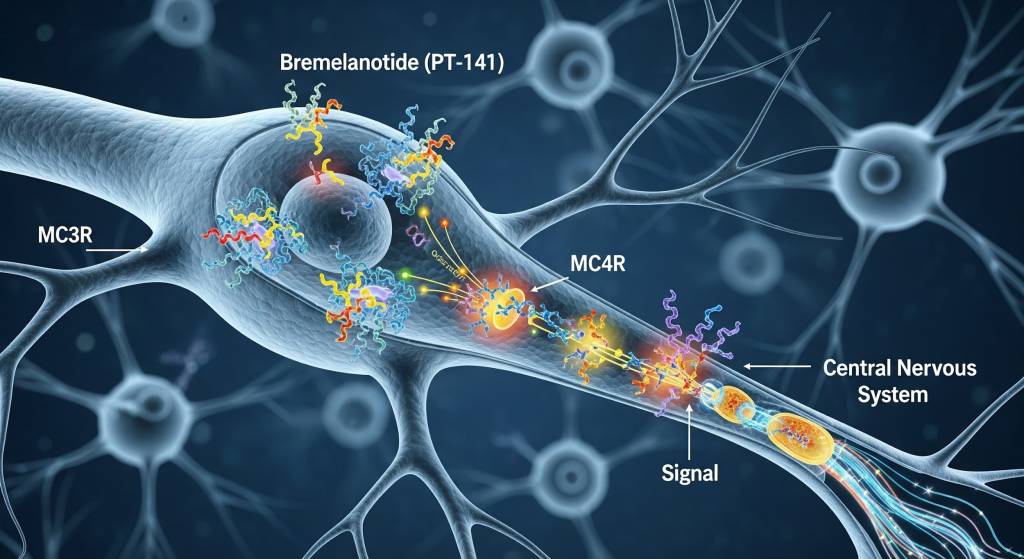
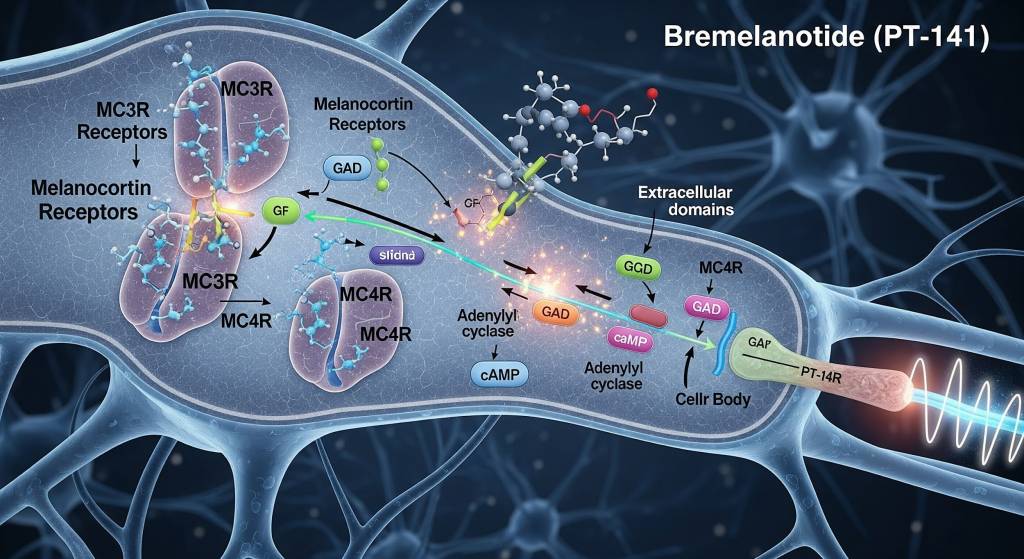
From a molecular research perspective, PT-141 belongs to the melanocortin peptide family, interacting primarily with MC3R and MC4R receptors in the brain. Researchers study PT-141 to explore how melanocortin signaling influences:- Central nervous system behavioral regulation
- Neuroendocrine communication
- Hypothalamic signaling pathways
- Dopaminergic and reward-associated circuits
- Stress-response and motivational signaling
Mechanism of Action (Research Context)
In laboratory research settings, PT-141 has been studied for its ability to activate melanocortin receptors within the brain, bypassing peripheral nitric oxide or vascular mechanisms. Researchers analyze how PT-141 influences neurotransmitter signaling, hypothalamic activation, and behavioral response modulation under controlled experimental conditions. PT-141 is also examined in studies evaluating central arousal pathways, reward circuitry, and neuroendocrine integration. All mechanisms are discussed strictly within a research context, without implication of clinical or therapeutic application.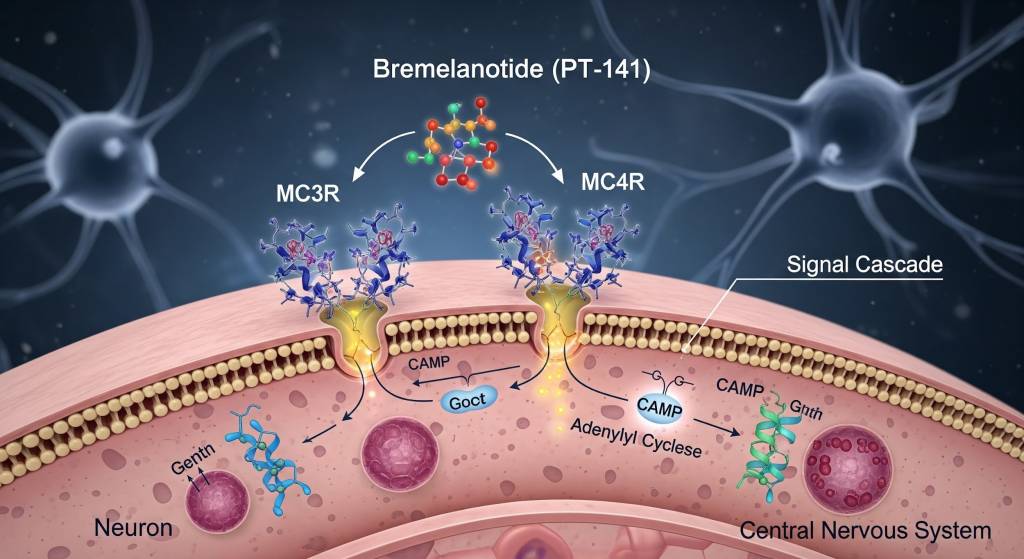
Areas of Scientific Research Interest
PT-141 has been referenced in scientific research related to:- Melanocortin receptor signaling (MC3R, MC4R)
- Central libido and arousal pathway research
- Neurobehavioral signaling modulation
- Hypothalamic peptide signaling
- Dopaminergic reward pathway studies
- Sexual behavior neuroscience research
- Stress and motivation signaling pathways