PEG-MGF (Pegylated Mechano Growth Factor) – Research Overview
PEG-MGF (Pegylated Mechano Growth Factor) is a modified peptide analog of Mechano Growth Factor (MGF), a splice variant of insulin-like growth factor-1 (IGF-1), that has been extensively studied in preclinical and laboratory research for its role in muscle repair signaling, satellite cell activation, and mechanotransduction-related growth pathways. Through pegylation, PEG-MGF exhibits enhanced molecular stability and prolonged signaling duration, making it a frequent subject in muscle biology research, exercise-induced adaptation studies, and tissue regeneration signaling investigations.
This page provides a research-focused, educational overview of PEG-MGF, including its molecular classification, mechanism of action in research contexts, and primary areas of scientific investigation.
⚠️ Research Disclaimer:
This content is provided strictly for educational and research purposes. No information on this page constitutes medical advice, dosing guidance, or instructions for human or animal use.
Compound Overview
PEG-MGF is classified as a pegylated IGF-1 splice variant peptide, derived from Mechano Growth Factor, which is naturally expressed in response to mechanical stress and muscle loading. In laboratory research environments, PEG-MGF is studied to better understand how mechanical stimuli translate into molecular growth signals, particularly in skeletal muscle tissue.
Pegylation of MGF increases resistance to enzymatic degradation, allowing researchers to evaluate extended signaling effects compared to non-pegylated MGF in controlled experimental models.
Research Background & Classification
From a molecular research perspective, PEG-MGF belongs to a class of growth factor signaling peptides associated with muscle repair and adaptation. As a derivative of the IGF-1 gene, MGF plays a distinct role in localized muscle signaling, separate from systemic IGF-1 activity.
Researchers study PEG-MGF to explore how stabilized growth factor variants influence:
- Muscle fiber repair signaling
- Satellite cell proliferation and differentiation
- Localized anabolic signaling pathways
- Mechanotransduction-related molecular responses
- Muscle adaptation following mechanical stress
These properties make PEG-MGF a key compound in muscle regeneration and hypertrophy research.
Mechanism of Action (Research Context)
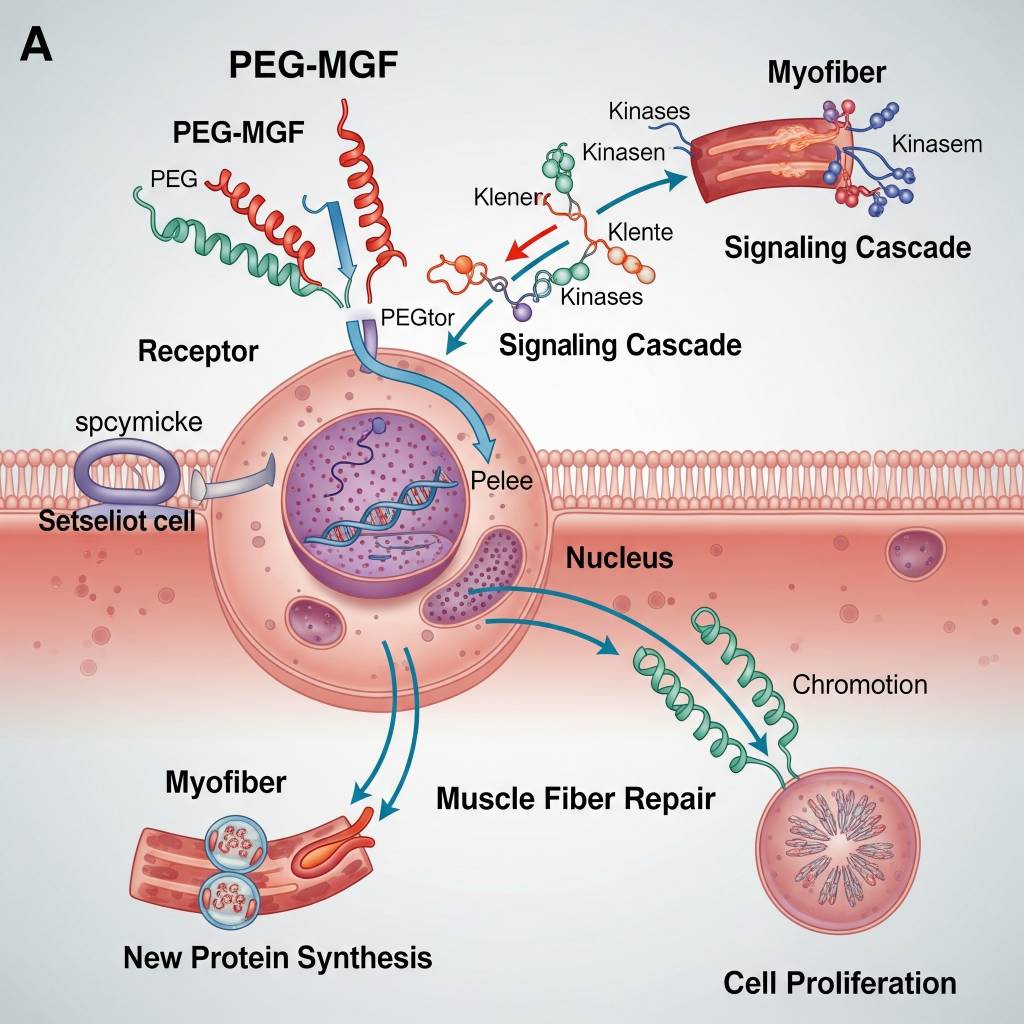
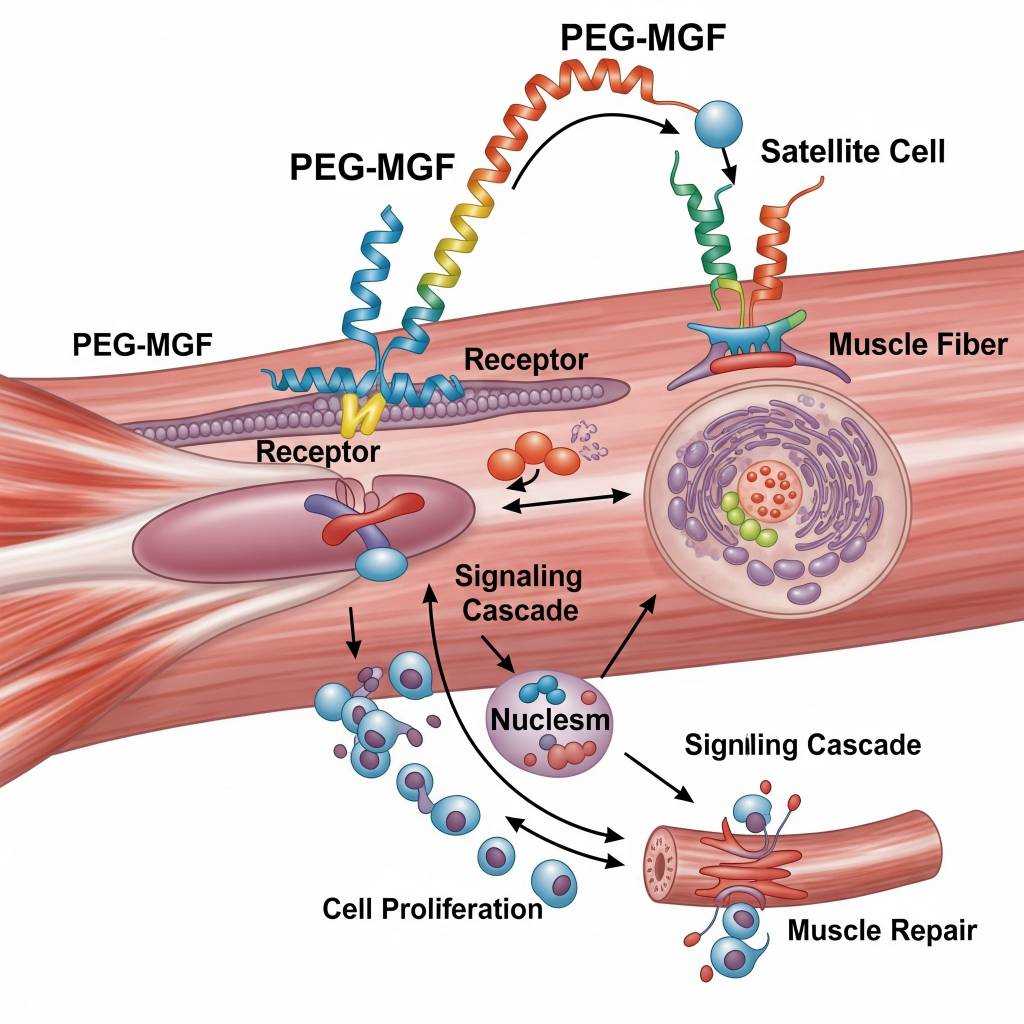
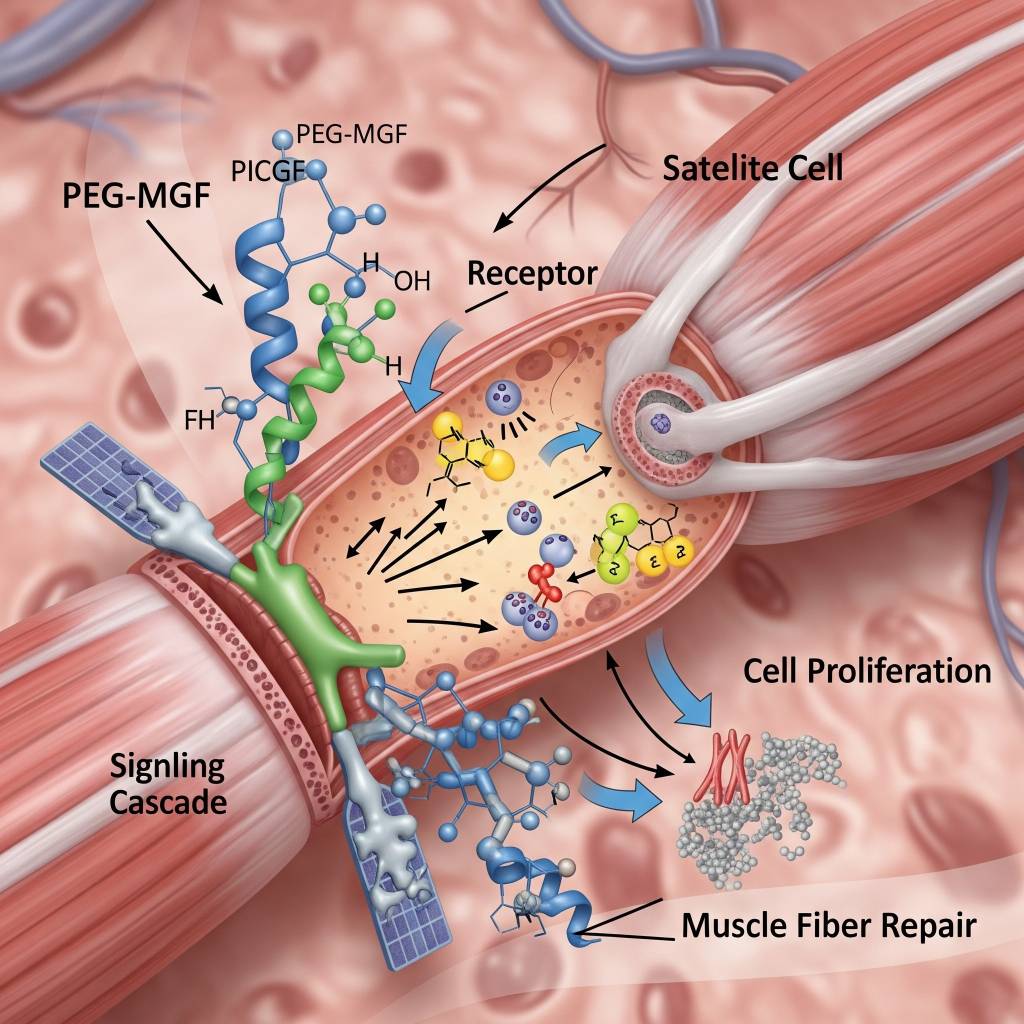
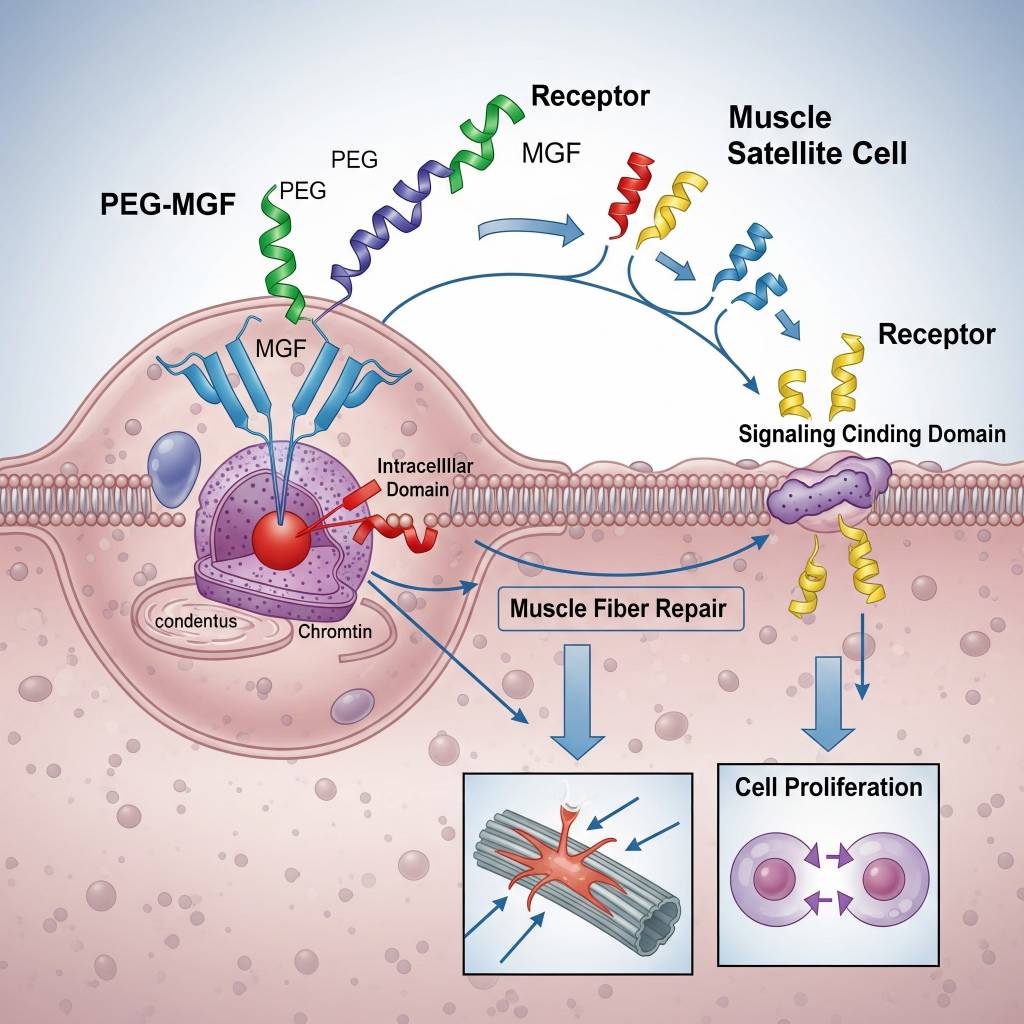
In laboratory research settings, PEG-MGF has been studied for its role in activating muscle satellite cells, which are essential for muscle repair and regeneration. Researchers analyze how PEG-MGF influences cell signaling cascades downstream of mechanical stress, including pathways related to cell proliferation, protein synthesis, and tissue remodeling.
PEG-MGF is also examined in studies evaluating localized growth factor signaling, temporal activation patterns, and interaction with IGF-1–related pathways. All mechanisms are discussed strictly within a research context, without implication of clinical or therapeutic use
Areas of Scientific Research Interest
PEG-MGF has been referenced in scientific research related to:
- Muscle repair and regeneration signaling
- Satellite cell activation and proliferation
- Mechanotransduction and muscle adaptation research
- IGF-1 splice variant signaling
- Localized anabolic pathway modeling
- Exercise-induced molecular response studies
- Growth factor stability and signaling duration analysis
These areas support broader investigation into how mechanical stress is converted into molecular growth signals in skeletal muscle research models.
Stability & Handling Considerations
In laboratory environments, PEG-MGF is handled according to standard peptide and growth factor research protocols. Researchers consider factors such as temperature stability, light exposure, solution composition, and pegylation integrity when evaluating compound stability and experimental consistency.
Proper handling and storage are essential for maintaining reliable signaling behavior during extended muscle growth and repair studies.
Research Context Notes
This overview is intended for educational and informational purposes for individuals studying muscle physiology, molecular biology, growth factor signaling, and regenerative research pathways. It does not replace peer-reviewed scientific literature, experimental protocols, regulatory documentation, or institutional research standards.
Researchers who have reviewed this compound overview may proceed to review available research compounds.