Humanin – Research Overview
Humanin is a mitochondrial-derived peptide (MDP) that has been extensively studied in preclinical and laboratory research for its role in cell survival signaling, mitochondrial function regulation, and stress-response pathway modulation. Discovered within the mitochondrial genome, Humanin has attracted significant attention in cellular aging research, neuroprotection studies, and metabolic resilience investigations due to its involvement in cytoprotective signaling mechanisms.
This page provides a research-focused, educational overview of Humanin, including its molecular classification, mechanism of action in research contexts, and primary areas of scientific investigation.
⚠️ Research Disclaimer:
This content is provided strictly for educational and research purposes. No information on this page constitutes medical advice, dosing guidance, or instructions for human or animal use.
Compound Overview
Humanin is classified as a short mitochondrial-encoded peptide, part of a broader class known as mitochondrial-derived peptides (MDPs). In laboratory research environments, Humanin is studied for its role in cellular stress resistance, mitochondrial signaling, and pro-survival pathway activation. Unlike nuclear-encoded peptides, Humanin originates from mitochondrial DNA, positioning it as a key subject in mitochondrial communication and cellular resilience research.Research Background & Classification
From a molecular research perspective, Humanin belongs to the family of mitochondrial signaling peptides that act as retrograde messengers, communicating mitochondrial status to the nucleus and cytosolic signaling pathways. Researchers study Humanin to explore how mitochondrial peptides influence:- Cellular stress-response pathways
- Apoptosis-associated signaling regulation
- Mitochondrial bioenergetics and integrity
- Neuroprotective signaling mechanisms
- Aging-related cellular resilience
Mechanism of Action (Research Context)
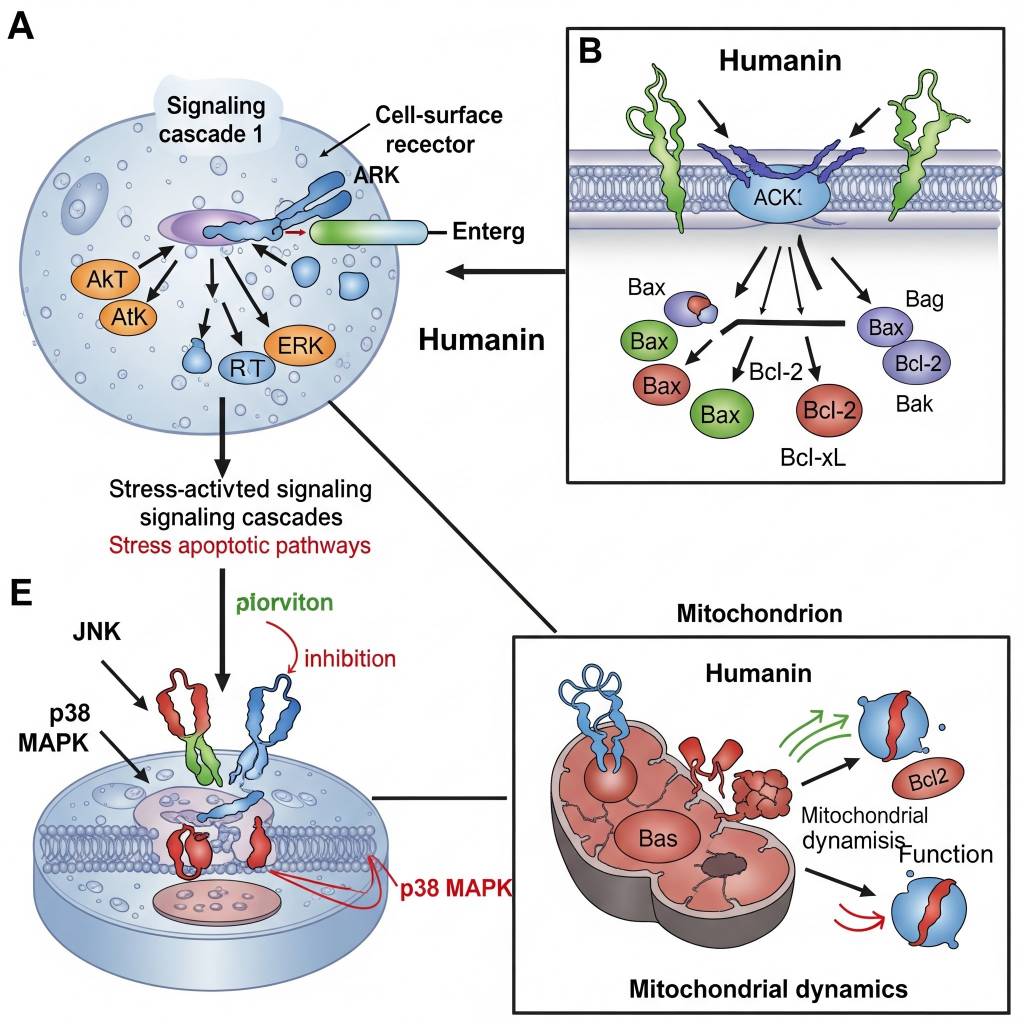
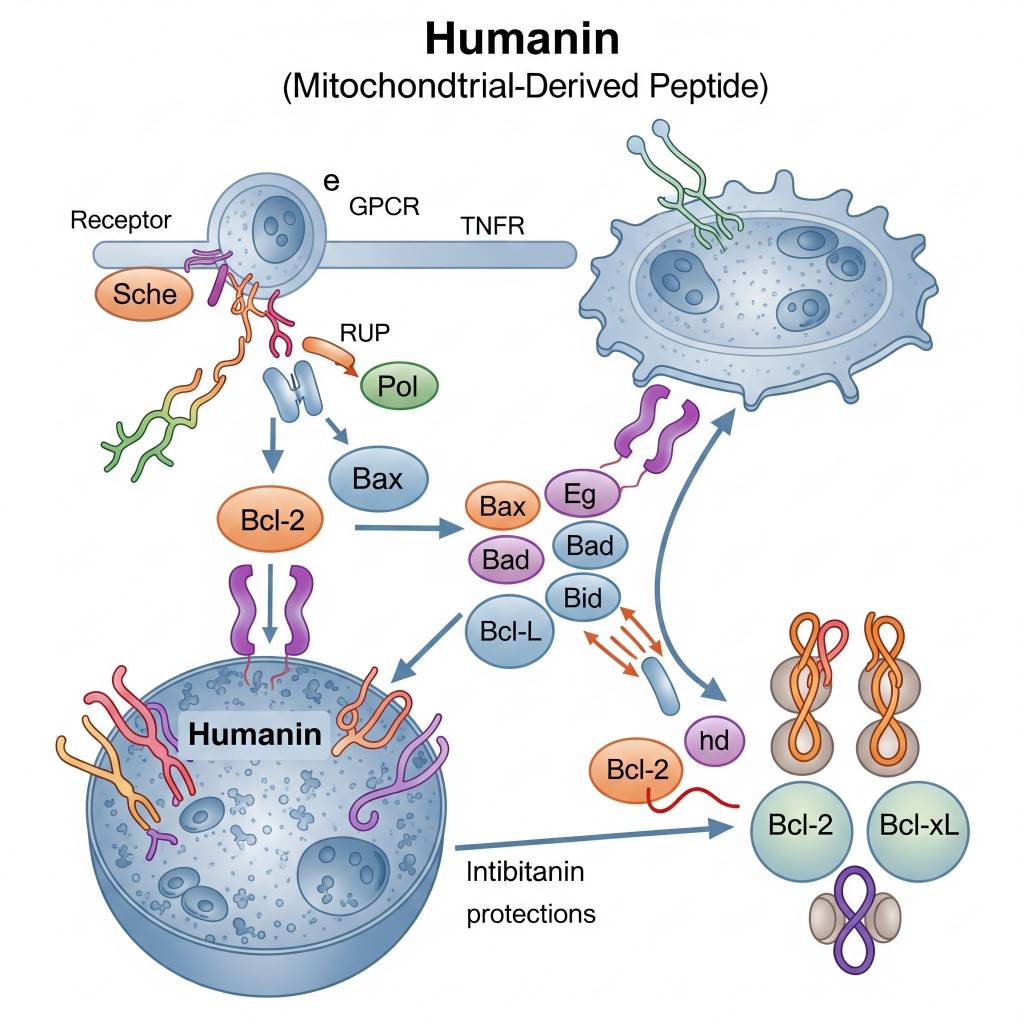
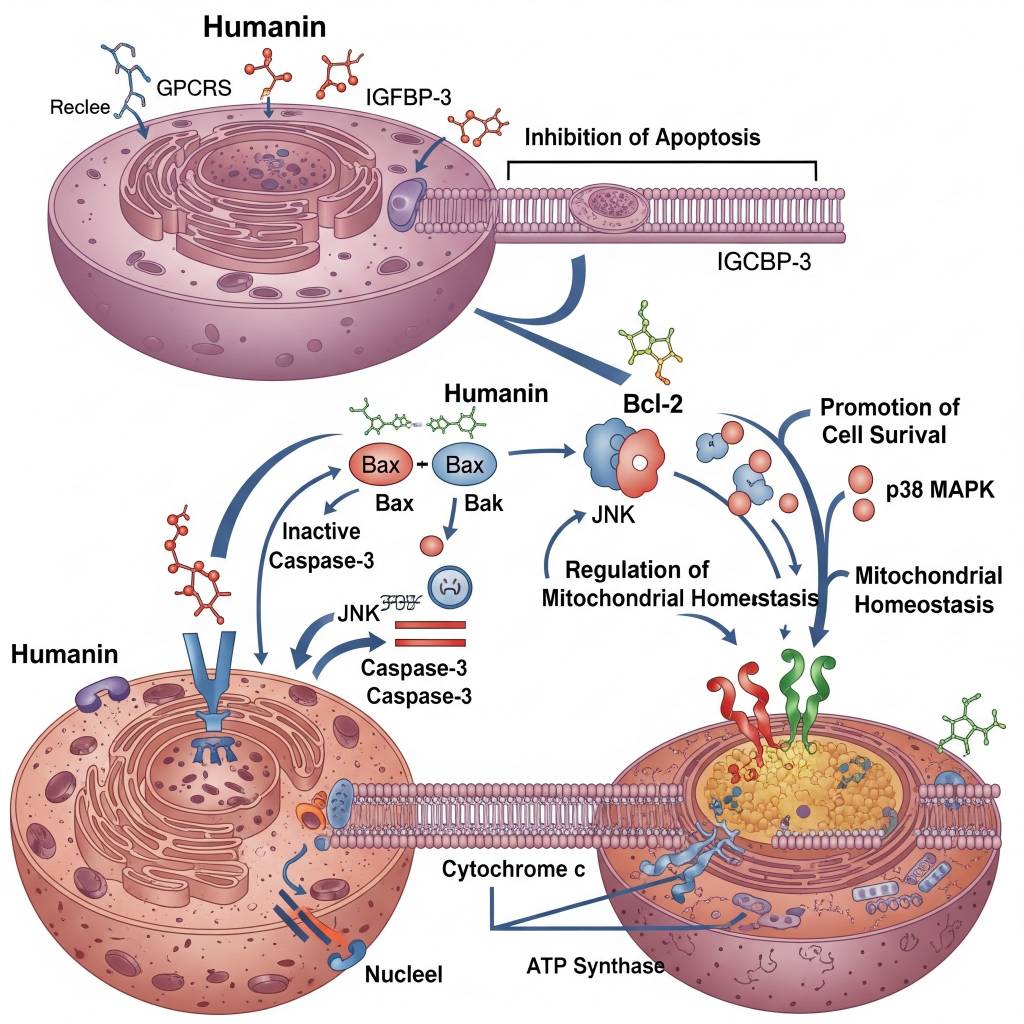
In laboratory research settings, Humanin has been studied for its interaction with cell-surface and intracellular signaling pathways associated with apoptosis inhibition and cell survival promotion. Researchers analyze how Humanin influences Bcl-2 family protein interactions, stress-activated signaling cascades, and mitochondrial homeostasis under controlled experimental conditions. Humanin is also examined for its role in modulating oxidative stress responses and neuroprotective signaling pathways. All mechanisms are discussed strictly within a research context, without implication of clinical or therapeutic application.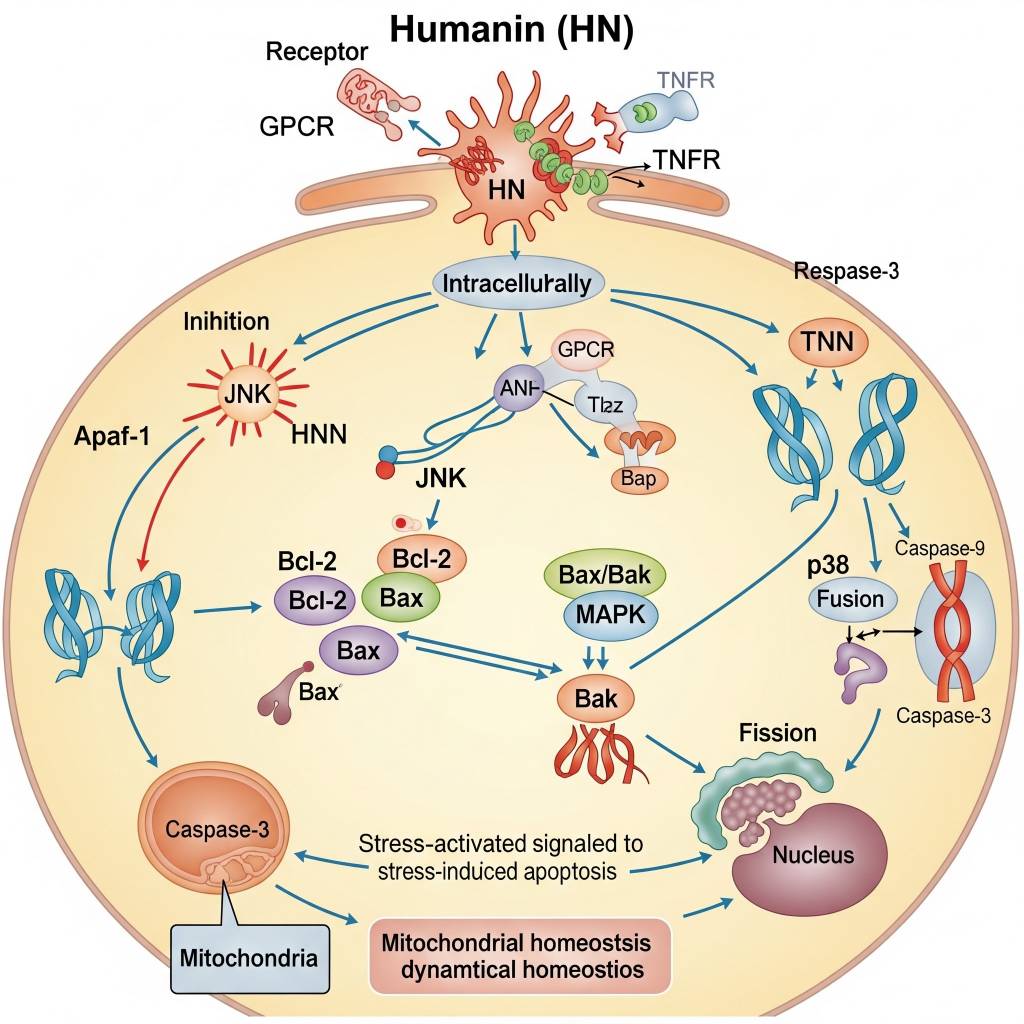
Areas of Scientific Research Interest
Humanin has been referenced in scientific research related to:- Mitochondrial-derived peptide signaling
- Cellular survival and cytoprotection pathways
- Apoptosis inhibition research
- Neuroprotective signaling studies
- Mitochondrial stress-response mechanisms
- Aging-related cellular resilience
- Metabolic and oxidative stress regulation
- Mitochondrial–nuclear communication